Starting from zero: a beginner's guide
The hardest part of training is starting - and the good news is you don't need to go heavy or complicated on day one. You don't need a fancy gym, an expensive program, or a perfect body to begin. What you need is a clear, simple plan and the willingness to show up two or three times a week. This guide walks you through the core principles every beginner should understand before lifting a single weight, so your first months build a foundation you can stand on for years rather than a burst of motivation that fizzles in two weeks.
Most people who quit the gym don't quit because the training was too hard. They quit because they did too much too soon, got sore or hurt, lost motivation, or simply never saw a clear path forward. Avoiding those traps is far more about strategy than willpower. Let's build that strategy.
Why the first 90 days matter most
Your first three months set the tone for everything that follows. In this window your nervous system learns the movement patterns, your joints and connective tissue adapt to new loads, and - just as important - you build the habit loop that keeps you coming back. Beginners actually have a major advantage here: untrained muscles respond quickly, so you'll see strength gains faster than you ever will again. These are often called "newbie gains," and the smartest thing you can do is not waste them by chasing intensity before your body is ready.
The goal of the first 90 days is not to look dramatically different. It's to become someone who trains regularly, moves well, and recovers properly. Get those three things right and the visible results take care of themselves.
1) Begin with consistency, not intensity
Training 2–3 days a week consistently beats one brutal session followed by a week off. Your body adapts to the average load you give it over time, not to a single heroic effort. A beginner who trains three reasonable sessions every week for three months will out-progress someone who trains like a maniac for one week and then disappears.
Practical ways to lock in consistency:
- Schedule it like an appointment. Put your sessions in your calendar and treat them as non-negotiable.
- Keep sessions short at first. 30–45 minutes is plenty. A workout you'll actually finish beats a perfect plan you dread.
- Lower the barrier to starting. Lay out your clothes the night before, keep the gym on your route home, or train at home with bodyweight if travel is the obstacle.
- Aim for "good enough" days. Some sessions will feel great, others flat. Showing up on the flat days is what builds the habit.
If you're unsure how many days suit you, see our guide on how many days per week and start with a structured beginner program.
2) Focus on compound basics
Movements like squats, push-ups, and rows train multiple muscle groups at once - the most efficient foundation for beginners. Instead of doing a dozen isolation exercises for tiny muscles, you cover your whole body with a handful of big, productive lifts. This saves time, builds balanced strength, and teaches coordination that carries over to everyday life.
A great starting toolkit looks like this:
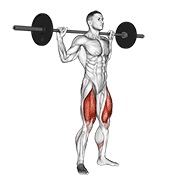
- Lower body: the dumbbell goblet squat is the most beginner-friendly way to learn the squat pattern, and it trains the upper legs thoroughly. Progress later to the barbell full squat.
- Push: the push-up builds chest, shoulders, and triceps with no equipment. The barbell bench press is the loaded version once you're ready.
- Pull: the dumbbell bent-over row develops the back and balances all that pushing.
- Hinge: the barbell deadlift teaches you to lift from the floor safely - learn it light first.
- Core: the front plank with twist builds the waist and trunk stability.
Add one isolation movement you enjoy, such as the dumbbell biceps curl, once the basics feel solid. For a deeper walk-through, read our 6 basic exercises guide.

3) Form always comes before weight
Move slowly and under control first, then add load. Lifting heavy with sloppy technique is the fastest route to a tweaked back or sore knees, and it builds bad habits that are hard to unlearn later. Spend your first few weeks "greasing the groove" - practicing each movement light enough that you can focus entirely on doing it correctly.
Check the GIF demos in the exercise library to verify correct form every time, and film yourself from the side occasionally so you can compare. Cues that help most beginners: keep the spine neutral (not rounded or over-arched), control the lowering phase rather than dropping the weight, and breathe out as you exert. Our article on form before weight goes into detail on the most common technique fixes.
A simple 3-day starter week
Here's a balanced full-body template a beginner can run three times a week. Rest at least one day between sessions.
| Day | Focus | Example movements |
|---|---|---|
| Mon | Full body A | Goblet squat, push-up, dumbbell row, plank |
| Wed | Full body B | Deadlift (light), bench press, biceps curl, plank with twist |
| Fri | Full body C | Goblet squat, push-up, dumbbell row, plank |
Do 2–3 sets of each exercise. Keep 1–2 reps "in the tank" rather than going to failure. For exactly how many sets and reps to pick, see our sets and reps guide.
4) Warm up and rest enough
Spend 5–10 minutes warming up before you lift: a few minutes of light cardio to raise your heart rate, then some dynamic movements and a couple of light warm-up sets of your first exercise. This primes your joints and reduces injury risk. Our warm-up guide has a ready-to-use routine.
Muscles grow during rest, not during the workout itself. Training breaks the muscle down; recovery - fueled by sleep, food, and time - is when it rebuilds stronger. Sleep 7–9 hours, give a trained muscle group roughly 48 hours before hammering it again, and eat enough protein to support repair. Our protein and recovery article explains how much you actually need.
5) Track progress and be patient
Visible change usually takes 8–12 weeks, and that's completely normal. The scale and the mirror are slow, noisy signals - your training log is the honest one. Write down the weight and reps for every set. When the numbers slowly climb week to week, you're progressing, even on days you don't "feel" stronger. This gradual increase in demand is called progressive overload, and it's the real driver of results - learn it in our progressive overload guide.
Focus on small, repeatable wins: one more rep, a slightly heavier dumbbell, a cleaner rep. Stacked over months, these tiny improvements become a transformation.
ข้อผิดพลาดที่พบบ่อย (Common mistakes)
- Doing too much, too soon. Five days a week of brutal sessions in week one almost always ends in burnout or injury. Start conservative.
- Chasing weight over form. Ego lifting is the number one cause of beginner injuries. Earn the weight with clean technique.
- Skipping the warm-up. Cold muscles and joints are far easier to strain.
- Program-hopping. Switching plans every week prevents the progress that only shows up with consistency. Pick one and run it for at least 8–12 weeks.
- Ignoring recovery. No sleep, no rest days, not enough food - and your body can't rebuild. Recovery is part of training, not a break from it.
คำถามที่พบบ่อย (FAQ)
How many days a week should a complete beginner train? Two to three full-body days is ideal. It's enough to drive progress while leaving plenty of recovery time, and it's sustainable while you build the habit.
Do I need supplements to start? No. Whole-food nutrition with enough protein, plus good sleep, covers almost everything a beginner needs. Supplements are optional extras, not requirements.
Should I do cardio or weights first? If your main goal is strength and muscle, lift first while you're fresh, then do lighter cardio after or on separate days. A short cardio warm-up before lifting is fine.
สรุป (Summary)
Starting from zero is simpler than it looks: train consistently 2–3 days a week, build everything on compound basics, put form before weight, warm up and recover well, and track small wins with patience. Do these five things and your first 90 days will lay a foundation that lasts for years. Ready to begin? Pick a structured plan in our beginner program and read the full beginner guide to map out your first month.
Ready to put this into action? Start with a program for your level.
View programs →