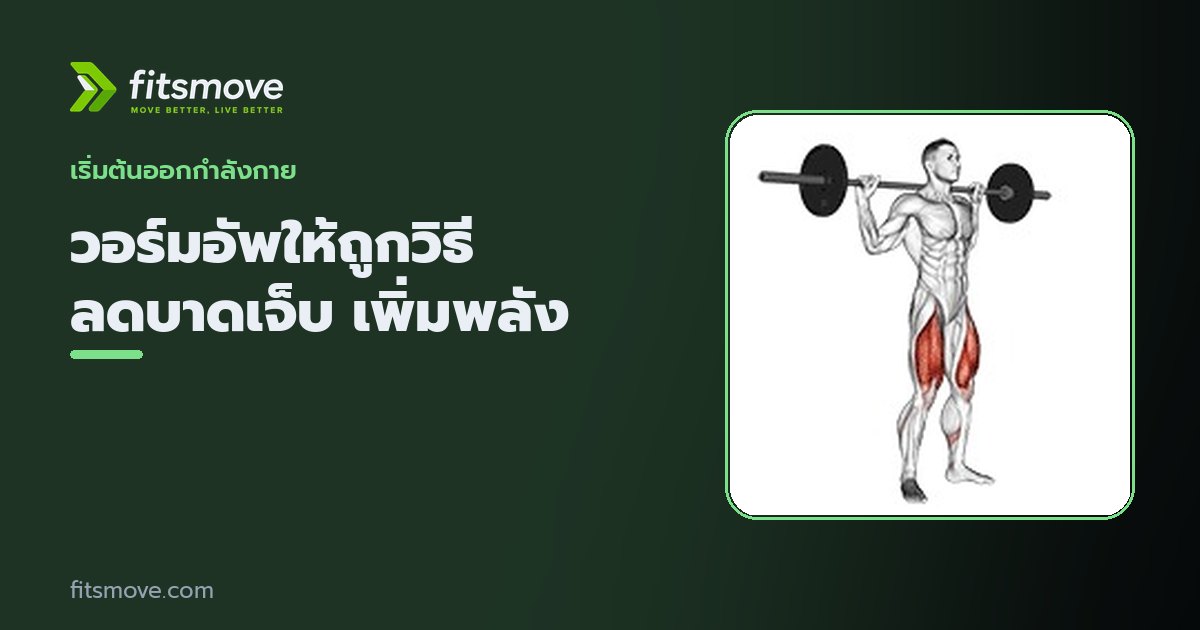
Warm up the right way: fewer injuries, more power
Most people who train with limited time treat the warm-up as the first thing to cut. The logic feels reasonable - why spend ten minutes "doing nothing" when you could be lifting? But a warm-up is not nothing. It is the part of the session that decides whether your first working set feels sluggish or sharp, whether your joints feel cranky or smooth, and whether you finish the workout intact. A good warm-up is the cheapest performance upgrade you will ever get.
This guide walks through what a warm-up actually does inside your body, the three-step structure that works for almost everyone, how to tailor it to the lift you are about to do, and the common mistakes that quietly waste people's time. None of this requires special equipment or extra hours - just five to fifteen focused minutes used well.
Why a warm-up actually works
A warm-up changes your body in several measurable ways, and understanding them helps you stop treating it as a ritual and start treating it as preparation.
- Higher muscle temperature. Warmer muscle contracts and relaxes faster, which translates directly into more force and more speed. This is the single biggest reason warmed-up lifts feel stronger.
- More blood flow. As you move, blood is redirected to the working muscles, delivering oxygen and clearing waste so you fatigue more slowly.
- A primed nervous system. Lifting is a skill. Rehearsing the movement pattern at low intensity tells your brain and muscles how to fire together, improving coordination and timing.
- Better joint lubrication. Gentle movement spreads synovial fluid through the joint capsule, which is why the third squat usually feels smoother than the first.
Put simply: a warm-up raises the ceiling on how well you can perform and lowers the chance that a cold, unprepared joint takes load it was not ready for.
Step 1: Light cardio (3–5 minutes)
Start with something that gently raises your heart rate and core temperature - brisk walking, an easy bike, a rowing machine, or skipping rope. The goal is not to tire yourself out. You want to feel pleasantly warm and notice your breathing pick up slightly, not to be gasping.
If your training session is cardio-focused, this phase blends naturally into the main work: you simply start very easy and build. For a guide to structuring conditioning work, see our cardio category. For lifting days, three to five minutes is plenty before you move on.
A useful internal cue: by the end of this phase you should have broken a very light sweat and feel like you want to move, not like you need to sit down.
Step 2: Dynamic stretching and mobility (3–5 minutes)
Dynamic stretching means moving your joints actively through their range of motion rather than holding a stretch still. Think arm circles, leg swings, hip openers, walking lunges, and slow bodyweight squats. Each movement should feel controlled and gradually reach a little further.
This is the right time to address the joints you are about to load. Squatting today? Spend extra time on ankles and hips. Pressing overhead? Open up the shoulders and upper back.
Why not static stretching here? Holding a long static stretch right before heavy lifting can briefly reduce your power output. Save static stretching for after training or for separate flexibility sessions. Before lifting, keep it dynamic.
Step 3: Warm-up sets specific to the lift (3–5 minutes)
This is the step most people skip, and it is the most important for heavy training. Before your working weight, perform one to three progressively heavier sets of the exact movement you are about to do. This grooves the motor pattern, lets your nervous system adjust, and gives you a final equipment and form check before real load.
Here is a practical ramp for someone whose working set is a 100 kg barbell squat:
| Set | Load | Reps | Purpose |
|---|---|---|---|
| 1 | Empty bar (20 kg) | 8 | Groove the pattern |
| 2 | 50 kg | 5 | Wake up the muscles |
| 3 | 75 kg | 3 | Rehearse near-working speed |
| 4 | 90 kg | 1 | Final primer |
| Work | 100 kg | as programmed | Real set |
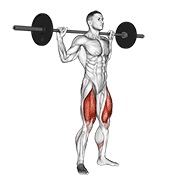
The same logic applies to any big lift - the barbell full squat, the barbell bench press, or a dumbbell goblet squat if you train at home. Lighter accessory work usually needs only one warm-up set, because you have already been warmed by the bigger lifts.
How to adjust your warm-up to the situation
A warm-up is not one fixed routine. Scale it to three things:
- The weather and time of day. Cold mornings need more time. On hot afternoons after an active day, you may already be half warm.
- The lift. Explosive or maximal work - like a jump squat or a heavy single - demands a more thorough ramp than moderate, higher-rep training.
- Your body. Old injuries, stiff joints, or simply being a beginner are all reasons to take a few extra minutes. Beginners building a base should never feel rushed; see our beginner guide and structured programs.
ข้อผิดพลาดที่พบบ่อย (Common mistakes)
- Skipping it entirely. The most common and most costly mistake, especially when short on time.
- Holding long static stretches before lifting. This can dull your power. Keep pre-lift stretching dynamic.
- Warming up too hard. A warm-up that leaves you tired has stolen energy from your working sets. Stay easy.
- Generic only, never specific. Five minutes on a bike does not prepare your shoulders for a heavy press. Add warm-up sets of the actual lift.
- Same routine forever. As you get stronger, heavier lifts need a longer, more careful ramp.
คำถามที่พบบ่อย (FAQ)
Do I need to warm up for a short or light workout? Yes, but you can scale it down. Even a quick session benefits from a few minutes of light movement and one warm-up set of your first exercise.
Should I stretch before or after? Dynamic mobility before; static stretching is best saved for after training or for dedicated flexibility work.
How long is enough? For most people, 5–10 minutes. Add a few minutes for heavy, explosive, or cold-weather training; trim it for light sessions when you are already warm.
สรุป (Summary)
A warm-up is a small investment that pays off in better lifts and fewer injuries. Build the habit around three steps: a few minutes of light cardio, dynamic mobility for the joints you will use, and progressively heavier warm-up sets of your main lift. Scale it to the day, the lift, and your body. Ready to put it to use? Pick a session from our programs and warm up the right way before your next set. Pairing good warm-ups with smart recovery matters too - read protein and recovery next.
Ready to put this into action? Start with a program for your level.
View programs →