
Dynamic vs static stretching: when to use each
Most people stretch out of habit without asking a simple question: what is this stretch actually for? They reach down to touch their toes, hold it for a few seconds, and call it a warm-up. The problem is that the long, held stretch they just did is the wrong tool for the moment. It can leave the muscle briefly less powerful right before they try to lift or sprint. The fix is not to stretch less, it is to match the type of stretch to the time of day.
There are two broad families of stretching, and they do different jobs. Dynamic stretching uses controlled movement to take a joint through its range, and it belongs before you train. Static stretching means holding a position at the edge of comfortable range, and it fits best after you train or in a separate flexibility session. This article explains the difference, shows you sample moves in a clear table, summarizes what the evidence says, and points out the mistakes that quietly hold people back.
This is general educational information, not medical advice. If you have a specific injury, joint problem, or pain that does not settle, see a doctor or physiotherapist before relying on a stretching routine.
The core difference in one minute
Dynamic stretching is movement based. You swing, rotate, or step through a range repeatedly, gradually increasing how far you go. Leg swings, walking lunges with a twist, and arm circles are classic examples. The goal is to raise muscle temperature, wake up the nervous system, and rehearse the movement patterns you are about to load.
Static stretching is hold based. You move into a lengthened position and stay there, usually for twenty to forty seconds, letting the muscle relax into the range. A seated hamstring reach or a standing quad stretch are typical. The goal here is long term flexibility and a calmer, post effort wind down, not preparation for hard output.
The simplest way to remember it: dynamic to get ready, static to cool down. Both have a place. The mistake is swapping their order.
Why dynamic stretching belongs before training
Before a workout your aim is to prepare the body to produce force safely. Dynamic stretching does this in a way a long hold cannot. The repeated movement increases blood flow and muscle temperature, which makes tissue more pliable and contractions more efficient. It also primes the nervous system, so the muscles fire more readily when you start your working sets.
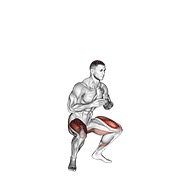
Just as important, dynamic work lets you rehearse the actual pattern of your session. If you are about to squat, a few sets of bodyweight squats and hip openers tell your joints and brain exactly what is coming. This rehearsal is why a dynamic routine pairs naturally with a structured warm-up. For lower body power work such as a jump squat, dynamic preparation is not optional, it is what makes the first explosive rep feel controlled rather than jarring.
Keep the intensity moderate. Dynamic stretching is preparation, not a workout of its own. Eight to twelve controlled reps per movement, building range as you go, is plenty.
Why static stretching belongs after training
After training the muscles are warm, the hard work is done, and you no longer need peak power. This is the ideal window for static stretching. Holding a lengthened position when the tissue is already warm is more comfortable and, over weeks, can help maintain or improve range of motion around joints you care about.
Static stretching after a session also serves a gentler purpose: it marks the transition out of effort and into recovery. A few quiet minutes of holds can lower arousal and help you wind down. It is a small habit that fits neatly alongside other recovery tools such as active recovery on your off days.
The key word is comfortable. Static stretching should feel like a firm, tolerable lengthening, never a sharp pull. Pain is a signal to back off, not push harder.
Sample moves: a quick reference
Use the table below to build a short routine. Pick three to five dynamic moves before training and three to five static holds after.
| Type | Move | When | How |
|---|---|---|---|
| Dynamic | Leg swings front to back | Before | 10 per leg, controlled |
| Dynamic | Walking lunge with torso twist | Before | 8 per side |
| Dynamic | Arm circles, small to large | Before | 10 each direction |
| Dynamic | Bodyweight squat to depth | Before | 10 reps, building range |
| Static | Seated hamstring reach | After | Hold 30 seconds per side |
| Static | Standing quad stretch | After | Hold 30 seconds per side |
| Static | Chest doorway stretch | After | Hold 30 seconds |
| Static | Figure four glute stretch | After | Hold 30 seconds per side |
Match the moves to the muscles you trained. After a leg day, prioritize hamstring, quad, and glute holds. After upper body, favor chest, shoulder, and lat stretches.
What the research actually says
The evidence here is often misread, so it is worth being precise. Studies have repeatedly shown that long static holds done immediately before explosive or maximal effort can cause a small, short lived drop in strength and power. This is why static stretching is a poor warm up choice on its own. It is not that static stretching is bad, it is that the timing is wrong.
Dynamic stretching, by contrast, tends to maintain or slightly improve power output when done before activity, which is why it is the preferred pre training option. For long term flexibility, regular static stretching remains an effective and well supported method, and it does that job best when the muscle is already warm.
One honest caveat: stretching is not a proven shield against all injury. The strongest protective factor in the research is a thorough, movement specific warm up that raises temperature and rehearses the task. Stretching supports that goal but does not replace it. Treat flexibility work as one useful habit among several, alongside sensible loading and adequate recovery.
How to fit both into a real session
You do not need a long routine. A practical structure looks like this. Spend five to eight minutes on dynamic stretching and light general movement before your working sets, ending with a movement that mirrors your first exercise. Train. Then spend three to five minutes on static holds for the muscles you worked, breathing slowly into each position.
On rest days, a longer dedicated static stretching or mobility session is a fine choice, since there is no power output to protect. It pairs well with easy cardio to keep blood moving without adding stress. This is also a good moment to address tight areas that limit your lifts, such as ankles or hips. If improving range is a real goal, consistency over weeks matters far more than the length of any single session. New to all this? A guided beginner program will build the warm up and cool down in for you.
ข้อผิดพลาดที่พบบ่อย (Common mistakes)
- Doing long static holds as a warm up. This can blunt power right before your hardest sets. Use dynamic moves first instead.
- Skipping the rehearsal step. A warm up should mirror what you are about to do, not just stretch random muscles.
- Stretching into sharp pain. A stretch should feel firm, not painful. Sharp pain means stop.
- Bouncing through static stretches. Forceful bouncing on a held stretch adds risk without benefit. Move smoothly.
- Expecting stretching alone to prevent injury. A proper warm up and sensible training do the heavy lifting; stretching supports them.
คำถามที่พบบ่อย (FAQ)
Is static stretching before lifting always bad? Not bad, just poorly timed. A very brief hold is unlikely to ruin a session, but for explosive or maximal work, dynamic stretching is the better pre training choice. Save longer static holds for afterward.
How long should I hold a static stretch? Around twenty to forty seconds per position is a common and reasonable range. Comfort and steady breathing matter more than chasing a specific number.
Will stretching make me less likely to get injured? It may help with comfort and range, but the research does not support stretching as a standalone injury shield. A thorough, task specific warm up is the more reliable protective habit. If you have recurring pain, see a physiotherapist.
สรุป (Summary)
Stretching is not one thing, it is two tools for two moments. Use dynamic stretching before you train to raise temperature, prime the nervous system, and rehearse your movements. Use static stretching after you train, or on rest days, to support long term flexibility and ease into recovery. Keep static holds out of your pre lift warm up, never stretch into sharp pain, and remember that a proper warm up does more for safety than stretching alone. Ready to put it to work inside a real plan? Pick a structured routine on the programs page and build your sessions around a smart warm-up.
Ready to put this into action? Start with a program for your level.
View programs →