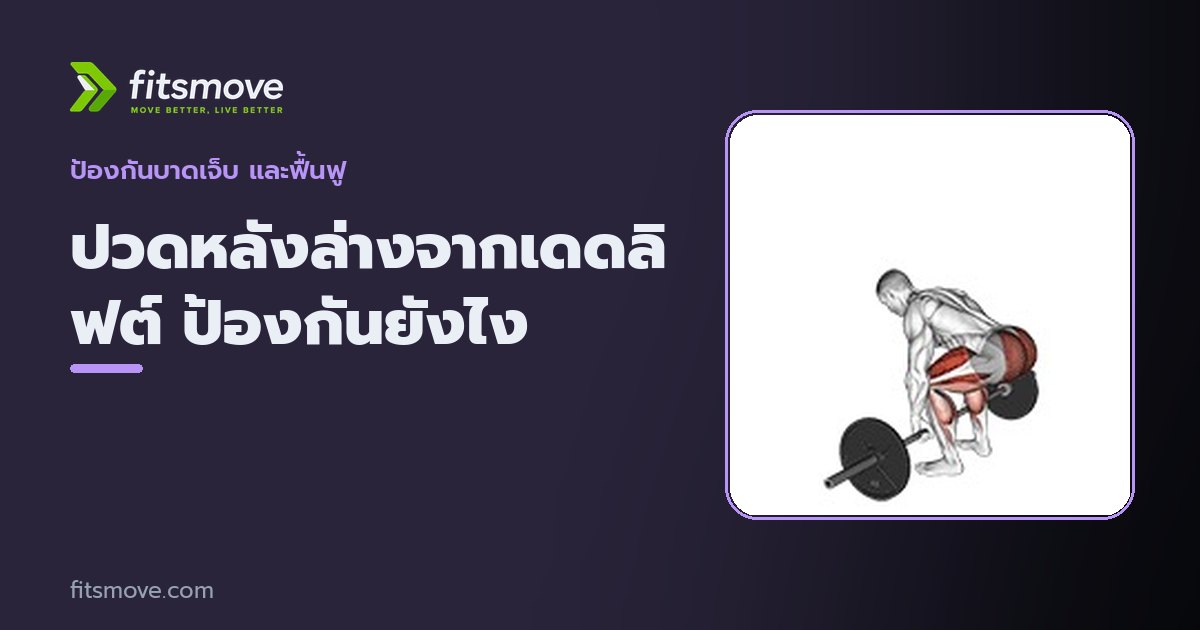
Preventing lower-back pain from deadlifts
The deadlift has an unfair reputation as a back-wrecker. In reality, the lift itself is one of the most useful movements you can train: it teaches you to brace your spine and move heavy loads from the floor, which is exactly what protects your back in daily life. The problem is rarely the deadlift. The problem is a rounded spine under load, a bar drifting away from the body, or a torso that is not braced before the bar leaves the ground. Fix those, and most lower-back pain from deadlifting quietly disappears.
This guide from FitsMove is general educational information, not medical advice or a diagnosis. It focuses on form, technique, and prevention so you can train with less risk. It is not a treatment plan for an existing injury. If your pain is severe, persistent, or worsening, stop reading and see a doctor or physiotherapist. With that said, let us look at why the barbell deadlift sometimes hurts and how to set it up so it does not.
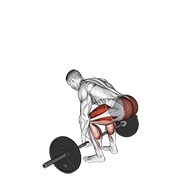
What "lower-back pain from deadlifts" usually means
There is a meaningful difference between two sensations. The first is general muscular fatigue or tightness in the spinal erectors the day after a hard session. This is normal: those muscles worked hard, just like your legs do after squats. It eases within a day or two and feels like soreness spread across a broad area.
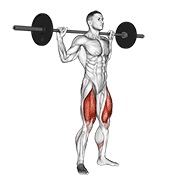
The second is a sharp, pinpoint, or radiating pain that arrives during a rep or immediately after. This is a signal, not soreness, and it deserves attention. The aim of good technique is to keep the spine in a stable, neutral position so the load travels through structures built to handle it, rather than concentrating stress on a small area that is not.
Why bad form causes pain
Most deadlift-related back pain traces back to a handful of repeatable mistakes. Understanding the mechanism behind each one makes it far easier to self-correct.
- Rounding the lower back. When the lumbar spine flexes under heavy load, stress shifts from large muscles onto smaller passive structures. Keeping a neutral spine spreads the load the way it was designed to be carried.
- The bar drifting forward. Every centimetre the bar sits away from your shins lengthens the lever arm on your spine. A bar that stays close keeps the load manageable.
- Lifting with a soft, unbraced trunk. Without intra-abdominal pressure, your spine has far less support against the load.
- Yanking the bar off the floor. A jerky start spikes force before you are braced and positioned. A smooth, deliberate pull lets tension build first.
- Hyperextending at the top. Leaning sharply backward to "finish" the lift loads the lower back in a vulnerable position. Finish tall, not arched.
The correct-form checklist
Run through this sequence every set. It becomes automatic within a few weeks.
| Phase | What to do | Common error to avoid |
|---|---|---|
| Setup | Bar over mid-foot, shins close, feet hip-width | Bar too far from shins |
| Grip | Hands just outside the legs, shoulders over or slightly ahead of bar | Hips dropped too low like a squat |
| Brace | Big breath into the belly, brace as if about to be lightly punched | Holding the breath in the chest only |
| Pull | Push the floor away, keep the bar dragging up the legs | Hips shooting up before the chest |
| Lockout | Stand tall, squeeze glutes, ribs down | Leaning back and overarching |
| Lowering | Hinge hips back first, control the descent | Dropping or rounding on the way down |
The same checklist applies to the barbell Romanian deadlift, which trains the hip hinge with less range from the floor and is an excellent way to groove the pattern at lighter loads. Building a stronger, more coordinated posterior chain through your back training also makes every rep more stable.
How to brace your core properly
Bracing is the single most underrated skill in the deadlift, and it is learnable in minutes. The goal is to create pressure inside your abdomen that turns your trunk into a rigid cylinder supporting the spine from all sides.
Try this: stand tall and take a breath low into your belly, not high into your chest. Then tense your abdominal wall outward as if you were bracing to take a light tap to the stomach. You are not sucking in; you are expanding and stiffening 360 degrees around your waist. Hold that pressure through the entire rep and exhale only at the top or after setting the bar down.
Many lifters find a structured approach to breathing transforms their lifts. For a deeper look, read our guide on breathing while lifting habits and how tension is built across a set. The key principle: brace before the bar moves, not after.
Warm up the hinge before you load it
Cold, unprepared tissue under a heavy pull is asking for trouble. A few focused minutes prime the hips, hamstrings, and spinal stabilisers so your first working set feels smooth rather than stiff. Light hip hinges, glute bridges, and a couple of progressively heavier warm-up sets of the actual lift do far more than a generic five minutes on a bike.
For a complete, practical routine you can run before any session, see our dedicated warm-up guide. The principle that matters here: rehearse the exact movement pattern at light load before you add real weight, so your nervous system and joints know what is coming.
A problem-solving table
When something feels off, match the symptom to a likely cause and a fix before you simply add more weight.
| What you feel | Likely cause | What to adjust |
|---|---|---|
| Pain at the start of the pull | Hips too low, back rounding | Raise hips slightly, set a neutral spine |
| Pain at lockout | Overarching at the top | Finish tall with ribs down, not leaning back |
| Lower back doing all the work | Weak or unengaged glutes and legs | Drive through the floor with the legs first |
| Bar swings away from you | Bar starting too far forward | Set bar over mid-foot, keep it close |
| Tweak when fatigued late in a set | Form breaking down from fatigue | End the set before form fails, reduce reps |
Smart load management
Even perfect form will eventually cause problems if you add weight faster than your body adapts. Lower-back tissue, in particular, needs time to build tolerance. Progress in small, planned increments rather than chasing a new number every session, and build in lighter periods so accumulated fatigue can clear. Our overview of progressive overload explains how to add load sustainably so you keep getting stronger without outrunning your recovery.
ข้อผิดพลาดที่พบบ่อย (Common mistakes)
- Treating every twinge as normal soreness. Broad, dull soreness is usually fine; sharp or radiating pain is not.
- Going heavy before the pattern is grooved. Master the hinge light before chasing numbers.
- Holding the breath in the chest instead of bracing the belly. This leaves the spine poorly supported.
- Letting form collapse on the final reps. The last ugly rep is where most tweaks happen.
- Skipping the warm-up on busy days. A cold hinge under load is the riskiest setup of all.
เมื่อไหร่ควรไปพบแพทย์/นักกายภาพ (When to see a professional)
Form fixes are for prevention, not for treating an injury. Stop training the lift and seek a doctor or physiotherapist if you notice any of these red flags:
- Sharp, sudden, or radiating pain, especially shooting into the buttock or down a leg.
- Numbness, tingling, or weakness in the legs or feet.
- Pain that persists for several days, keeps returning, or is getting worse.
- Pain that disturbs your sleep or is present even at rest.
- Any loss of bladder or bowel control, which needs urgent medical attention.
FitsMove cannot diagnose or treat injuries. These signs mean a qualified professional should assess you in person.
คำถามที่พบบ่อย (FAQ)
Is a lifting belt necessary to protect my back? A belt can help you brace harder on heavy sets, but it is not a substitute for learning to brace your own core. Build the skill first; a belt amplifies good technique rather than replacing it.
Should I round my back on purpose, like some strongman lifters? No. Advanced athletes who train specific positions over years are not a model for general lifters. Keep a neutral spine for safe, repeatable training.
Can I keep training if my back is just a little sore? Mild, broad muscular soreness usually settles with light activity. But sharp or worsening pain is a reason to back off and, if it persists, to get checked.
สรุป (Summary)
The deadlift does not have to hurt your back. The lift rewards a neutral spine, a bar kept close, a braced trunk, and load added patiently over time. Run the form checklist every set, brace before the bar moves, warm up the hinge, and respect the difference between ordinary soreness and a warning sign. If pain is sharp, persistent, or worsening, stop and see a professional. Ready to train the lift the right way inside a structured plan? Explore our programs and build a strong, resilient back over the long term.
Ready to put this into action? Start with a program for your level.
View programs →