
Progressive overload: the engine of muscle growth
If you lift the same weight for the same reps every week, your body has no reason to get stronger. Adaptation only happens when you ask your muscles to do something they aren't already comfortable doing. Progressive overload is the principle of gradually increasing the demand on your muscles over time - and it is, without exaggeration, the single most important concept in strength training. Programs come and go, but every effective one is just a different way of applying progressive overload.
The good news is that "overload" doesn't mean grinding yourself into the ground every session. It means small, deliberate, trackable increases that nudge your body to adapt while keeping injury risk low. This guide explains why it works, the many ways to apply it, and how to do it without getting hurt or stalling.
Why your body adapts
Muscle is metabolically expensive, so your body only builds and keeps what it's forced to use. When you train with a load that challenges you, you create a small amount of stress and micro-damage in the muscle. During recovery - with enough sleep, food, and rest - the body repairs that tissue and adds a little extra capacity so it can handle the same demand more easily next time. This is the "stress, recover, adapt" cycle.
Here's the catch: once you've adapted, that same weight is no longer a challenge. The stimulus that once drove growth becomes maintenance. To keep progressing, the demand has to keep creeping upward. That's the entire reason progressive overload exists - to stay one small step ahead of what your body has already gotten used to.
Many ways to add challenge
Most beginners think progressive overload only means "add more weight." Adding weight is the most obvious lever, but it's far from the only one - and the others are often safer and more sustainable. You can progress by:
- Adding weight in small jumps (e.g. 2.5 kg total). This is the classic driver, especially on big lifts.
- Adding reps at the same weight. Going from 8 reps to 10 at the same load is real progress.
- Adding sets. A third set of an exercise increases total work for that muscle.
- Shortening rest between sets, which raises the density of your workout.
- Improving form and tempo - slowing the lowering phase under control increases time under tension and difficulty without adding a single kilogram.
- Increasing range of motion - squatting deeper or doing a fuller push-up makes the same load harder.
- Adding frequency - training a muscle group an extra day per week increases weekly volume.
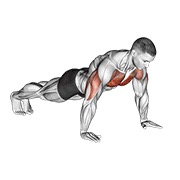
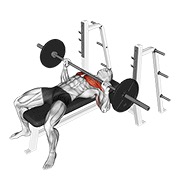
The key insight is that total weekly volume and the gradual rise in difficulty matter more than any single variable. On the barbell bench press you might add weight; on the push-up you might add reps; on the dumbbell biceps curl you might slow the tempo. All of them count.
The 'small steps' rule
Don't increase everything at once. Add one variable at a time, and only once you can complete all your sets with good form. If you're doing 3 sets of 8 and hit 3 sets of 10 cleanly, that's your signal to add a little weight and drop back to 8 reps - then build the reps up again. This "double progression" (reps first, then weight) is one of the safest and most reliable methods for beginners and intermediates alike.
Adding too much, too fast is how people get hurt or burn out. A 2.5 kg jump on a curl is a big relative increase; a 2.5 kg jump on a deadlift is tiny. Scale your increments to the lift. When in doubt, progress slower than you think you need to - slow progress that continues for years beats fast progress that ends in injury.
A worked example over 4 weeks
Here's how double progression might look on the dumbbell goblet squat, training the upper legs. The goal is 3 sets of 8–12 reps; once you hit 12 on all sets, you add weight.
| Week | Weight | Sets x Reps | Note |
|---|---|---|---|
| 1 | 16 kg | 3 x 8 | Starting point, form is the focus |
| 2 | 16 kg | 3 x 10 | Added reps at the same weight |
| 3 | 16 kg | 3 x 12 | Hit the top of the range - time to load up |
| 4 | 18 kg | 3 x 8 | Added weight, reps reset, cycle repeats |
Notice that real progress happened every single week, but the weight only moved once. That's progressive overload working through multiple levers, not just the barbell.
When progress stalls
Plateaus are normal and expected - your rate of progress naturally slows as you advance. If you stall for two or three weeks, don't panic and don't immediately blame your program. Check the basics first: Are you sleeping enough? Eating enough protein and calories? Recovering between sessions? Progressive overload only works if recovery keeps pace with the rising demand. See our protein and recovery guide if you suspect recovery is the bottleneck.
If recovery is solid and you're still stuck, useful tactics include a "deload" week (cut volume or intensity by ~40% for a week to let fatigue clear), switching to a different variation of the lift - for example moving between the barbell full squat and the goblet squat - or focusing on a different progression lever such as reps or tempo. Stalling on weight doesn't mean you're done; it means it's time to overload differently.
Tracking is your best tool
Record the weight and reps for each exercise so you know exactly where to push next time. Progressive overload is impossible to apply if you're guessing what you did last week. A simple notebook or phone app is enough. Write down the exercise, the weight, the reps for each set, and how hard it felt. Over time this log becomes a map of your progress and the single clearest signal of whether your training is working.
This habit is what separates steady, year-after-year progress from spinning your wheels. The lifters who keep getting stronger aren't the ones training the hardest - they're the ones who methodically nudge the numbers up and write it all down.
ข้อผิดพลาดที่พบบ่อย (Common mistakes)
- Adding weight too fast. Big jumps wreck form and invite injury. Smaller, more frequent increases win.
- Sacrificing form to hit a number. A heavier weight done badly is not progress - it's an injury waiting to happen.
- Changing several variables at once. If you add weight, reps, and sets together, you can't tell what's driving (or stalling) your progress.
- Ignoring recovery. You can't overload a body that isn't recovering. Sleep and food are part of the plan.
- Not tracking. Without a log, you're guessing, and guessing rarely produces consistent overload.
คำถามที่พบบ่อย (FAQ)
How fast should I add weight? Slowly. On big lifts, small increments every week or two is plenty early on; on small isolation lifts, even slower. Only add load when you can hit the top of your rep range with clean form on every set.
Do I have to add weight to make progress? No. Adding reps, sets, range of motion, or slowing your tempo are all valid forms of overload. Weight is just the most visible lever.
What if I can't progress every week? That's completely normal, especially as you advance. Progress over months matters far more than week to week. Check your recovery, consider a deload, and keep tracking.
สรุป (Summary)
Progressive overload is the engine behind every result you'll ever get in the gym: ask your body to do a little more over time, give it what it needs to recover, and it adapts. Apply it in small steps, vary the lever you push (weight, reps, sets, tempo, range), respect recovery, and track everything. Master this one principle and you'll never need to chase the "perfect" program again. Ready to put it into action? Pick a structured plan in our intermediate program and pair this with our sets and reps guide to dial in your numbers.
Ready to put this into action? Start with a program for your level.
View programs →