

How to break a muscle-building plateau
There is a particular frustration every lifter eventually meets: the weights stop going up, the mirror stops changing, and weeks of effort seem to lead nowhere. This is a plateau, and it is not a sign that you have reached your limit. It is almost always a sign that one or more of the inputs your body needs to grow has quietly slipped out of place. The good news is that plateaus are diagnosable. Once you know where to look, you can usually find the cause and fix it.
This guide explains why plateaus happen, then walks you through a checklist of the four inputs that matter most: progressive overload, training volume, nutrition, and sleep. It covers when to take a deload, when to swap exercises, and gives you a diagnostic table to pinpoint your own sticking point. For the full framework on growth, pair this with our muscle building guide.
Why plateaus happen
Your body adapts to the exact demands you place on it. When you first start training, almost any work is a new stress, so you grow quickly. Over time your body becomes efficient at handling your usual sessions, and the same workout that once forced adaptation now just maintains what you have. The stimulus has stayed the same while your capacity has risen, so progress flattens. A plateau, then, is usually a signal that your training has stopped being challenging enough, or that recovery is no longer keeping up with the work.
It helps to understand that a real plateau is not the same as a slow week or two. Progress is never perfectly linear, and small fluctuations are normal. A genuine plateau is when you go several weeks with no increase in weight, reps, or size despite consistent effort. Only then is it worth running through the checklist below, because the fix depends entirely on which input has gone wrong.
Check your progressive overload
The first and most common cause is a stall in progressive overload, the steady increase in demand that drives all growth. Many lifters believe they are progressing when they are actually repeating the same weights and reps week after week. If your training log shows the same numbers a month apart, you have found your problem. The muscle has no reason to grow because the work has not gotten harder.
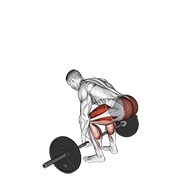
Fixing this means making the work measurably harder over time, even in small ways. Add a little weight when you can, or add a rep at the same weight, or shorten your rest slightly so the same work is more demanding. The key is to track it, because memory is unreliable and progress that is not measured is easy to lose. On a barbell full squat or barbell deadlift, even adding the smallest plates each session adds up over months. For the full method, read our progressive overload guide.

Check your training volume
If your loading is genuinely climbing but growth has still stalled, look next at volume, the total amount of work you do for a muscle each week, counted roughly in hard sets. Too little volume gives the muscle too small a stimulus to grow. This is common when a busy period quietly trims your sessions and a muscle that once got fifteen weekly sets is now getting eight without you noticing.
The opposite problem is just as real. Too much volume outpaces your ability to recover, so you accumulate fatigue faster than you build muscle, and progress stalls even though you feel like you are working hard. The fix depends on which way you have drifted: if volume has crept down, add a set or two per muscle each week; if it has crept too high and you feel run down, pull some back. Most lifters grow within a sensible weekly range rather than at the extremes. Our weekly training volume guide shows how to find that range.
Check your nutrition and sleep
Training is only the signal to grow. The building happens during recovery, and that depends on what you eat and how you sleep. To add muscle your body needs enough total energy and enough protein spread through the day. If a plateau lines up with eating less, skipping meals, or a busy stretch where food became an afterthought, you may simply not be giving your body the raw materials to build with. This is one of the most overlooked causes of stalled progress.
Sleep is the other half of recovery, and it is just as easy to let slip. Most of the hormonal and tissue repair that turns training into muscle happens while you sleep. A run of short nights blunts recovery, raises fatigue, and can flatten progress even when training and nutrition look fine on paper. Before changing your program, ask honestly whether your eating and sleeping have held up. Often the fix is here rather than in the gym. For the recovery side in detail, see our protein and recovery guide.
When to deload and swap exercises
Sometimes the problem is accumulated fatigue rather than a missing input. If you have trained hard for many weeks without a lighter week, your body may simply be too fatigued to express the strength it has built. A deload, a planned week of reduced weight or volume, lets fatigue clear so that real progress can show. Far from being a step back, a well-timed deload often unlocks a jump in performance the following week.
Swapping exercises is a separate tool, useful when a specific lift has stalled while others keep moving. Changing the angle or the implement gives the muscle a slightly different stimulus and can also resolve a nagging sticking point. You do not need to overhaul your whole program: replacing or rotating one or two stubborn movements is usually enough. Keep your core lifts and adjust around them, so you do not lose the progress your main movements are still giving you.
A plateau diagnostic table
Use this table to match your symptoms to the most likely cause and the first thing to try.
| Symptom | Likely cause | First fix |
|---|---|---|
| Same weights and reps for weeks | Stalled progressive overload | Add weight, reps, or reduce rest |
| Loading rises but no growth | Volume too low | Add a set or two per muscle weekly |
| Tired, run down, performance dropping | Volume too high or under-recovered | Pull back volume, take a deload |
| Plateau lines up with eating less | Nutrition gap | Increase total food and daily protein |
| Short nights, low energy | Poor sleep | Prioritise sleep before changing training |
| One lift stuck, others moving | Exercise-specific sticking point | Swap or rotate that movement |
Work down the table in order. Most plateaus trace back to the first few rows, so confirm your overload and volume before assuming you need a dramatic change.
ข้อผิดพลาดที่พบบ่อย (Common mistakes)
- Changing everything at once. Overhauling your whole program hides which fix actually worked. Change one input, then judge.
- Blaming the program before recovery. Most plateaus are an eating or sleeping gap, not a flawed plan. Check recovery first.
- Never deloading. Training hard with no lighter weeks lets fatigue mask your real strength. Schedule a deload.
- Not tracking your lifts. Without a log you cannot tell if you have actually stalled. Write down weight and reps.
- Panicking over a slow week. One or two flat weeks are normal. A real plateau is several weeks with no change at all.
คำถามที่พบบ่อย (FAQ)
How do I know it is a real plateau and not a slow patch? A real plateau is several consecutive weeks with no increase in weight, reps, or size despite consistent effort and recovery. One or two flat weeks are just normal fluctuation and need no action.
Should I add weight or reps to break a plateau? Either works, as long as the work gets harder over time. If you cannot add weight, add a rep at the same load, or trim your rest. Track it so you know it is genuinely increasing.
Will taking a deload set me back? No. A deload clears accumulated fatigue so your body can express the strength it has already built. Most lifters come back stronger the week after a well-timed deload.
สรุป (Summary)
A plateau is not your ceiling: it is a signal that one of the inputs your body needs has slipped. Work through them in order, confirm your progressive overload is genuinely climbing, check your weekly training volume is in a productive range, make sure nutrition and sleep are supporting recovery, and use a deload or an exercise swap when fatigue or a single stuck lift is the problem. Keep your main lifts like the squat and deadlift at the centre and adjust around them. Ready to push past the sticking point with a structured plan? Browse our advanced programs.
Ready to put this into action? Start with a program for your level.
View programs →