The mind-muscle connection, explained
You have probably heard a coach say "feel the muscle working" and wondered whether it was real advice or gym folklore. It turns out to be both useful and backed by evidence. The mind-muscle connection is the deliberate act of focusing your attention on the muscle you are training so that you feel it contract through every repetition, rather than simply moving the weight from point A to point B. Learning it can change how productive your sets feel and how well a stubborn muscle responds.
This guide explains what the mind-muscle connection actually is, what the research shows, and how to build it using tempo, squeezes, and lighter loads. It then covers which exercises suit it best, gives you a sample layout to copy, and walks through the mistakes that hold people back. For the bigger picture on muscle growth, pair this with our compound vs isolation guide.
What the mind-muscle connection is
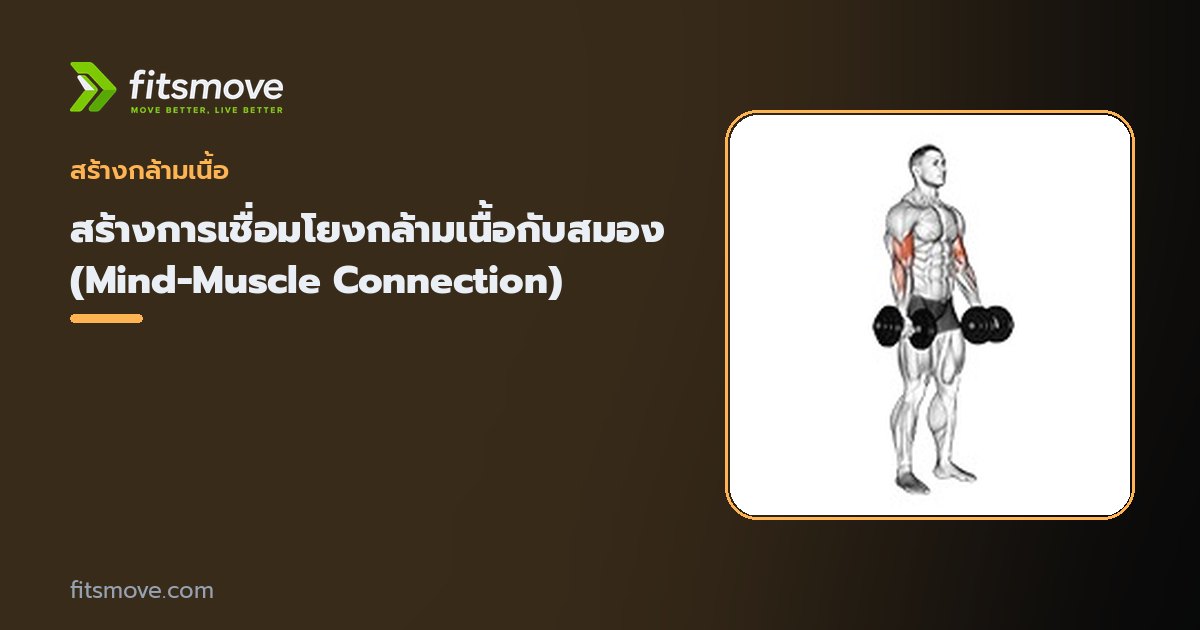
At its core, the mind-muscle connection is internal focus: you direct your attention inward to the working muscle instead of outward to the goal of the movement. When you perform a dumbbell biceps curl with an external focus, you think only about lifting the dumbbell to your shoulder. With an internal focus, you think about the biceps shortening and squeezing while the dumbbell happens to rise as a result.
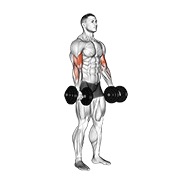
That shift sounds small, but it changes how you recruit muscle fibres. A strong connection means you feel tension build in the target muscle from the first inch of the rep, hold it through the peak, and keep it under load on the way down. A weak connection means other muscles take over, momentum creeps in, and the muscle you meant to train does less than you think. The connection is, in effect, a skill: the better you get at it, the more of each rep lands where you want it.
What the research says
Studies on attentional focus give the connection real support, with sensible limits. When trained lifters are told to consciously focus on a target muscle, measurements of muscle activity in that muscle tend to rise compared with just moving the weight. In practical terms, you can increase how hard a chosen muscle works without adding any load to the bar, simply by paying attention to it.
The research also adds two important caveats. First, the effect is clearest with lighter to moderate loads. When the weight is very heavy, your nervous system is fully occupied with moving it and there is little spare attention to steer. Second, an internal focus is best for building a muscle, while an external focus, thinking about the outcome, tends to help when the goal is maximal strength or speed. So the connection is a tool for growth and quality, not a replacement for progressive loading. To see how loading fits in, read our sets and reps guide.
How to train it with tempo
Tempo, the speed at which you move through a rep, is the simplest lever for building the connection. Rushing a set gives the muscle almost no time to register tension, so the first change to make is to slow down. A common, effective tempo is two to three seconds lowering the weight, a brief pause, then a controlled lift. The slow lowering phase is where many lifters first learn to actually feel a muscle stretch and load.
Lowering under control matters more than most people realise, because the muscle is highly active while resisting the weight on the way down. If you let the weight drop, you skip half the work and most of the sensation. Treat every rep as two deliberate halves: load the muscle as you lower, then drive the contraction as you lift. With a slower tempo the connection often appears within a single set, where a fast, careless set would have felt like nothing.
How to use the squeeze and lighter loads
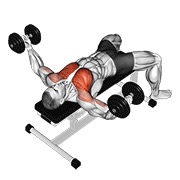
The second lever is the squeeze: a conscious, hard contraction of the target muscle at the top of each rep. At the point of peak contraction, pause for a count and actively flex the muscle as if you were posing it. On a dumbbell fly, that means squeezing the chest together at the top rather than just letting the dumbbells meet. The squeeze teaches your brain where the muscle is and how to fire it hard on command.
The third lever is load. Because the connection works best when you are not fighting maximal weight, drop the load on the exercises where you want to feel the most. A slightly lighter dumbbell on a full can lateral raise, performed slowly with a squeeze at the top, will often hit the side shoulder far better than a heavier raise thrown up with momentum. Lighter weight here is not a step back: it is a tool for quality. As your connection improves, you can add load while keeping the same feel.
Why isolation exercises suit it best
The connection is easiest to build on isolation exercises, the single-joint moves that target one muscle at a time. Because only one joint moves and one muscle does the work, there is nowhere for the effort to hide. A biceps curl bends only the elbow, so all of your attention can rest on the biceps. A lateral raise lifts through the shoulder alone, making the side delt easy to feel.
Big compound lifts, by contrast, spread the effort across many muscles and demand so much coordination that there is little attention to spare. That is fine: compounds are for loading and strength, not for fine-tuning sensation. The smart approach is to drive your heavy work on the compounds, then use isolation moves later in the session to apply the connection where it pays off most. For more on this split of jobs, see our compound vs isolation guide.
A sample isolation finisher
Here is how the three levers, slow tempo, a squeeze, and a lighter controlled load, come together in a short finisher you can add to the end of a session.
| Exercise | Tempo | Squeeze | Focus cue |
|---|---|---|---|
| Dumbbell biceps curl | 3s down, controlled up | 1s at top | Feel the biceps shorten |
| Dumbbell fly | 3s down, controlled up | 1s at top | Squeeze the chest together |
| Full can lateral raise | 2s down, controlled up | 1s at top | Lead with the elbow, feel the side delt |
Run two to three sets of each with a weight light enough that you never lose the feel of the target muscle. This is not your strength work: it is quality work that sharpens control you can carry back to the heavier lifts.
ข้อผิดพลาดที่พบบ่อย (Common mistakes)
- Going too heavy to feel anything. When the weight forces you to heave and swing, attention goes to survival, not the muscle. Drop the load on focus work.
- Rushing every rep. A fast set gives the muscle no time to register tension. Slow the lowering phase to build the feel.
- Skipping the lowering phase. Letting the weight drop wastes the most productive part of the rep. Control the descent every time.
- Forcing it on heavy compounds. Big lifts are for loading, not feeling. Save the connection for isolation moves.
- Treating it as a substitute for progression. Feel is a quality tool, not a growth driver on its own. You still have to make the work harder over time.
คำถามที่พบบ่อย (FAQ)
Does the mind-muscle connection really build more muscle? Used on the right exercises with the right loads, it raises how hard a target muscle works within a set, which supports growth. It is a quality tool, though, not a replacement for steadily increasing your training over time.
Should I use it on every exercise? No. It works best on lighter, isolation moves where one muscle does the work. On heavy compound lifts your attention is better spent on moving the weight safely and well.
How long does it take to develop? Many lifters feel a clear improvement within a few sessions once they slow the tempo and add a squeeze. Like any skill it keeps getting sharper with practice.
สรุป (Summary)
The mind-muscle connection is internal focus made into a skill: feeling the target muscle load and contract through every rep instead of just shifting the weight. The research supports it most with lighter to moderate loads, and you build it with three levers, a slow controlled tempo, a hard squeeze at the top, and a load light enough to keep the feel. It shines on isolation moves like the biceps curl, dumbbell fly, and lateral raise, while your compounds stay focused on loading. Ready to put quality work into a structured plan? Browse our intermediate programs.
Ready to put this into action? Start with a program for your level.
View programs →