Compound vs isolation exercises
Open any training program and you will see two kinds of movements side by side: big lifts that work several muscles at once, and smaller lifts that target a single muscle. These are compound and isolation exercises, and understanding the difference between them is one of the most useful things a lifter can learn. Get the balance right and your sessions become efficient and productive. Get it wrong and you either waste time on small moves or miss the muscle-building power of the big ones.
This guide defines both types clearly, explains what each one is good for, shows how to order them within a workout, gives you a sample layout to copy, and walks through the mistakes people make. By the end you will know exactly when to reach for a compound lift and when an isolation move earns its place. For the bigger picture, pair this with our complete muscle building guide.
What is a compound exercise?
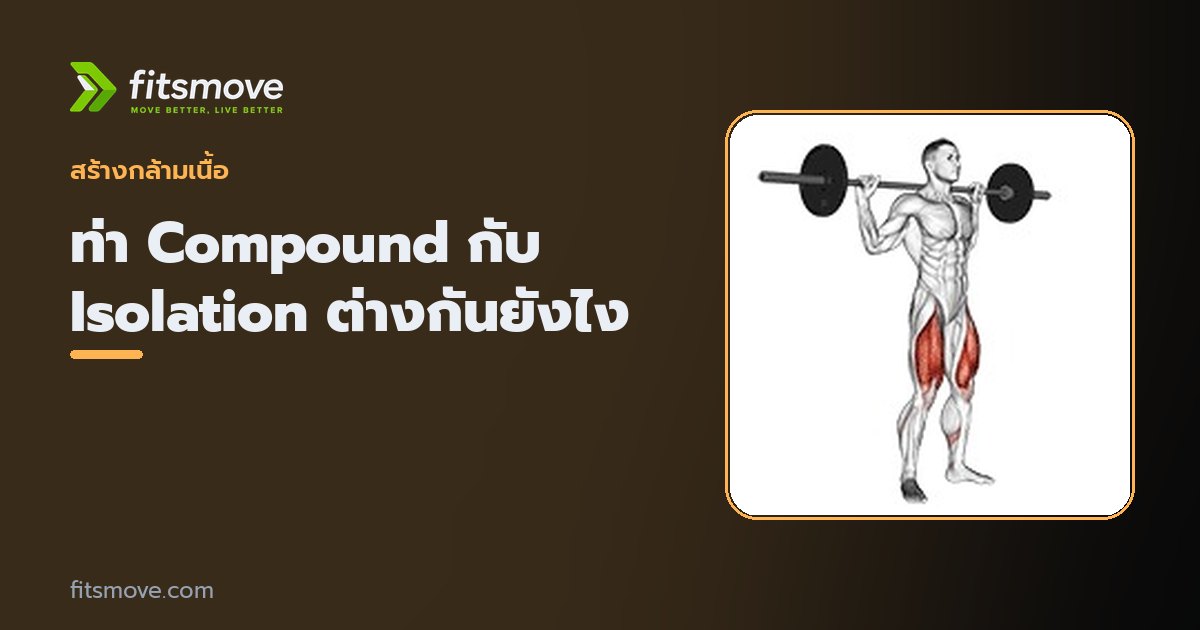
A compound exercise is any movement that bends and works more than one joint at a time, recruiting several muscle groups together. When you perform the barbell full squat, your hips, knees, and ankles all move, which means your quads, glutes, hamstrings, and core all contribute. The barbell deadlift is the same: a single lift that loads almost the entire back of the body in one coordinated effort.
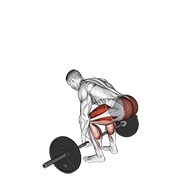
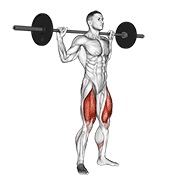
Because they spread the load across many muscles, compound lifts let you handle heavy weight and train a lot of muscle in a single movement. This is what makes them the backbone of almost every serious program. They build strength quickly, deliver a large growth stimulus, and use your gym time efficiently, since one exercise covers ground that would otherwise take three or four.
What is an isolation exercise?
An isolation exercise moves a single joint and targets one muscle group with minimal help from others. The dumbbell biceps curl bends only the elbow, placing the work squarely on the biceps. The triceps pushdown does the same for the triceps, and the lateral raise targets the side of the shoulder almost on its own.
Isolation moves cannot handle the same loads as compounds, and each one trains far less muscle. But that focus is exactly the point. They let you direct effort to a specific muscle that a compound might under-stimulate, polish a lagging body part, and accumulate volume on smaller muscles like the biceps and side shoulders that no big lift fully hits. They are precision tools, not the foundation.
The strengths of each type
The two types are not rivals: they are partners with different jobs. Compounds are your best return on time and energy. They build the bulk of your strength and size, train multiple muscles at once, and let you progress with real weight. If you could only do five exercises, they should all be compounds.
Isolation moves fill the gaps that compounds leave. After a heavy pressing and pulling session, your arms and side shoulders have done supporting work but rarely enough direct work to grow their best. A few targeted curls, pushdowns, and raises top them up. The smart approach is not to choose one type over the other but to build sessions on compounds and finish with isolation where it adds value. For how this fits into your weekly plan, see our sets and reps guide.
There is also a mind-muscle benefit to isolation that compounds cannot easily provide. When a movement involves only one joint, it is far easier to feel the target muscle working and to keep tension on it from start to finish. That focused connection helps you learn what a strong contraction actually feels like, which then carries over and improves your control on the bigger lifts. Used this way, isolation is not just filler at the end of a session but a tool that sharpens the quality of all your training.
How to order them in a session
The order of exercises matters because fatigue accumulates as the workout goes on. The general rule is simple: do compounds first, isolation last. Big lifts demand the most coordination, the most weight, and the freshest nervous system, so they deserve your energy while you have it. Saving them for the end means lifting them tired, which both limits the weight you can use and raises injury risk.
Isolation moves, by contrast, are forgiving when you are fatigued. A biceps curl performed near the end of a session is still perfectly productive, and a failed rep simply means lowering the dumbbell. So the logic flows in one direction: open with the squat or deadlift while you are fresh, then work down toward the curls and raises as the session winds on. This ordering protects your performance on the lifts that matter most.
A sample session layout
Here is how a balanced session puts the rule into practice, leading with compounds and finishing with isolation.
| Order | Exercise | Type | Why here |
|---|---|---|---|
| 1 | Barbell squat | Compound | Heaviest lift, done while fresh |
| 2 | Barbell deadlift | Compound | High demand, needs energy |
| 3 | Leg accessory | Compound or assisted | Builds on the big lifts |
| 4 | Biceps curl | Isolation | Targets a smaller muscle |
| 5 | Triceps pushdown | Isolation | Direct arm volume |
| 6 | Lateral raise | Isolation | Polishes the side shoulder |
Notice how the heavy, multi-joint work comes first and the precise, single-joint work comes last. This is the template for almost any productive session, whatever body part you are training.
ข้อผิดพลาดที่พบบ่อย (Common mistakes)
- Building sessions around isolation. Spending most of your time on curls and raises while skimping on the big lifts leaves the most muscle-building work undone. Anchor every session with compounds.
- Skipping isolation entirely. Compounds do not fully develop the biceps and side shoulders. A little targeted work finishes the job.
- Doing isolation first. Pre-tiring a muscle with isolation before a big compound limits the weight you can use on the lift that matters most.
- Going too heavy on isolation. Swinging a curl with bad form turns a precision move into nothing. Control the weight and feel the target muscle.
- Ignoring progression on both. Compound or isolation, the muscle only grows if the work gets harder over time.
คำถามที่พบบ่อย (FAQ)
Are compound exercises better than isolation? For overall strength and size, compounds give the biggest return because they train the most muscle with the heaviest weight. But isolation moves are not inferior: they finish off smaller muscles that compounds under-stimulate. The best programs use both.
Do beginners need isolation exercises? Beginners get most of their results from a handful of compound lifts and can build a great base with just those. A small amount of isolation for the arms and shoulders is fine, but it should never crowd out the big lifts.
In what order should I do them? Compounds first, isolation last. Big multi-joint lifts need your freshest energy and best coordination, while isolation moves stay productive even when you are tired.
สรุป (Summary)
Compound exercises work several joints and muscles at once, build the bulk of your strength and size, and belong at the start of every session. Isolation exercises work a single joint, polish smaller muscles that the big lifts miss, and belong at the end. They are partners, not rivals: anchor your training on compounds like the squat and deadlift, then finish with focused isolation where it adds value. Ready to put a balanced session into practice? Browse our programs and pair this with the muscle building guide.
Ready to put this into action? Start with a program for your level.
View programs →