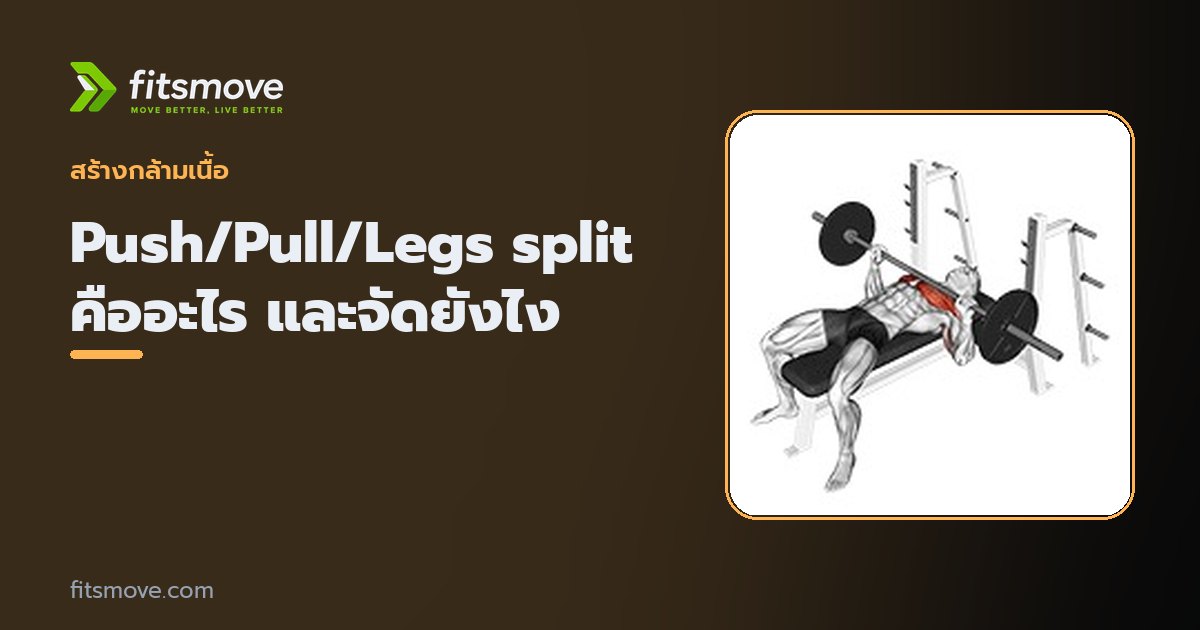
The Push/Pull/Legs split explained
Once you move past the beginner stage, the question of how to organise your training week becomes important. You can no longer train everything hard three times a week and keep recovering, so you need a split: a sensible way of dividing your body across separate sessions. Of all the options, the Push/Pull/Legs split, usually shortened to PPL, is one of the most popular and effective ways to do this, and for good reason. It groups muscles by the movement they share, which keeps each session logical and makes the whole week easy to understand.
This guide explains the simple principle behind PPL, gives you a ready-to-use 6-day sample schedule, helps you decide whether the split actually suits you, and walks through the common mistakes that trip people up. By the end you will know exactly how to build a PPL week of your own. For more on how splits compare, see our overview of the upper and lower split, and for the bigger picture, our complete muscle building guide.
The principle behind Push/Pull/Legs
The logic of PPL is beautifully simple. It divides all your training into three categories based on what the muscles do together. Push days cover every muscle involved in pushing weight away from you: the chest, the shoulders, and the triceps. Pull days cover every muscle involved in pulling weight toward you: the back and the biceps. Legs days cover the entire lower body, including quads, hamstrings, glutes, and calves, often with direct core work added in.
This grouping is clever because muscles that share a movement naturally work together anyway. When you press a barbell, your chest, shoulders, and triceps all fire at once, so training them in the same session means they warm up and fatigue together rather than getting hit twice across the week by accident. The same is true for the back and biceps on a pull day. The result is sessions that flow logically, recover cleanly, and avoid the overlap that plagues less organised plans.
What goes into each day
A push day is built around a heavy chest or shoulder press, then supported by accessory work for all three pushing muscles. The barbell bench press is the classic anchor for the chest, paired with the seated overhead press for the shoulders and the triceps pushdown to finish the arms. Together these cover the whole chest and shoulder region.
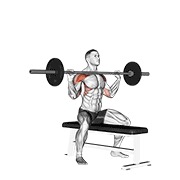
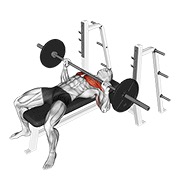
A pull day mirrors this for the back and biceps. The barbell deadlift or a heavy row anchors the session, the lat pulldown builds back width, and the dumbbell biceps curl finishes the arms, covering the whole back. A legs day is built around the barbell full squat as the main movement, then supported by a hip hinge, single-leg work, and calf raises to train the entire upper legs region and below.
A sample 6-day PPL schedule
The most common way to run PPL is six days a week, training each session twice so every muscle is hit roughly twice in seven days. Here is a clean weekly layout.
| Day | Session | Main lifts |
|---|---|---|
| Monday | Push | Bench press, overhead press, triceps |
| Tuesday | Pull | Row, lat pulldown, biceps |
| Wednesday | Legs | Squat, hinge, calves |
| Thursday | Push | Incline press, lateral raises, triceps |
| Friday | Pull | Deadlift, pulldown, biceps |
| Saturday | Legs | Squat variation, lunges, calves |
| Sunday | Rest | Full recovery |
This twice-a-week frequency is excellent for building muscle because each muscle receives two growth signals every week. If six days is too much, the same split runs perfectly well over three or four days by simply cycling push, pull, and legs in order and taking rest days as needed, even if that means a slightly different session falls on the same weekday each week.
Who Push/Pull/Legs suits
PPL shines for intermediate lifters who can train four to six days a week and want a logical, high-volume structure. If you have a year or so of consistent training behind you, can commit to several gym days, and want each muscle trained twice a week, PPL is one of the best frameworks available. The clear grouping also makes it easy to add accessory work without sessions becoming a confusing jumble.
It is less ideal for two groups. Complete beginners are usually better served by a simpler full-body or three-day plan, because they make excellent progress on less volume and rarely need six sessions a week. And anyone who can only train two or three days a week will struggle to run a true six-day PPL, in which case an upper and lower split often fits a busy schedule better. Match the split to the days you can realistically train, not the other way around.
Making PPL work over the long term
The strength of PPL is its flexibility, but that flexibility only pays off if you apply progressive overload consistently. Each session should aim to beat the last over time, whether by adding a little weight, an extra rep, or another quality set. Without that steady progression, even the best-designed split stops producing results.
Recovery is the other half of the equation. Six training days a week is demanding, so your sleep, food, and protein intake have to keep pace, a topic our protein and recovery guide covers in detail. If you find yourself constantly run down, drop to a four or five day version rather than grinding yourself into the ground. A split you recover from and can repeat for months will always beat an ambitious one that burns you out in three weeks. Choose a structured intermediate program and let the consistency do the work.
ข้อผิดพลาดที่พบบ่อย (Common mistakes)
- Running six days when you can only recover from four. More days only help if you can recover from them. Pick the frequency your sleep and schedule actually support.
- Skipping leg day. PPL makes it easy to quietly drop legs. Treat the legs session with the same seriousness as push and pull.
- No progression. Doing the same weights every week wastes the structure. Aim to beat your previous session over time.
- Endless accessory work. Piling on isolation movements while neglecting the heavy compounds is backwards. Anchor each day with a big lift first.
- Jumping in as a beginner. Newer lifters rarely need six days. A simpler full-body plan usually builds muscle faster at the start.
คำถามที่พบบ่อย (FAQ)
Is Push/Pull/Legs good for beginners? Usually not as a first program. Beginners progress well on simpler full-body or three-day plans with less volume. PPL is better suited once you have a year or so of consistent training and can commit to more gym days.
Can I run PPL on fewer than six days? Yes. You can cycle push, pull, and legs over three or four days, taking rest days as needed. Each muscle simply gets trained slightly less often, which still works well for many lifters.
How is PPL different from an upper and lower split? PPL divides the body into three sessions by movement, while an upper and lower split uses two. PPL allows more focused volume per muscle group across more days, while upper and lower fits a four-day week more neatly.
สรุป (Summary)
Push/Pull/Legs is one of the most logical and effective ways to organise serious training. It groups muscles by the movement they share, flows cleanly from session to session, and trains each muscle roughly twice a week when run over six days. It suits committed intermediate lifters best, rewards consistent progressive overload, and demands real recovery to back it up. Ready to put it into practice? Pick a structured intermediate program and build your PPL week with confidence.
Ready to put this into action? Start with a program for your level.
View programs →