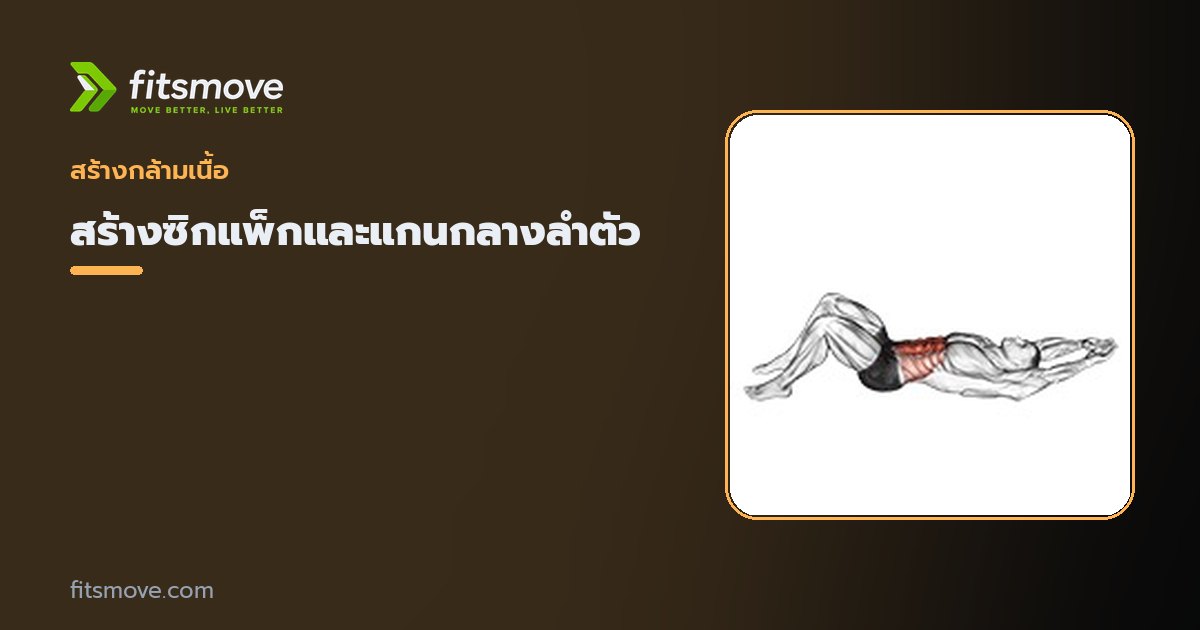
How to build abs and a strong core
Almost everyone wants visible abs, yet most people train them in exactly the wrong way: hundreds of crunches with no plan, no progression, and no attention to body fat. The result is a core that may be strong underneath but stays hidden, and a lot of wasted effort. The truth is simpler and a little harder to accept. A defined midsection is the product of two separate jobs done well: building the abdominal muscles so they have shape, and lowering body fat far enough for that shape to show.
This guide treats both jobs honestly. You will learn why abs are made in the kitchen as much as the gym, which core muscles actually matter, the best exercises to train them, how often to work the core, a ready-to-use sample plan, and the mistakes that quietly stall progress. For the full menu of midsection movements, browse the waist category any time.
Why visible abs require losing fat too
Here is the part most people skip. Everyone already has abdominal muscles. Whether you can see them depends almost entirely on how much fat sits on top. You can build the thickest, strongest core in the gym, but if a layer of fat covers it, the lines never appear. This is why crunches alone never reveal a six-pack: they build the muscle but do nothing about the fat hiding it.
For most men, abs start to show somewhere around 10 to 15 percent body fat, and for most women around 18 to 24 percent, with plenty of individual variation. Getting there comes from a modest, sustainable calorie deficit, enough protein to hold onto muscle, and patience over weeks and months. Training the abs makes them thicker and more defined once revealed, but the reveal itself is driven by your eating. Treat the two as a team: build the muscle, then strip the fat that hides it.
The core muscles that matter
Your core is not one muscle but a coordinated group. The rectus abdominis is the long sheet of muscle down the front that forms the visible six-pack, and it flexes the spine to bring your ribcage toward your hips. The obliques run along the sides of your waist, handling rotation and side bending, and they frame the abs to give the midsection its athletic taper.
Deeper still sits the transverse abdominis, a corset-like muscle that wraps around your trunk and braces your spine under load. It is the muscle you tighten when you brace before a heavy lift. A complete core routine trains all three: direct flexion work for the rectus abdominis, rotational and anti-rotational work for the obliques, and bracing work like planks for the deep stabilisers. Heavy compound lifts also tax the core hard, which is why people who squat and deadlift often have a strong midsection without much direct ab work.
The best core exercises
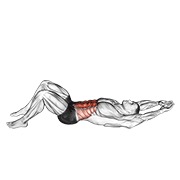
A handful of movements cover everything. The crunch with hands overhead is a direct, effective flexion exercise that loads the rectus abdominis through a clean range of motion, and the overhead arm position makes it harder than a standard crunch, so you can keep progressing. Done slowly with a deliberate squeeze at the top, it builds real thickness in the front of the abs.
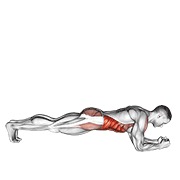
For the deep stabilisers and the obliques together, the front plank with twist is excellent. The plank position forces your whole core to brace, while the twist adds a rotational challenge that hits the obliques and teaches your trunk to resist and control movement. Hold your body in a straight line, brace hard, and move with control rather than speed. Between these two movements, plus the core work you already get from heavy compounds, you have a complete program for both the visible front and the supporting muscles around it.
How to set sets, reps, and load
The core is muscle like any other, so it responds to the same principles. Train direct ab movements like the crunch in roughly the 10 to 20 rep range, with a slow tempo and a strong contraction rather than rushed, bouncing reps. Planks and bracing work are held for time, usually 20 to 60 seconds per set, with the focus on a tight, straight body rather than simply surviving the clock.
As a weekly target, aim for around 10 to 16 hard sets for the core, spread across two or three short sessions rather than one marathon. Crucially, the core needs progressive overload just like your chest or legs. That means adding reps, adding hold time, slowing the tempo, or eventually adding resistance with a weight plate or cable. Endless unweighted crunches with no progression stop working quickly. Our complete muscle building guide explains the principles behind these numbers in full.
A sample core plan
Here is a balanced core session that trains the front abs, the obliques, and the deep stabilisers. Run it two or three times a week at the end of your workouts, progressing the difficulty over time.
| Exercise | Sets x Reps | Rest | Focus |
|---|---|---|---|
| Crunch hands overhead | 3 x 12–20 | 60 sec | Front abs, controlled flexion |
| Front plank with twist | 3 x 8–12 each side | 45 sec | Obliques, bracing, rotation |
| Standard plank hold | 3 x 30–60 sec | 45 sec | Deep stabilisers |
Beginners can start with just the crunch and a plain plank hold, then add the twisting plank as their control improves. The structure matters more than the exact exercise: one direct flexion movement, one rotational or anti-rotational movement, and one bracing hold.
Programming the core into your week
The core fits almost anywhere because it recovers quickly and does not need a dedicated day. The simplest approach is to add a short core finisher of two or three sets at the end of two or three workouts a week. On an upper and lower split, the core pairs naturally with lower-body days. On a full-body plan, you can rotate it through the week so no single session runs too long.
Remember that your big lifts already train the core hard. A heavy squat and a barbell deadlift demand intense bracing, so you do not need to hammer the abs with extra volume on top. Keep direct ab work focused and progressive rather than long and aimless, give the core at least a day to recover between hard sessions, and let your nutrition do the work of revealing the muscle you build. Sleep and protein matter here too, which our protein and recovery guide covers in detail.
ข้อผิดพลาดที่พบบ่อย (Common mistakes)
- Thinking crunches burn belly fat. Spot reduction is a myth. Ab work builds the muscle, but fat loss comes from your overall calorie balance.
- Doing endless reps with no progression. Three hundred bodyweight crunches do little. Add resistance, slow the tempo, or increase the difficulty over time.
- Ignoring nutrition entirely. You cannot out-train a poor diet. Without a modest calorie deficit, the abs you build stay hidden.
- Rushing every rep. Fast, bouncing reps use momentum, not your muscles. Move slowly and squeeze hard at the top.
- Only training the front. Skipping the obliques and deep stabilisers leaves the core unbalanced and the waist less defined.
คำถามที่พบบ่อย (FAQ)
Can I get abs by doing crunches every day? No. Daily crunches build some muscle but do nothing about the fat covering it, and they offer no recovery. Train the core two or three times a week with progression, and lower your body fat through diet to make the abs visible.
How long does it take to see a six-pack? It depends entirely on your starting body fat. Losing fat at a sustainable rate, it can take several months. There is no shortcut, and patience with a steady calorie deficit is what works.
Do I need a dedicated ab day? No. The core recovers quickly and is already worked hard by heavy compound lifts. A short core finisher at the end of two or three workouts a week is plenty.
สรุป (Summary)
A visible, strong core comes from two jobs done together: building the abdominal muscles with focused, progressive work, and lowering body fat far enough for them to show. Train the front abs, the obliques, and the deep stabilisers two or three times a week, use progressive overload instead of endless aimless reps, and let a sensible diet reveal the muscle underneath. Ready to fit this into a complete routine? Pick a structured program and build a core that actually shows.
Ready to put this into action? Start with a program for your level.
View programs →