Build round, 3D shoulders
Round, capped shoulders are what give a physique its width and that coveted "3D" look from every angle. They frame the upper body, make the waist look smaller, and finish off the V-taper that almost everyone is chasing. Yet most people train shoulders the way they train chest - pressing endlessly and hoping for the best - and end up with overdeveloped fronts, flat sides, and rear delts that barely exist. The deltoid is one muscle with three distinct heads, and building all three is what separates a flat shoulder from a round one.
This guide gives you a short tour of shoulder anatomy so your exercise choices make sense, the core movements that build all three heads, clear guidance on how to structure your sets, a ready-to-use sample plan, and the mistakes that quietly keep most people's shoulders flat. For the full menu of options, browse the shoulders category any time.
A short tour of shoulder anatomy
The shoulder is built around the deltoid, a single muscle with three heads that each pull the arm in a different direction. The front (anterior) delt raises the arm forward and assists in every pressing movement - which is exactly why it tends to be overdeveloped in most lifters who bench and press a lot. The side (lateral) delt raises the arm out to the side and is the head responsible for that capped, wide look. The rear (posterior) delt pulls the arm backward and is almost always the most neglected.
The key insight is balance. Because the front delt already gets heavy work from chest pressing, your shoulder training should bias the side and rear heads to create a round, three-dimensional shape. Overhead pressing builds overall mass and the front, lateral raises isolate the all-important side, and rear-delt work fills in the back. Train all three deliberately and the shoulder looks complete from the front, the side, and behind.
The core movements
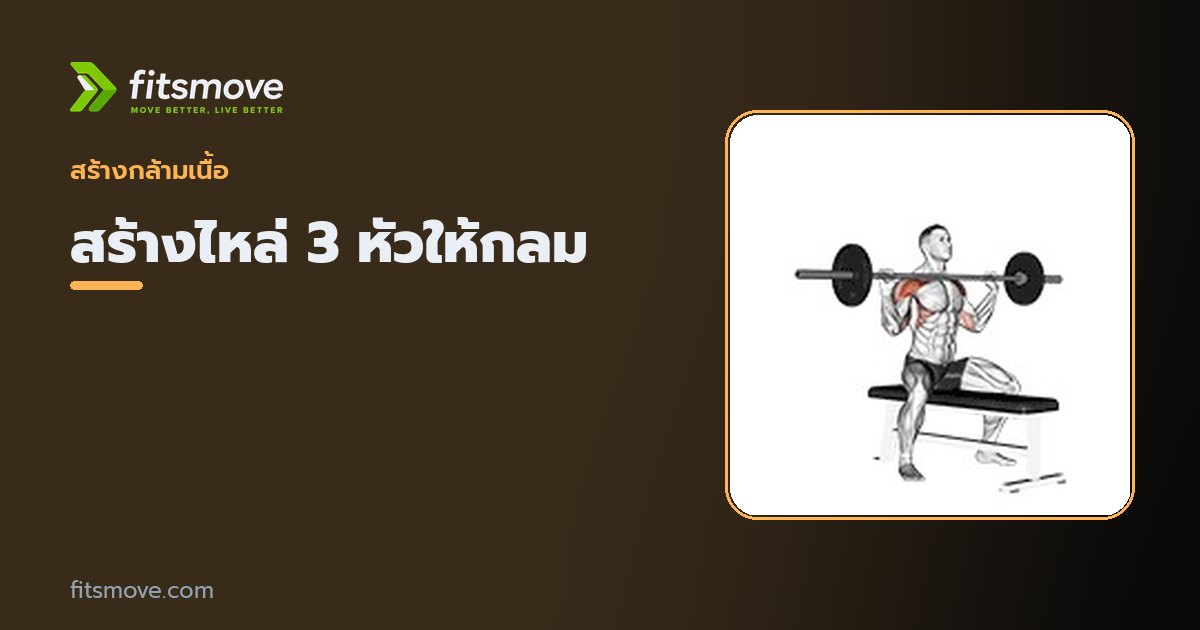
A handful of exercises do most of the work. The barbell seated overhead press is the heavy compound that builds overall shoulder mass and strength - pressing a loaded bar overhead from a seated position keeps your torso supported and lets you progress over time, making it the backbone of shoulder training. The dumbbell seated shoulder press brings the same overhead pattern with a greater range of motion and independent arms, which helps even out left-right differences and is gentler on cranky shoulders.
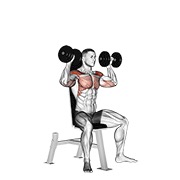
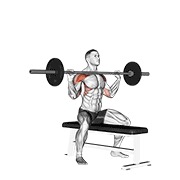
For the side delt - the head that creates width - nothing beats the dumbbell lateral raise. Raising the dumbbells out to the sides isolates the lateral head in a way that pressing simply cannot, and it is the single most important exercise for a capped look. This "full can" variation keeps the thumbs slightly up, which most people find more comfortable on the shoulder joint. Higher-rep lateral raises, done with control and a light weight, are where side-delt growth really happens.
How to set sets and reps
Anchor your shoulder sessions with a heavy overhead press in the 5 to 8 rep range to build strength and overall mass. Then add volume with lighter presses and lateral raises in the 10 to 20 rep range - the side and rear delts respond especially well to higher reps with strict form, since loading them heavily tends to turn the movement into a swing rather than a raise.
As a weekly target, aim for roughly 12 to 18 hard sets for the shoulders in total, weighted toward the side and rear heads since the front already gets work from chest day. Split this across two sessions for better results than one big day. Rest two to three minutes after heavy presses and 45 to 90 seconds on raises. Progress using progressive overload: add a rep or a small amount of weight whenever you hit the top of your range with clean form. Our progressive overload guide explains exactly how to apply this without sacrificing technique.
A sample shoulder plan
Here is a balanced shoulder session that covers all three heads with both heavy and higher-rep work. Run it once or twice a week, progressing the loads over time.
| Exercise | Sets x Reps | Rest | Focus |
|---|---|---|---|
| Barbell seated overhead press | 4 x 5–8 | 2–3 min | Heavy mass, front and overall |
| Dumbbell seated press | 3 x 8–10 | 2 min | Overall, range of motion |
| Dumbbell lateral raise | 4 x 12–20 | 60–90 sec | Side delt, width |
| Lateral raise (lighter, slow) | 2 x 15–20 | 45 sec | Side delt finisher |
Beginners can simplify this to one overhead press and one lateral raise. The structure matters more than the exact exercise - press heavy first, then isolate the side delt with strict raises.
Programming shoulders into your week
Where shoulders sit depends on your split. On a push/pull/legs plan, shoulders train with chest and triceps on push day, so you can lean toward the side and rear heads since the front is already hit by chest pressing. On an upper/lower plan, shoulders share the upper day. On full-body training, you simply include one press and one raise each session. The goal in every case is the same: hit the shoulders about twice a week with enough quality sets and adequate recovery in between.
Because the front delt is already worked hard by any chest pressing, resist the urge to do even more front-focused work. Prioritise the side and rear heads instead - they are what most people are actually missing. A few strict sets of lateral raises consistently, week after week, will do more for your shoulder shape than another round of heavy front presses. If you build your training around our complete muscle building guide, simply weight your shoulder volume toward the side and rear and you will see the difference within a few months.
ข้อผิดพลาดที่พบบ่อย (Common mistakes)
- Only pressing. Pressing builds the front delt but leaves the side and rear underdeveloped. Add direct lateral and rear work.
- Swinging the lateral raise. Using momentum to heave the dumbbells up takes tension off the side delt. Go lighter and raise with control.
- Ignoring the rear delt. The back of the shoulder is the most neglected head and the one that completes the 3D look. Include some rear work.
- Going too heavy on raises. Lateral raises are an isolation movement - heavy weight forces other muscles to take over. Strict form beats big numbers.
- Pressing into shoulder pain. Pain during overhead work is a signal to adjust grip, range, or load - not to push through.
คำถามที่พบบ่อย (FAQ)
How do I get wider shoulders? Width comes almost entirely from the side (lateral) delt. Prioritise the dumbbell lateral raise with strict form and higher reps, week after week - this is the single most important exercise for a capped, wide look.
Should I press overhead or use machines? Free-weight overhead pressing like the barbell or dumbbell seated press builds the most overall mass and strength. Machines are a fine alternative if your shoulders are sensitive, but free weights should be your foundation.
My shoulders hurt when I press. What now? Switch to dumbbells for a more natural path, reduce the load, control the descent, and avoid pressing into pain. Persistent joint pain is a signal to adjust technique and volume, not to push through.
สรุป (Summary)
Round, 3D shoulders come from training all three heads - front, side, and rear - with the side and rear getting extra attention since the front is already worked by chest pressing. Use a heavy overhead press for mass and strict lateral raises for width, hit the shoulders about twice a week, and progress steadily over months. Keep your form clean and let progressive overload do the slow, reliable work. Ready to fit this into a complete routine? Pick a structured intermediate program and put your shoulder training on autopilot.
Ready to put this into action? Start with a program for your level.
View programs →