Shoulder pain from bench press
The bench press is one of the most popular lifts in any gym, and also one of the most common sources of shoulder discomfort. The good news is that the lift rarely deserves the blame. A bench press performed with flared elbows, loose shoulder blades, and a grip that is too wide places the shoulder joint in a vulnerable position rep after rep. Tighten up the set-up, and the same lift that nagged your shoulder can become one that builds it.
This FitsMove guide is general educational information, not medical advice or a diagnosis. It focuses on form, technique, and prevention so you can press with less risk, not on treating an existing shoulder injury. If your pain is sharp, persistent, or getting worse, stop and see a doctor or physiotherapist. With that clear, let us look at why the barbell bench press sometimes irritates the shoulder and how to set it up safely.
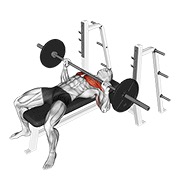
What bench-press shoulder pain usually means
There is a difference between the broad, dull soreness of worked chest and front-shoulder muscles, which fades within a day or two, and a sharp, pinching, or pinpoint pain at the front of the shoulder that arrives during a rep. The first is normal training stress. The second is a signal that the joint is being loaded in a poor position, and it is worth taking seriously.
Good pressing technique keeps the shoulder in a stable, packed position so the load travels through well-supported structures, with the chest, shoulders, and triceps sharing the work rather than concentrating stress at the front of the joint.
Common causes of shoulder pain
Most bench-press shoulder complaints trace back to a few repeatable set-up errors.
- Flared elbows. Letting the elbows drift out to 90 degrees from the torso places the shoulder in an exposed position. Tucking them slightly protects the joint.
- Unset shoulder blades. Pressing with loose, protracted shoulder blades removes the stable base the shoulder needs. Pinning the blades down and back creates a solid platform.
- A grip that is too wide. An extremely wide grip increases the angle at the shoulder and the strain on the joint.
- Bar touching too high on the chest. Lowering the bar to the collarbone forces the elbows out and the shoulder forward.
- No retraction, no arch. A flat, slumped position leaves the shoulder unsupported throughout the press.
Safe pressing form
A safe bench press is built before the bar ever moves. The set-up does most of the work.
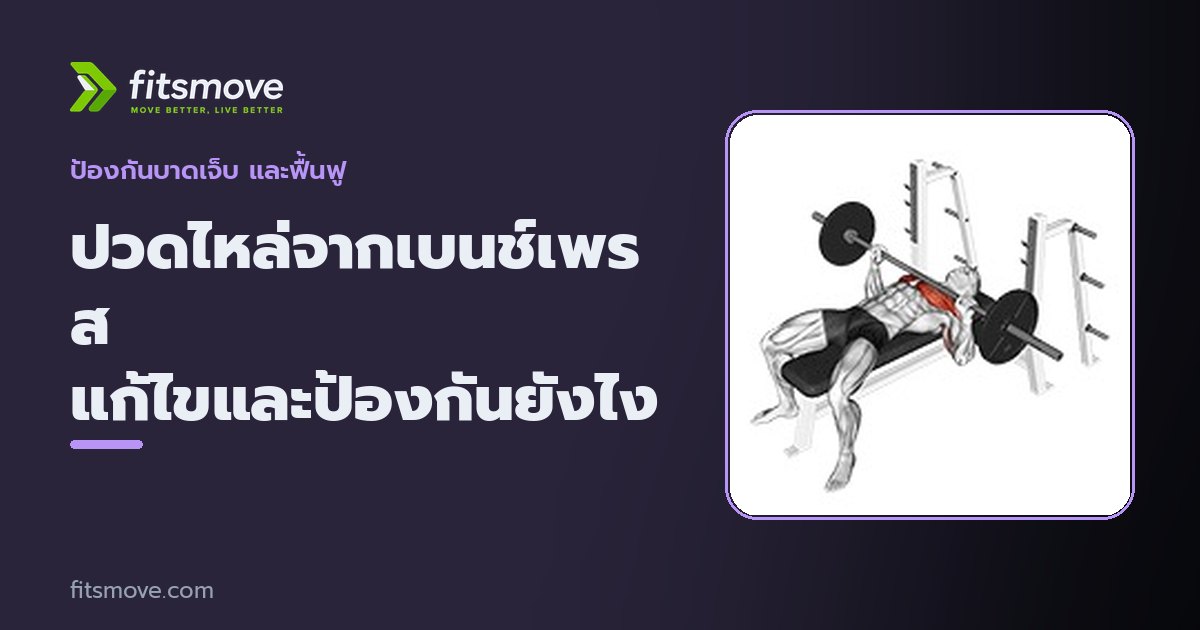
Lie back and pull your shoulder blades down and together, as if tucking them into your back pockets, then keep them pinned there for the entire set. Maintain a small, natural arch in your upper back so the chest is lifted toward the bar. As you lower, keep the elbows tucked to roughly 45 to 75 degrees from your torso rather than flared straight out, and let the bar touch around the lower chest or nipple line, not the collarbone. Press back up along the same path, keeping the shoulder blades set the whole time. The cue that ties it together: stay tight and packed, never loose.
This stable, retracted position is what lets the chest and triceps do their job while the shoulder stays protected. Building balanced strength across the shoulders, including the rear and the supporting muscles, gives the joint the stability it needs under load.
Grip width
Grip width has a direct effect on how much stress lands on the shoulder. Too wide, and the joint is loaded at a harsher angle; too narrow, and the triceps take over while the chest does less. The sweet spot is individual, but a moderate grip is far kinder to the shoulder than a maximally wide one.
| Grip width | Effect on shoulder | Best for |
|---|---|---|
| Very wide | More shoulder strain, shorter range | Generally not recommended if shoulders hurt |
| Moderate | Balanced load, joint better protected | Most lifters, especially with shoulder discomfort |
| Narrow / close | Less chest, more triceps emphasis | Triceps focus, variation work |
If your shoulders bother you on the bench, start by bringing your grip in toward moderate and keeping the elbows tucked. Many lifters find that this single change relieves a surprising amount of discomfort.
Warming up the shoulders before pressing
The shoulder is a mobile, complex joint, and it benefits enormously from a focused warm-up before heavy pressing. A few minutes of arm circles, band pull-aparts, and light external rotations wake up the supporting muscles, followed by a couple of progressively heavier warm-up sets of the press itself to groove the pattern.
For a complete routine you can run before any session, see our warm-up guide. It is also worth understanding the difference between mobility work done before lifting and flexibility work done afterward: our article on dynamic versus static stretching explains why dynamic movement is the right choice before you press, while static stretching is best saved for later. The principle: prepare the joint actively before you load it.
A problem-solving table
Match the symptom to a likely cause and an adjustment before adding weight.
| What you feel | Likely cause | What to adjust |
|---|---|---|
| Pinch at the front of the shoulder | Flared elbows | Tuck elbows toward 45 to 75 degrees |
| Shoulder rolls forward under load | Shoulder blades not set | Pin blades down and back, stay packed |
| Strain that grows with wider grip | Grip too wide | Bring grip in toward moderate |
| Discomfort when bar is high on chest | Bar touching near collarbone | Lower to the nipple line instead |
| Aches when cold, fine once warm | Inadequate shoulder warm-up | Add band work and warm-up sets |
Patient load management
The shoulder is easy to overload because the bench press lets you move serious weight. Add load in small, planned steps rather than chasing a new max every week, and build in lighter periods so the joint and its supporting tissues can keep adapting. A measured approach to progressive overload lets your bench climb while keeping the shoulder healthy enough to keep training.
ข้อผิดพลาดที่พบบ่อย (Common mistakes)
- Letting the elbows flare straight out. Keep them tucked to protect the joint.
- Pressing with loose shoulder blades. Set them down and back, and keep them there.
- Using an excessively wide grip. Bring it in toward moderate if shoulders hurt.
- Touching the bar too high on the chest. Lower toward the nipple line instead.
- Skipping the shoulder warm-up. A cold, mobile joint under load is a needless risk.
เมื่อไหร่ควรไปพบแพทย์/นักกายภาพ (When to see a professional)
Form fixes are for prevention, not for treating an injury. Stop pressing and see a doctor or physiotherapist if you notice any of these red flags:
- Sharp, sudden, or pinpoint pain in the shoulder during a rep.
- Pain that radiates down the arm, or numbness, tingling, or weakness in the arm or hand.
- Clicking or catching combined with pain, or a sense of instability.
- Pain that persists for days, keeps returning, or is getting worse.
- Pain at rest or that disturbs your sleep.
FitsMove cannot diagnose or treat injuries. These signs mean a qualified professional should assess you in person before you load the joint again.
คำถามที่พบบ่อย (FAQ)
Should I stop benching completely if my shoulder hurts? If the pain is sharp, radiating, or worsening, stop and get it checked. For mild discomfort, it is often better to fix the set-up, narrow the grip slightly, reduce load, and rebuild than to quit the lift entirely.
Are dumbbells safer for my shoulders than a barbell? Dumbbells allow a more natural path and let each shoulder move independently, which some people find more comfortable. They are a useful option, but the same principles of tucked elbows, set shoulder blades, and patient loading still apply.
Does a slight arch hurt my back? A small, natural arch in the upper back is part of safe benching and helps protect the shoulder. This is different from an extreme, forced arch. Keep it modest and your feet planted.
สรุป (Summary)
Shoulder pain from bench press is usually a set-up problem, not a reason to abandon the lift. Pin the shoulder blades down and back, tuck the elbows, choose a moderate grip, lower the bar to the right spot, warm the joint up, and add weight patiently. Respect the difference between ordinary soreness and a sharp warning, and if pain is sharp, persistent, or worsening, stop and see a professional. Ready to build a strong, healthy press inside a structured plan? Explore our programs and train your upper body the smart way.
Ready to put this into action? Start with a program for your level.
View programs →