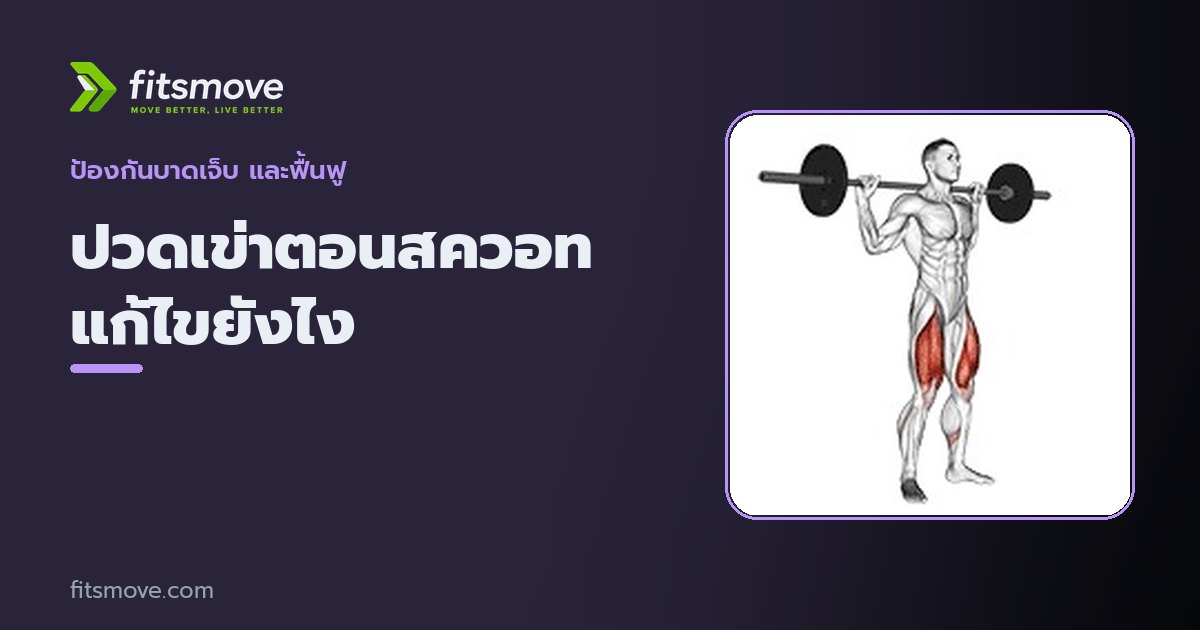
Fixing knee pain when you squat
Knee pain is one of the most common complaints among people who squat, and it is also one of the most fixable. The squat does not inherently damage healthy knees: a large body of evidence shows that well-coached squatting builds strong, resilient joints. When the knees hurt, the cause is usually upstream, in how the hips, ankles, and torso are positioned, or how quickly load was added. Trace the cause, adjust the input, and the symptom often fades.
This FitsMove guide is general educational information, not medical advice or a diagnosis. It focuses on form, technique, and prevention so you can squat with less risk, not on treating an existing knee injury. If your pain is sharp, persistent, or getting worse, stop and see a doctor or physiotherapist. With that framing clear, let us work through why the barbell full squat sometimes bothers the knees and what to do about it.
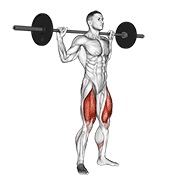
What knee pain during squats usually means
Not all knee sensations are equal. A mild, diffuse ache around the kneecap that warms up and eases as you move is different from a sharp, pinpoint, or grinding pain that worsens with each rep. The first often reflects tissue that simply needs more gradual loading. The second is a clearer signal to stop, reassess, and, if it persists, get it checked.
Good technique aims to distribute load across the whole lower body, the quads, glutes, and hamstrings working together, rather than dumping stress onto the knee joint alone. Most of this article is about restoring that shared workload.
Common causes of knee pain
A handful of repeatable factors account for the majority of squat-related knee complaints.
- Knees caving inward. When the knees collapse toward each other under load, the joint is loaded at an awkward angle. Tracking them in line with the toes spreads the load evenly.
- All quads, no hips. Squatting straight down without sitting the hips back puts the knees in charge of the entire lift. Involving the hips shares the work.
- Limited ankle mobility. Stiff ankles force the knees to travel forward excessively or the torso to pitch, both of which can stress the joint.
- Adding weight too fast. Tendons and cartilage adapt more slowly than muscle. Outrunning that adaptation is a frequent cause of nagging knee pain.
- Cold, unprepared joints. Heavy squats on cold knees, with no warm-up sets, is a common trigger.
Knee and hip form that protects the joint
The squat is a hip-and-knee movement, not a knee-only one. The fix for most knee pain begins with re-teaching the hips to do their share.
Start each rep by sitting the hips back and down at the same time, as if reaching your hips toward a chair behind you while keeping your chest up. Let the knees bend and travel forward naturally, but keep them tracking over your toes rather than caving in. A simple cue that works for many lifters: imagine spreading the floor apart with your feet, which switches on the glutes and keeps the knees aligned. Drive up through the whole foot, not just the toes or the heels.
Strengthening the muscles around the joint matters too. Balanced upper-leg training, hitting quads, hamstrings, and glutes, gives the knee the muscular support it needs to handle load comfortably.
Mobility: ankles and hips
Many knee problems are really mobility problems in disguise. If your ankles cannot flex enough, your knees and hips compensate, and the compensation is where pain shows up. The same goes for tight hips that prevent you from sitting into a clean squat position.
A focused mobility routine before squatting can transform how the lift feels. Spend a few minutes opening the ankles and hips so the joints can reach the positions the squat demands. Our dedicated guide to hip and ankle mobility for the squat walks through specific drills you can do with no equipment. The principle: give the joints room to move, and they stop forcing the knee to make up the difference.
Footwear and stance
What is on your feet, and how you set them, has a surprisingly large effect on the knees.
| Factor | What helps | What to avoid |
|---|---|---|
| Sole | Firm, flat, stable base | Soft, squishy running shoes |
| Heel | A slightly raised heel can aid depth if ankles are stiff | Forcing depth your ankles cannot reach |
| Stance width | Width that lets you reach depth comfortably | A stance that forces the knees in |
| Toe angle | Toes turned out slightly, knees tracking over them | Toes forward with knees caving |
A stable platform under your feet lets you drive force into the ground without the foot rolling, which keeps the knee aligned. Experiment with stance width and toe angle: small changes often relieve discomfort by letting your hips and knees find a more natural path.
Warm up the knees before loading them
Cold knees under a heavy bar are a common source of pain that has nothing to do with technique. A short, specific warm-up raises joint temperature, spreads lubricating fluid through the joint, and rehearses the movement pattern. Light bodyweight squats followed by a few progressively heavier warm-up sets prepare the knee far better than jumping straight to your working weight.
For a complete routine you can run before any leg session, see our warm-up guide. The key idea: by the time you reach your working set, the knee should already feel smooth, not stiff.
A problem-solving table
Match the symptom to a likely cause and an adjustment before you reach for more weight.
| What you feel | Likely cause | What to adjust |
|---|---|---|
| Pain when knees drift inward | Knees caving under load | Spread the floor, track knees over toes |
| Pain only at the bottom | Limited ankle or hip mobility | Add mobility work, consider a small heel |
| Front-of-knee ache that builds over weeks | Load added too quickly | Reduce weight, progress in smaller steps |
| Discomfort early, fine once warm | Inadequate warm-up | Add warm-up sets before working weight |
| Pain when squatting deep | Forcing depth you cannot control | Squat only to a depth you own, then build |
Patient load management
Even with clean form and good mobility, knees can flare if load climbs faster than the tissues adapt. Cartilage and tendon strengthen slowly. Add weight in small, planned increments and include lighter periods so accumulated stress can settle. A measured approach to progressive overload keeps your squat moving forward while giving your knees the time they need to keep up.
ข้อผิดพลาดที่พบบ่อย (Common mistakes)
- Letting the knees cave on heavy or fatigued reps. Keep them tracking over the toes throughout.
- Squatting straight down without using the hips. Sit the hips back to share the load.
- Forcing depth your mobility cannot support. Build the range first, then the depth.
- Skipping warm-up sets. Cold knees under load is a needless risk.
- Chasing weight every session. Tendons need time; progress patiently.
เมื่อไหร่ควรไปพบแพทย์/นักกายภาพ (When to see a professional)
Form and mobility fixes are for prevention, not for treating an injury. Stop squatting and see a doctor or physiotherapist if you notice any of these red flags:
- Sharp, sudden, or pinpoint pain inside the joint during a rep.
- Swelling, locking, catching, or a knee that gives way.
- Pain that persists for days, keeps returning, or is getting worse.
- Pain at rest or that disturbs your sleep.
- Any instability that makes the knee feel untrustworthy under load.
FitsMove cannot diagnose or treat injuries. These signs mean a qualified professional should assess you in person before you load the joint again.
คำถามที่พบบ่อย (FAQ)
Is it bad for my knees to travel past my toes? Not inherently. Knees moving forward is a normal part of a deep squat, especially with mobile ankles. The problem is excessive forward travel forced by stiff ankles, or knees caving inward, not forward movement itself.
Should I stop squatting if my knees hurt? If the pain is sharp, swelling, or worsening, stop and get it checked. For mild discomfort, it is often better to reduce load, fix form and mobility, and rebuild gradually rather than quit entirely.
Do knee sleeves fix knee pain? Sleeves can add warmth and a sense of support, which some people find helpful, but they do not correct form, mobility, or load errors. Treat them as a comfort aid, not a solution.
สรุป (Summary)
Knee pain when you squat is usually a fixable signal, not a verdict against the lift. Sit the hips back, keep the knees tracking over the toes, open the ankles and hips, choose a stable platform, warm the joint up, and add weight patiently. Respect the difference between a mild ache and a sharp warning, and if pain is sharp, persistent, or worsening, stop and see a professional. Ready to rebuild a strong, pain-free squat inside a structured plan? Explore our programs and train your legs the smart way.
Ready to put this into action? Start with a program for your level.
View programs →