Build a wider, thicker back
A great back is what gives a physique its shape from behind and its power in almost every lift. Yet it is the muscle group people train least effectively, partly because you cannot see it working in the mirror, and partly because most lifters bias their pulling toward whichever movement they are best at. The result is a back that is either wide but flat, or thick but narrow. A complete back needs both - and building both means understanding the difference.
This guide breaks the back into its two visual goals, width and thickness, shows you which exercises build each, lays out a balanced sample plan, and flags the mistakes that quietly limit back development. For the full list of options, the back category has everything in one place.
Width versus thickness
These two words describe how your back looks from different angles. Width is the V-taper - the impression of a broad upper body sweeping out from a narrow waist. It comes mainly from the latissimus dorsi (lats), the large muscles on the sides of your back, and it is built primarily by vertical pulling: movements where you pull a bar or your body downward from overhead.
Thickness is the dense, three-dimensional look you see from the side and the rear, driven by the muscles of the mid-back - the rhomboids, traps, and the inner portions of the lats. It is built primarily by horizontal pulling, or rowing: movements where you pull a weight toward your torso. A back trained only with pulldowns will look wide but flat; a back trained only with rows will look thick but lack that V sweep. Train both patterns and you get a back that is wide and thick.
Vertical pulls for width
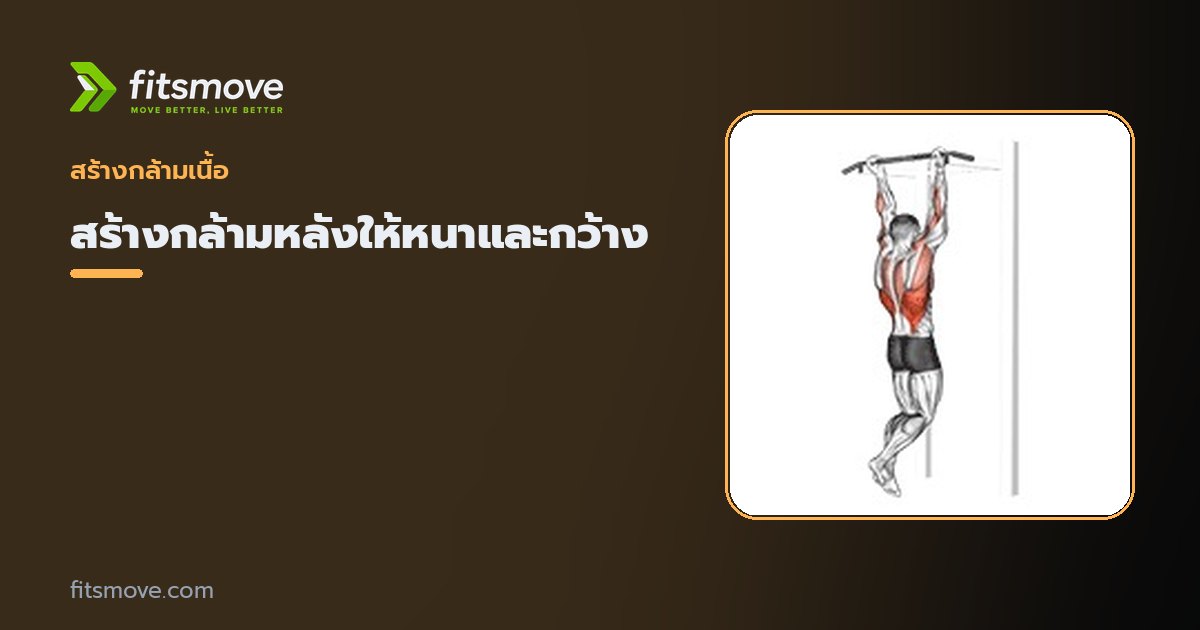
To build width, you pull from overhead. The chin-up is one of the best back-builders there is - pulling your own bodyweight up loads the lats heavily and lets you add weight as you get stronger. If full chin-ups are out of reach, the lat pulldown trains the same vertical pattern with adjustable load, which is why it is the go-to width builder for most people.
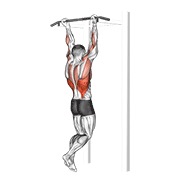
The key with vertical pulls is to use a full range of motion: let your arms extend fully at the top to stretch the lats, then pull your elbows down and slightly back, driving with the back rather than yanking with the arms. Think about pulling your elbows toward your hips, and let your lats - not your biceps - do the work. Done well, these are the movements that carve in the V-taper.
Horizontal pulls for thickness
To build thickness, you row. The barbell bent-over row is a powerful mass builder that loads the entire mid-back, hitting the rhomboids, traps, and lats together with heavy weight. The seated cable row offers a stable, joint-friendly way to row with constant tension, making it easy to feel the mid-back contract.
The dumbbell bent-over row trains one side at a time with a long range of motion, helping correct left-right imbalances. On every row, the cue is the same: pull the weight toward your lower ribs or belly, squeeze your shoulder blades together at the top, and avoid shrugging up toward your ears. Lead with the elbows and think about pulling through them, not your hands. That mind-muscle connection is what turns a row into a back exercise rather than an arm one.
The deadlift: the backbone of back training
No back guide is complete without the barbell deadlift. It is not a pure "back" exercise - it trains the entire posterior chain from your calves to your traps - but it builds enormous thickness through the lower and mid-back, the spinal erectors, and the traps, while teaching the whole body to brace and pull as a unit. It is also one of the best drivers of overall strength.
Because it is so demanding, the deadlift sits at a low rep range and modest weekly volume. Treat it as a strength foundation rather than a high-volume back exercise: a few heavy sets done with a flat back and a braced core go a long way. Master the hip hinge and keep the bar close to your body throughout. Done correctly, the deadlift underpins everything else your back does.
A sample back plan
Here is a balanced session that trains both width and thickness, plus a strength foundation. Run it once or twice a week, progressing the loads over time.
| Exercise | Sets x Reps | Pattern | Focus |
|---|---|---|---|
| Barbell deadlift | 3 x 4–6 | Hinge | Strength, overall thickness |
| Chin-up | 3 x 6–10 | Vertical pull | Width (lats) |
| Barbell bent-over row | 3 x 8–10 | Horizontal pull | Thickness (mid-back) |
| Lat pulldown | 3 x 10–12 | Vertical pull | Width, higher reps |
| Seated cable row | 3 x 12–15 | Horizontal pull | Thickness, contraction |
Beginners can simplify to one vertical pull, one row, and an optional light deadlift. The principle is balance: for every pulldown or chin-up, include a row.
Programming and progressing your back
Aim to train your back about twice a week, with roughly 10 to 18 hard sets total split across those sessions. Balance is the golden rule - count your vertical pulls and your rows, and keep them in rough proportion so neither width nor thickness lags. If your physique already looks wide but flat, add row volume; if it looks thick but narrow, add vertical pulling.
Progress with progressive overload: on chin-ups, add reps then weight; on rows and pulldowns, add load when you hit the top of your rep range with clean form. Because the back is so reliant on feel, slow your reps down enough to actually sense the muscle working - rushing through pulls is the fastest way to turn them into arm exercises. When you are ready for structure, the intermediate programs build this balance in for you.
ข้อผิดพลาดที่พบบ่อย (Common mistakes)
- Pulling with the arms, not the back. If your biceps fail before your back, you are bending the elbows too early. Lead with the elbows and think "drive them down and back."
- Only rowing or only pulling down. Neglecting one pattern leaves your back half-developed. Balance vertical and horizontal pulls.
- Cutting range short. Half-reps on pulldowns and rows shortchange the lats. Full stretch at one end, full squeeze at the other.
- Rounding the back on deadlifts and rows. A rounded lower back under load is a serious injury risk. Keep a flat back and a braced core.
- Going too heavy to feel the muscle. Loads you cannot control turn back work into a whole-body heave. Pick weights you can move with intent.
คำถามที่พบบ่อย (FAQ)
What is the difference between width and thickness? Width is the V-taper built by vertical pulls like the chin-up and lat pulldown. Thickness is the dense mid-back built by rows like the barbell row. A complete back trains both.
I can't do a single chin-up. What should I do? Start with the lat pulldown to build pulling strength, use an assisted machine or band if available, and practice the negative (lowering) portion of the chin-up. Strength builds over weeks.
How do I stop my arms from taking over? Slow down, use a slightly lighter weight, and focus on driving with your elbows while squeezing your shoulder blades. The mind-muscle connection improves with practice.
สรุป (Summary)
A wide, thick back comes from training two patterns in balance: vertical pulls for the lats and width, and rows for the mid-back and thickness, anchored by heavy deadlifts for strength and overall mass. Pull with your back rather than your arms, use a full range of motion, keep your vertical and horizontal work in proportion, and progress steadily over months. Ready to put it together in a complete routine? Choose a structured intermediate program and let your back finally grow in every dimension.
Ready to put this into action? Start with a program for your level.
View programs →