The complete beginner's guide to working out
Starting to work out can feel overwhelming - too many programs, too much advice, too many conflicting opinions. This guide cuts through the noise. It is the hub for everything a beginner needs to begin training with confidence, and it links out to focused articles whenever you want to go deeper on a single topic. Read it once from top to bottom, then come back to it as a map whenever you feel lost.
Who this guide is for
This guide is for anyone who has never trained before, who is returning after a long break, or who has tried before but never managed to make it stick. You do not need a gym membership, expensive equipment, or any prior experience. You only need a willingness to start small and the patience to stay consistent week after week. If you have a current injury, a chronic health condition, or you are pregnant, check with a doctor or a qualified trainer before you begin - this article is educational and is not medical advice.
The good news is that beginners hold a real advantage. When you are new, your body responds quickly to almost any sensible stimulus, so even modest effort produces visible progress in the first few months. Your job is simply to show up, repeat a handful of good movements, and resist the urge to do too much too soon.
The 5 core principles
Almost everything about beginner training comes back to five ideas. Internalise these and you will make good decisions even when an article does not cover your exact situation.
- Consistency over intensity. Three steady sessions a week beat one brutal workout followed by a week of soreness. Your body adapts to what you repeat, not to what you do once. A workout you can sustain for a year is worth more than a heroic one you quit after a fortnight.
- Compound, multi-joint basics. Squats, push-ups, rows, and hinges train several muscles at once. They give you the most strength and the most efficient progress for the least time. Learn them in our 6 basic exercises guide.
- Form before weight. Always earn the movement before you load it. Good technique protects your joints and makes every repetition count. See why in form before weight.
- Recovery is part of training. Muscle is built during rest, not during the set itself. Sleep well, eat enough protein, and give each muscle around 48 hours before training it hard again. Learn more in protein and recovery.
- Patience. Visible change usually takes 8–12 weeks. Trust the process and measure small weekly wins rather than judging yourself in the mirror every day.
How to start, step by step
You do not need to figure everything out at once. Follow this order and each step sets up the next.
- Pick your setting. No gym? Start with a home workout that needs no equipment. It is the simplest possible on-ramp and removes every excuse about cost or travel.
- Choose a simple schedule. Most beginners thrive on a 3-day-a-week split. If you are unsure how often to train, read how many days per week.
- Warm up first. Five minutes of easy movement before every session lowers injury risk and helps you perform better. See our warm-up guide.
- Learn the basics. Spend your first two weeks grooving the 6 basic exercises with light or no load. Master the pattern before you chase the number.
- Read your very first session plan. Our beginner start article walks you through day one, set by set.
- Progress gradually. Once a movement feels easy, add a little - one rep, one set, or a small amount of weight. This is progressive overload, the engine behind every result.
A sample first week
Here is what a realistic, low-pressure first week can look like. Keep loads light and focus on clean technique.
| Day | Focus | What to do |
|---|---|---|
| Mon | Full body A | Squat pattern, push, row - 2 sets of 8–10 each |
| Tue | Rest / walk | 20–30 minutes of easy walking |
| Wed | Full body B | Squat pattern, push, hinge - 2 sets of 8–10 each |
| Thu | Rest | Sleep and recover |
| Fri | Full body A | Same as Monday, add 1 rep if it felt easy |
| Sat/Sun | Rest / light activity | Walk, stretch, enjoy a day off |
Two sets per movement is intentionally modest. Finishing the week feeling like you could have done more is exactly the point - it keeps you coming back.
Understanding sets, reps, and progress
A rep is one full repetition of an exercise; a set is a group of reps done back to back. Most beginners do well with 2–3 sets of 8–12 reps per exercise, resting about 60–90 seconds between sets. Stop a set when your form starts to break down rather than grinding out ugly reps. For a deeper look, read sets and reps. Once a weight feels comfortable across all your sets, that is your signal to add a little - the principle of progressive overload.
How to use FitsMove
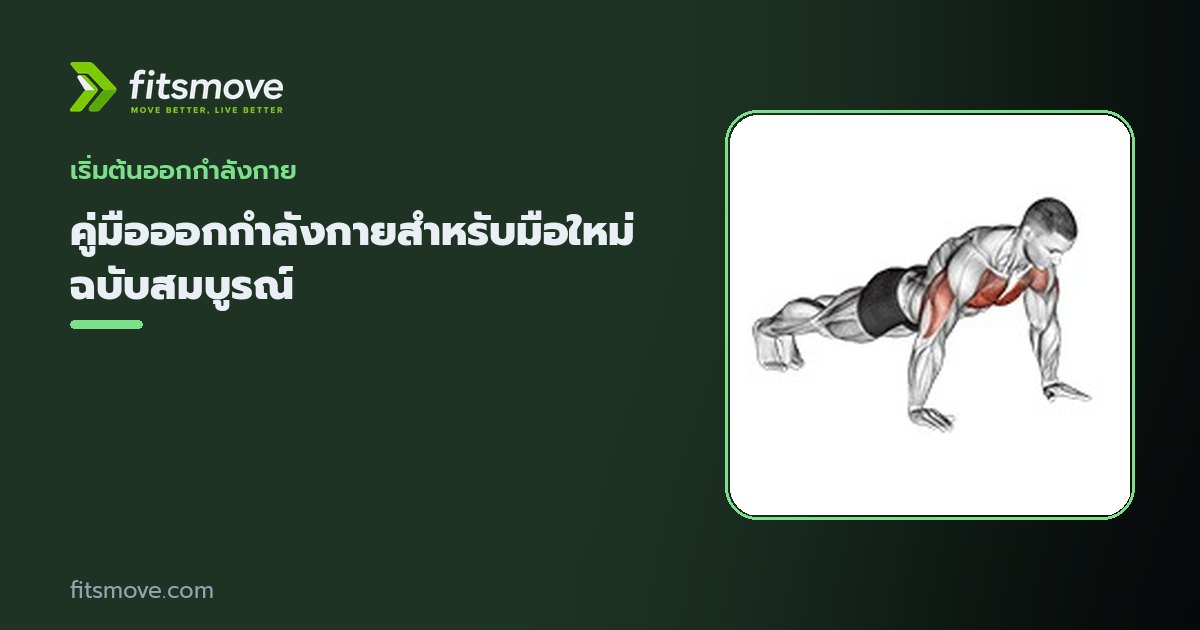
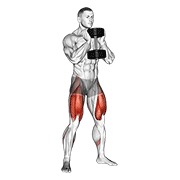
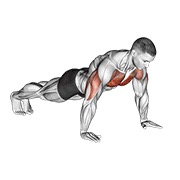
FitsMove is built to make all of this easy. Follow a ready-made plan in our beginner programs, then explore the exercise library by body part - for example legs, chest, back, and shoulders. Every exercise page shows a clear demonstration so you can check your form before you start, such as the push-up or the dumbbell goblet squat. Bookmark this guide and use the linked articles whenever you want more detail.
Common mistakes
- Doing too much, too soon. Enthusiasm fades fast when you are too sore to walk. Start below what you think you can handle.
- Skipping the warm-up. Two saved minutes are not worth a tweaked back. Always prepare your body first.
- Chasing weight before form. Heavy and sloppy builds bad habits and risk; light and clean builds a foundation.
- Program-hopping. Changing your plan every week prevents the steady progress that only repetition reveals. Pick one and give it 8 weeks.
- Ignoring sleep and food. Training is only the stimulus; rest and nutrition are where adaptation happens.
Frequently asked questions (FAQ)
How long until I see results? Strength often improves within 2–3 weeks because your nervous system learns the movements quickly. Visible changes in your body usually take 8–12 weeks of consistent training paired with sensible eating.
Do I need supplements to start? No. Whole foods with enough protein cover the basics. Read protein and recovery before spending money on anything else.
Is it normal to be sore? Mild soreness a day or two after a new workout is normal, especially at the start. Sharp or joint pain is not - scale back and check with a professional if it persists.
Summary
Beginner training is not complicated: warm up, repeat a few good movements, recover well, and add a little over time. Start small, stay consistent, and let the small weekly wins add up. When you are ready to follow a structured plan, head to our beginner programs and let FitsMove guide you session by session.
Ready to put this into action? Start with a program for your level.
View programs →