A full-body bodyweight routine
Your body is the most accessible piece of training equipment you will ever own. It is always with you, it never needs setup, and with the right plan it can take a complete beginner a remarkably long way. The trick is not to do random sets of push-ups whenever you remember. The trick is to cover every major movement pattern, organize the work into a repeatable session, and make each week a little harder than the last. This article gives you a full-body bodyweight routine you can run anywhere, a sample table you can follow today, and a clear method for keeping it challenging for months.
Why bodyweight training works
Bodyweight movements are not a watered-down version of "real" training. They are foundational. When you squat, hinge, push, pull, and brace using only your own mass, you teach your joints and muscles to work together the way they are built to. Because you control the difficulty through leverage, range, and tempo, you can match the load to your current ability with surprising precision. There is no spotter to find, no plates to load, and very little that can go wrong. Best of all, the low friction makes it easy to stay consistent, and consistency is what actually changes your body. If you want the bigger picture of how to begin, read our beginner guide and our no-equipment home workout.
Cover every movement pattern
A balanced body needs balanced training. Skip a pattern and you build gaps that show up as weak links and nagging aches. A complete bodyweight routine should hit five jobs: push, pull-style bracing, squat, hinge, and core stability.
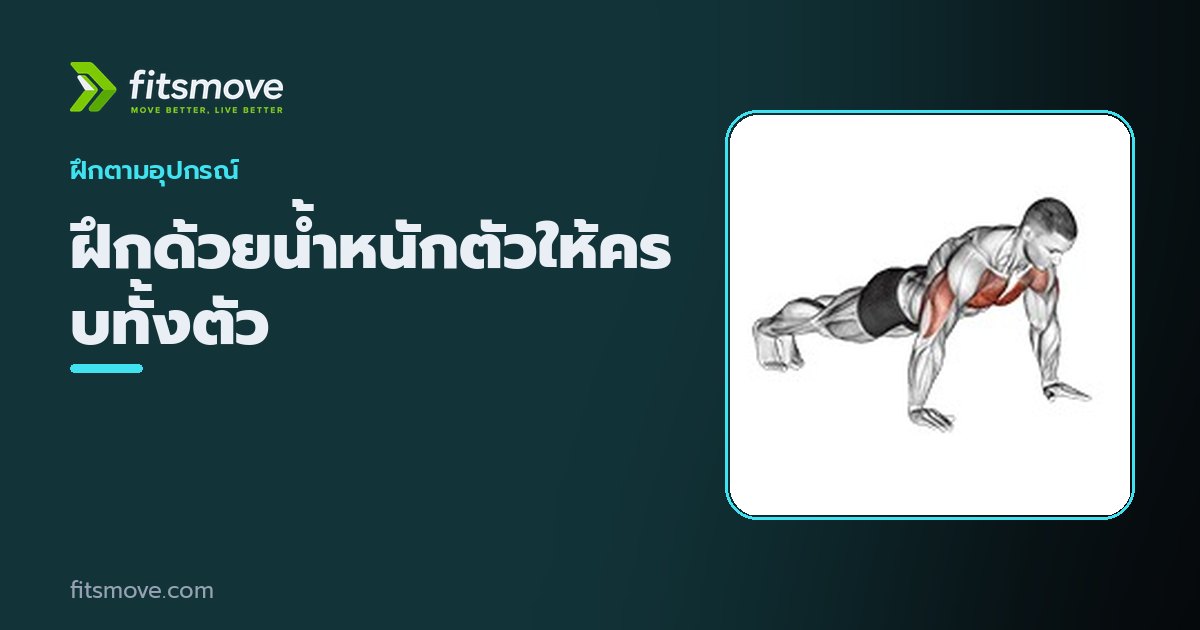
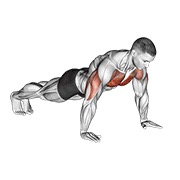
- Push: the push-up trains your chest, shoulders, and triceps in one clean movement.
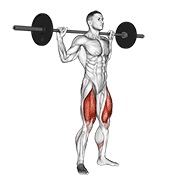
- Squat: the bodyweight squat loads your legs and glutes through a deep, controlled range.
- Hinge: the glute bridge and single-leg variations teach your hips to drive while protecting your lower back.
- Core stability: the front plank with twist trains your trunk to resist movement, which is exactly what the core does in real life.
- Pull-style work: if you have a sturdy table edge or low bar, rows fill the pulling gap, otherwise prone "superman" raises keep the back of your body engaged.
Warm up before you start
Cold muscles move poorly and feel stiff. Spend three to five minutes raising your heart rate and opening your joints before the first hard rep. March in place, swing your arms in big circles, do slow air squats, and roll your shoulders and hips. A short warm-up improves how you move and lowers your risk of tweaks. For a complete sequence, see our warm-up guide.
A sample full-body session
Here is the routine as a real session you can run today. Move through it as a circuit: do one set of each exercise in order, rest briefly, then repeat the whole list. Beginners start with 2 rounds and build toward 4.
| Exercise | Pattern | Reps / time | Rest |
|---|---|---|---|
| Push-up (or kneeling) | Push | 8-12 | 45 sec |
| Bodyweight squat | Squat | 12-20 | 45 sec |
| Glute bridge | Hinge | 12-15 | 45 sec |
| Inverted row or superman | Pull | 8-12 | 45 sec |
| Front plank with twist | Core | 20-40 sec | 60 sec |
Repeat the full list 2-4 times depending on your level. With the warm-up included, the whole thing fits inside 25 to 35 minutes. Run it three to four non-consecutive days a week.
How to set reps and rounds
For building strength and muscle, keep most sets in the 8 to 15 rep range and stop one or two reps before failure. For core holds, work in the 20 to 40 second range. Rest 30 to 60 seconds between exercises and a bit longer between rounds. The most important rule is simple: end a set when your form starts to slip. A clean set of 9 beats a sloppy set of 15 every time. If you want a deeper breakdown, read sets and reps.
How to keep progressing
Bodyweight training stalls only if you let it. The principle behind continued gains is progressive overload, and you can apply it without owning a single weight. Change just one variable at a time so your body adapts safely and you can tell what is working.
- Add reps: push from 8 toward 12, then 15.
- Add a round: go from 2 rounds to 3, then 4.
- Slow the tempo: take three seconds to lower in each push-up and squat.
- Shorten rest: trim 10 to 15 seconds off your breaks.
- Harder variation: progress from kneeling to full push-ups, then to feet-elevated push-ups, or from two-leg squats to split squats.
A good habit is to change one variable each week and hold everything else steady. That way, if a session feels off, you know exactly which dial to turn back.
Track your results
Without numbers on a bar, progress can feel invisible. Keep a simple log. Note your rounds, the reps you hit on each move, your hardest variation, and a one-to-ten rating of how the session felt. Over a few weeks you will see the numbers climb even before the mirror catches up. Recorded wins, one more rep, one slower tempo, one extra round, are the real proof your plan is working. For how rest and food turn effort into results, see protein and recovery.
Fit it into your week
A full-body bodyweight routine works best when it has structure around it. Train three to four times a week on non-consecutive days, leaving recovery time between sessions so your muscles can rebuild. A simple weekly shape is Monday, Wednesday, Friday, with an optional fourth day on the weekend. On your off days, light movement like walking helps you recover without adding fatigue. Keep the routine the same for three or four weeks so you can measure progress against yourself, then refresh it with harder variations or a new sequence. If you would rather follow a ready-made structure, our beginner programs lay the whole week out for you, and the no-equipment home workout gives you a shorter alternative for busy days. Consistency over many weeks beats any single perfect session, so pick a schedule you can actually keep and protect it like an appointment.
Common mistakes
- Rushing the reps. Bouncing removes the tension that builds strength. Control every repetition.
- Skipping patterns. Doing only push-ups and planks leaves your legs and back behind. Cover all five jobs.
- Sagging hips in the plank. Squeeze your glutes and brace so your body forms one straight line.
- Half-depth squats. Sit down until your thighs reach roughly parallel, as long as it is pain-free.
- Never progressing. If the workout feels identical for weeks, it has stopped challenging you, so add a variable.
- Training every single day. Muscle is built during recovery. Three to four days a week is plenty.
Frequently asked questions (FAQ)
Can I really build muscle with just bodyweight? Yes, especially as a beginner. Once basic moves get easy, harder variations, more reps, and slower tempos keep the stimulus high enough to grow.
How many days a week should I run this? Three to four non-consecutive days works well. Leave at least one rest day between sessions. See how many days per week.
When should I add equipment? When the hardest bodyweight variations stop challenging you, a single pair of dumbbells opens up new options. It is a natural next step, not a requirement to start.
Summary
A complete body needs complete training, and you can deliver that with nothing but the floor and a plan. Cover all five movement patterns, run the circuit with clean form, recover between sessions, and add one small challenge whenever it feels easy. When you are ready for a structured, guided plan, follow one of our programs. If anything causes sharp pain, stop and consider checking with a professional.
Ready to put this into action? Start with a program for your level.
View programs →