Full-body training with one pair of dumbbells
You do not need a rack of machines or a wall of plates to train your entire body well. A single pair of dumbbells, used with a smart plan, covers every major muscle group and scales with you for years. Dumbbells are compact, affordable, and forgiving for beginners, which makes them the most practical first investment for home training. This article explains why one pair is genuinely enough, gives you the lifts that cover your whole body, lays out a sample session, and shows you exactly how to choose the right weight.
Why one pair of dumbbells is enough
The myth is that more equipment means better results. In reality, what builds muscle is challenging your muscles through a full range of motion and progressively asking for more over time. A pair of dumbbells does both. Because each hand moves independently, dumbbells expose and fix side-to-side imbalances that the barbell Big 3 can hide. They let you adjust the load by switching weights, the range by choosing your stance, and the difficulty by changing tempo and reps. For a deeper look at how dumbbells fit a complete plan, see our full-body dumbbell overview and the broader muscle building guide.
Lifts that cover the whole body
To train your whole body, you need to hit the same movement patterns a good gym session would: squat, hinge, push, pull, and a dedicated arm and core finisher. A handful of dumbbell lifts handles all of it.
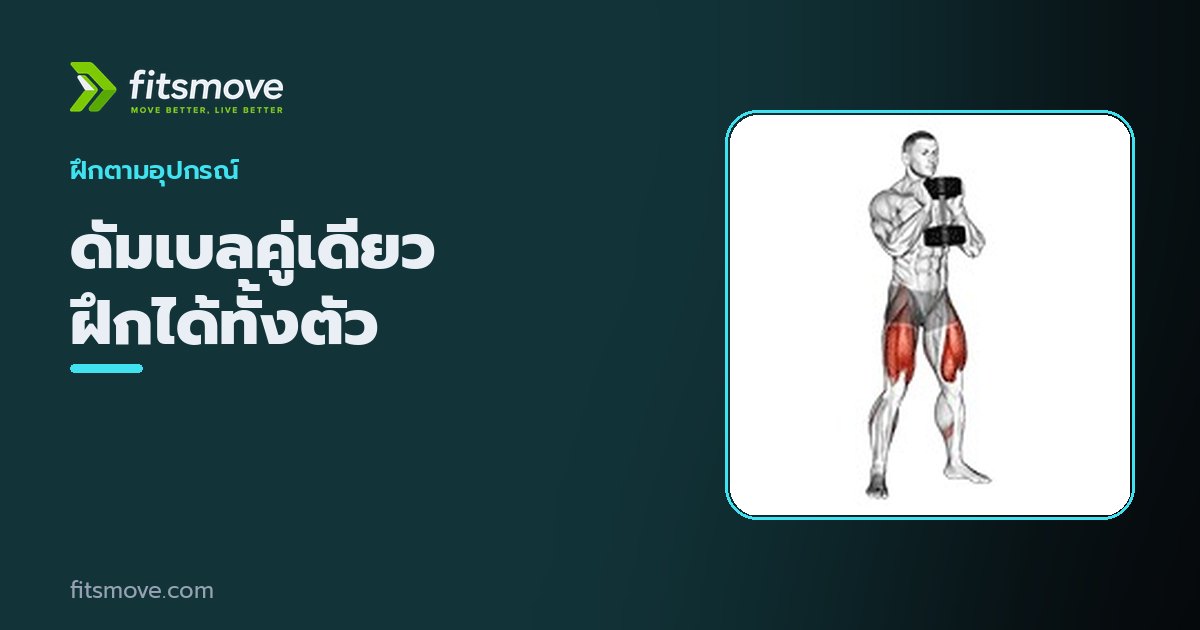
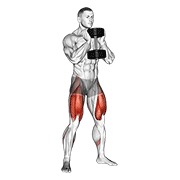
- Legs: the dumbbell goblet squat loads your legs and glutes while teaching an upright, braced torso.
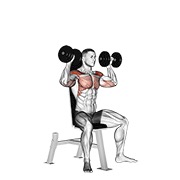
- Shoulders: the dumbbell seated shoulder press builds your shoulders and triceps with the spine supported.
- Back: the dumbbell bent-over row trains your back and rear shoulders, the key pulling pattern.
- Chest: the dumbbell floor or bench press develops your chest and front shoulders.
- Hips: the dumbbell Romanian deadlift loads the hinge and the back of your legs while protecting the lower back.
- Arms and core: the dumbbell biceps curl finishes the arms, and a weighted carry or front plank with twist braces the trunk.
Warm up first
Before the first working set, spend three to five minutes getting your body ready. Raise your heart rate with light cardio like marching or light steps, then do a few rounds of the day's lifts with very light or no weight to groove the pattern. This primes your joints and rehearses good form. For a complete routine, read our warm-up guide.
A sample full-body session
Here is a complete dumbbell workout you can run with one pair. Do all the sets for one exercise before moving to the next, or pair exercises that work different areas to save time. Beginners start at the lower end of the set and rep ranges.
| Exercise | Target | Sets | Reps |
|---|---|---|---|
| Goblet squat | Legs | 3 | 10-12 |
| Seated shoulder press | Shoulders | 3 | 8-12 |
| Bent-over row | Back | 3 | 10-12 |
| Floor or bench press | Chest | 3 | 8-12 |
| Romanian deadlift | Hips and hamstrings | 3 | 10-12 |
| Biceps curl | Arms | 2 | 12-15 |
Rest 60 to 90 seconds between sets of the bigger lifts and about 45 seconds on the curl. Run this two to three times a week on non-consecutive days. The whole session, warm-up included, fits in 40 to 50 minutes.
How to choose your weight
Picking the right load is simpler than it looks. The right weight lets you complete the target reps with clean form while the last one or two reps feel genuinely hard. If you breeze past the top of the range, the weight is too light. If your form breaks before you reach the bottom of the range, it is too heavy. Different lifts need different loads: your legs and back will handle far more than your shoulders or arms, so do not expect one weight to suit everything. If you own only one pair, manage the difficulty by changing reps and tempo. For a full walkthrough, read how to choose your dumbbell weight and how much weight to start.
| Lift | Difficulty cue | If too easy |
|---|---|---|
| Goblet squat | Last 2 reps hard, torso upright | Add reps or slow the descent |
| Shoulder press | Last 2 reps hard, no arching | Add reps or a short pause at the top |
| Biceps curl | Last 2 reps hard, no swinging | Add reps or slow the lowering |
How to keep progressing
Your body adapts to what you ask of it, so you must keep asking for a little more. This is progressive overload. With one pair of dumbbells, you have several levers: add reps within the range, add a set, slow the lowering phase to three seconds, shorten your rest, or improve your depth and control. When every lift sits comfortably at the top of its rep range with great form, that is your signal to add a heavier pair. Change one variable at a time so you can tell what is driving your results.
Structure your training week
One pair of dumbbells fits almost any schedule, which is part of why it is so practical. The simplest effective plan for a beginner is a full-body session repeated two or three times a week on non-consecutive days, for example Monday and Thursday, or Monday, Wednesday, and Friday. Hitting each muscle group two to three times a week gives you frequent practice and steady growth without overloading any single session. As you get stronger and want more volume, you can split the body into an upper-day and a lower-day, training four times a week. Whatever you choose, leave at least one rest day between sessions that hit the same muscles, because growth happens during recovery, not during the lift itself. Keep a consistent routine for a few weeks so your numbers can climb, and if you would like a guided structure, our programs and the muscle building guide show you how to organize the work.
Common mistakes
- Going too heavy too soon. If form breaks down, the weight is teaching bad habits, not building muscle. Earn the load.
- Using only one weight for everything. Your legs can handle far more than your arms, adjust reps and tempo to compensate.
- Swinging the curls. Momentum steals the work from the muscle. Keep your elbows pinned and lower slowly.
- Skipping the pull. Many home lifters press but never row, which builds imbalance. Train your back every session.
- Never progressing. If the weights and reps never change, neither will you. Add a variable each week.
Frequently asked questions (FAQ)
Can one pair of dumbbells really build muscle? Yes. As long as you train through a full range and progress over time, a single pair is enough to build a strong, balanced body, especially as a beginner.
What weight should a beginner buy? Choose a pair you can press overhead for about 8 to 10 controlled reps. It will feel light for squats and rows, which you manage with higher reps. See how to choose your dumbbell weight.
How many days a week should I train? Two to three full-body sessions on non-consecutive days is ideal for beginners. Leave a rest day between them so you recover.
Summary
One smart pair of dumbbells covers every movement pattern your body needs: squat, hinge, push, pull, and a finisher for arms and core. Warm up, choose a load that makes the last reps honestly hard, run the session with clean form, and add a small challenge whenever it feels easy. When you want a structured plan to follow, explore our programs. If anything causes sharp pain, stop and consider checking with a professional.
Ready to put this into action? Start with a program for your level.
View programs →