The barbell Big 3: bench, squat, deadlift
If you could pick only three exercises for the rest of your training life, the barbell bench press, squat, and deadlift would be the strongest possible choices. Together these three lifts, often called the Big 3, train nearly every muscle in your body, build raw strength faster than almost anything else, and give you a simple, measurable way to track progress for years. This article explains why the Big 3 matter so much, walks through the key technique of each lift, gives you a frequency and set table, and lays out the safety habits that keep heavy barbell training productive instead of risky.
Why the Big 3 matter
The Big 3 are compound lifts, meaning each one moves multiple joints and recruits large amounts of muscle at the same time. That efficiency is the whole point. Instead of stitching together a dozen isolation exercises, three barbell lifts cover the press, the squat, and the hinge, which are the foundations of human movement. They also load heavily and progress cleanly: you can add a small amount of weight to the bar over time and watch your strength climb in a way that is hard to fake. For the wider picture of how compound work drives growth, see our muscle building guide and progressive overload.
The bench press in brief
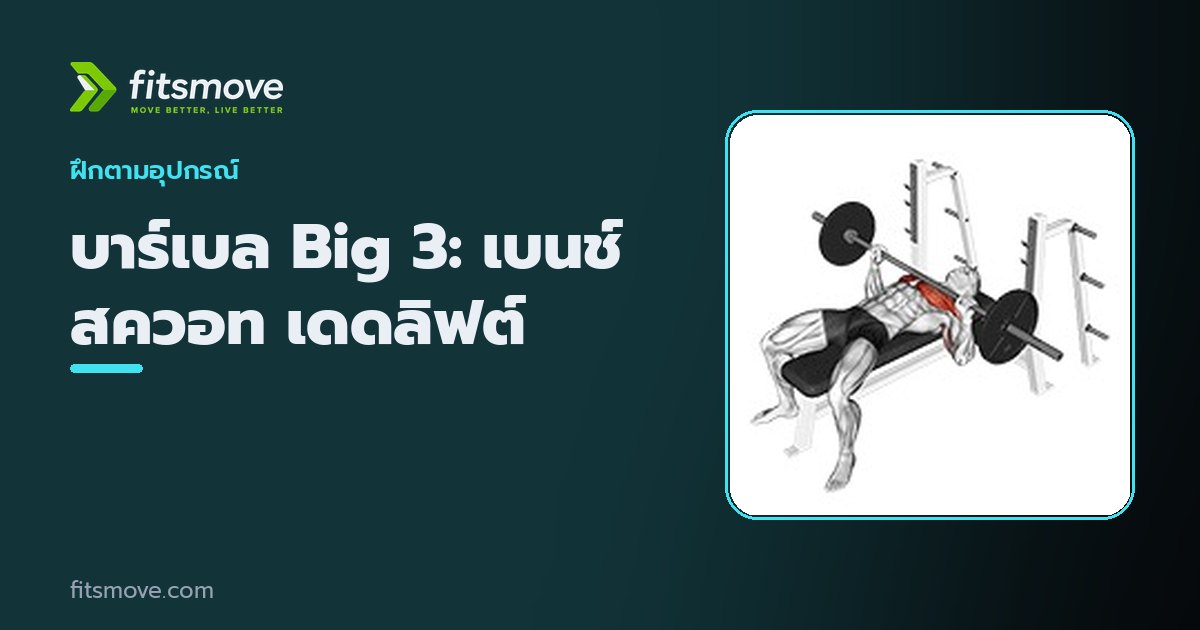
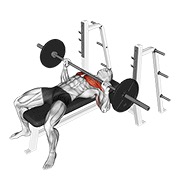
The barbell bench press is the primary upper-body push, training your chest, front shoulders, and triceps. Lie flat with your eyes under the bar, plant your feet, and pull your shoulder blades back and down to create a stable base. Grip a little wider than your shoulders, unrack, and lower the bar under control to the lower chest, keeping your elbows at roughly a 45-degree angle to your body. Press back up in a straight line until your arms are locked. Never bounce the bar off your chest, and always train with safety arms or a spotter.
The squat in brief
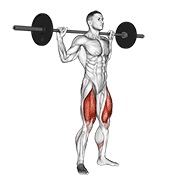
The barbell full squat is the king of lower-body lifts, loading your legs, glutes, and core in one movement. Set the bar across your upper back, not your neck, and grip it firmly. Step back, set your feet about shoulder-width apart with toes turned slightly out, and brace your core. Sit down and back as if lowering into a chair, keeping your chest tall and your knees tracking over your toes. Descend until your thighs reach at least parallel, as long as it is pain-free, then drive up through your whole foot. Keep the bar over your mid-foot the entire time.
The deadlift in brief
The barbell deadlift is the purest test of total-body strength, training your back, glutes, hamstrings, and grip. Stand with the bar over your mid-foot, hip-width stance. Hinge at the hips and bend your knees to reach the bar, gripping just outside your legs. Set your back flat, brace hard, and pull the slack out of the bar before you move. Drive your feet into the floor and stand up tall, keeping the bar close to your body the whole way. Finish standing upright with your hips and knees locked, then lower under control. Never round your lower back under load.
A frequency and set plan
Beginners progress fastest by practicing these lifts often with moderate volume. Here is a simple weekly template that hits each lift two to three times across the week. Start at the lower set count and add over time.
| Lift | Days per week | Sets per session | Reps |
|---|---|---|---|
| Squat | 2-3 | 3-4 | 5-8 |
| Bench press | 2-3 | 3-4 | 5-8 |
| Deadlift | 1-2 | 2-3 | 3-6 |
Rest two to three minutes between heavy sets so each one is high quality. Deadlifts are deliberately lower in volume because they are the most demanding on recovery. For how this fits a full week, read how many days per week and explore our structured beginner programs.
Safety habits that matter
Heavy barbell training is safe when you respect a few non-negotiable habits. These are not optional extras, they are what let you keep training for years. The lifters who get hurt are almost never the ones who follow these rules, they are the ones who skip the warm-up, chase a personal best on a bad day, or load the bar faster than their form can handle. Treat these habits as part of the lift itself.
- Warm up properly. Do light sets of the lift before your working weight to rehearse the pattern. See our warm-up guide.
- Use safety equipment. Set the rack safety arms at the right height for bench and squat, and use a spotter when one is available.
- Master form before load. Prioritize technique over the number on the bar, as covered in form before weight.
- Brace and breathe. Take a big breath, brace your core, hold it through the hardest part of the rep, then exhale at the top.
- Add weight slowly. Small, steady increases beat big jumps that wreck your form and invite injury.
How to progress over time
The reason the Big 3 are so effective is that they give you an obvious way to keep getting stronger: add a little weight to the bar. As a beginner, your nervous system and muscles adapt quickly, so you can often add a small amount each session while your form holds. A typical pattern is to add the smallest available plates to the squat and bench each session and to the deadlift slightly less often, since it taxes recovery more. When you can no longer add weight every session, switch to adding it weekly, then add reps or sets before increasing the load again. Keep a written log of every session, the weight, the sets, and the reps, so you always know your next target. This steady, recorded climb is progressive overload in its purest form, and it is what separates lifters who keep improving from those who stall. When progress slows for good, small changes in rep ranges or assistance work usually get it moving again.
Common mistakes
- Squatting too high. Cutting the depth short trains less muscle. Reach at least parallel when pain-free.
- Rounding the back on deadlifts. A rounded lower back under heavy load is the fastest route to injury. Keep it flat and braced.
- Bouncing the bench off the chest. Lower under control and press, do not use the ribcage as a springboard.
- Skipping the warm-up. Jumping straight to heavy sets cold raises risk and hurts performance.
- Adding weight too fast. Ego loading breaks form. Earn each increase with clean reps first.
- Ignoring recovery. The Big 3 are demanding. Sleep, food, and rest days are when you actually get stronger.
Frequently asked questions (FAQ)
Are the Big 3 enough on their own? For a beginner, largely yes. They build a powerful foundation. Many lifters add a few assistance exercises with dumbbells for arms, shoulders, and back over time, but the Big 3 stay at the center.
How often should I increase the weight? As a beginner, often, sometimes each session in small steps, as long as your form stays clean. When progress slows, switch to weekly increases. See progressive overload.
Do I need a spotter or a rack? For the bench and squat, yes, use safety arms or a spotter. The deadlift starts and ends on the floor, so it is safer to fail by simply setting the bar down.
Summary
The bench press, squat, and deadlift give you the most strength and muscle for your time, plus a clear scoreboard you can chase for years. Learn each lift's technique, follow a sensible frequency, respect the safety habits, and add weight only when your form has earned it. When you want a full, guided plan built around these lifts, start with our beginner programs. If anything causes sharp pain, stop and consider checking with a professional.
Ready to put this into action? Start with a program for your level.
View programs →