
How much weight should a beginner start with?
One of the most common beginner questions is also one of the hardest to answer with a single number: how much weight should I lift? The honest answer is that it depends on you, the exercise, and the day. But there is a reliable, repeatable way to find the right starting point and to know exactly when to move up. In this guide you will learn why starting light is a strength rather than a weakness, how to use "reps in reserve" to gauge effort, a simple test for finding your working weight, how fast to add load, and the mistakes that trip up almost every beginner.
Start light and focus on form
When you are new, your first job is not to lift heavy, it is to learn the movement well. Start lighter than you think you need to, even with just the empty bar or a light dumbbell. Clean, controlled reps build the motor patterns and connective-tissue resilience that let you add weight safely later. Going too heavy too soon usually means you learn the movement with bad habits that take months to unwind, which is why form comes before weight.
A good early goal is to finish every set feeling like you owned the technique, not like you barely survived. Speed and load will come; quality comes first. Think of your first few weeks as practice, not testing.
There is also a hidden benefit to starting light: it builds confidence. Nothing kills motivation faster than feeling crushed under a bar in your first week. When the weight feels manageable, you show up again, and showing up consistently is what actually drives progress. The strongest people you see in the gym all started lighter than you would guess.
The idea of reps in reserve (RIR)
A simple way to gauge effort is "reps in reserve" - how many more reps you could have done with good form before failing. For most beginner training, aim to leave about 2–3 reps in reserve on each set.
If your target is 10 reps, the right weight is one where you could have done roughly 12–13 if you absolutely had to. That keeps training productive while protecting your form and your recovery. Training all the way to failure every set is rarely necessary for beginners and makes recovery harder. To understand how reps and sets fit together, see our guide on sets and reps.
RIR is not an exact science, and that is fine. At first your estimate might be off - you might think you had three reps left when you really had five. That awareness sharpens quickly with practice. A simple rule of thumb: if your form starts breaking down, your speed slows dramatically, or you have to hold your breath and strain, you are close to failure. Stop a couple of reps before that point and you have judged your RIR well.
A quick test to find your weight
You do not need to guess. Try this:
- Pick a weight you think is easy and do 5 reps. If it feels very light, rest and add a little.
- Repeat until a set of your target reps feels challenging but you still have 2–3 clean reps left.
- Note that weight. That is your working weight for now.
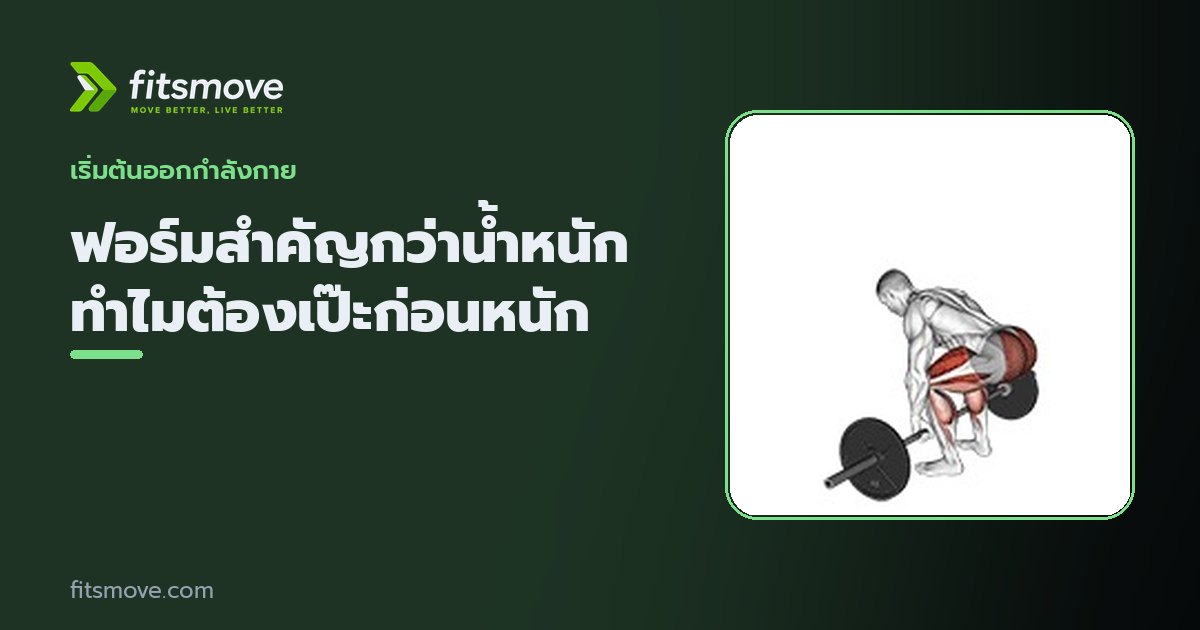
A goblet squat is a great lift to practise this on, because it is easy to set down and adjust if a weight feels off. The same approach works for a biceps curl or, with no weight at all, a push-up, where you can adjust difficulty by changing hand position or doing them on an incline.
Rough starting points by exercise
Numbers vary hugely between people, so treat these as conservative starting suggestions, not rules. Always begin at the lower end and adjust using the RIR test above.
| Exercise | Typical beginner start | Notes |
|---|---|---|
| Goblet squat | One light-to-moderate dumbbell | Easy to drop if it feels heavy |
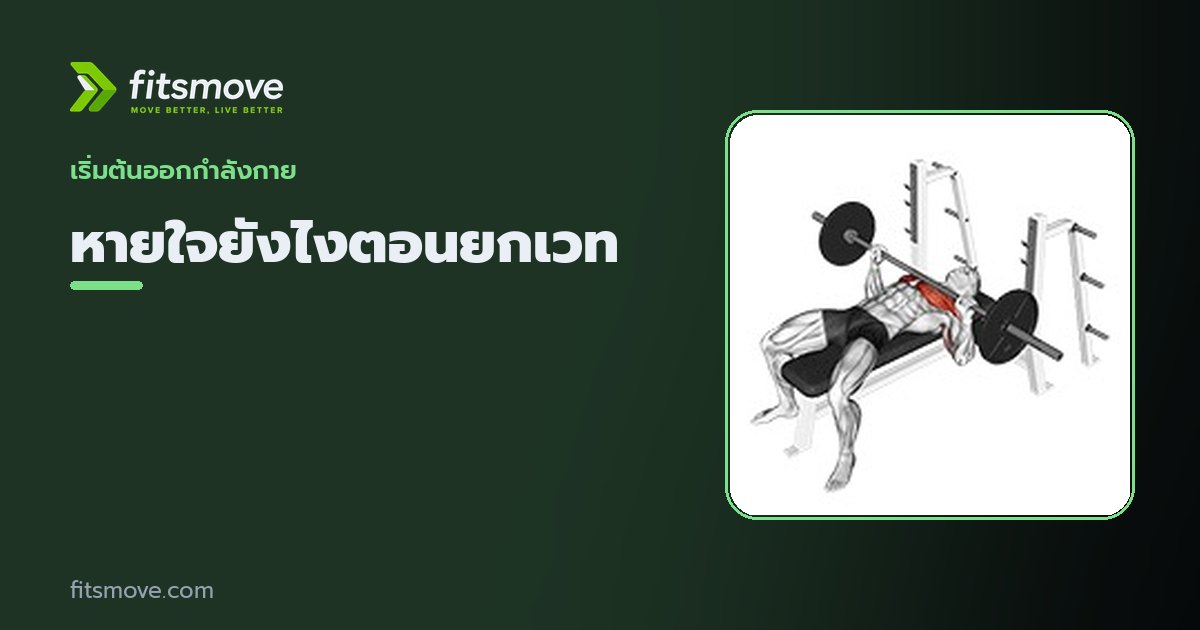
| Bench press | Empty barbell | Master the path before adding plates |
| Dumbbell biceps curl | A pair of light dumbbells | Strict form beats heavy swinging |
| Push-up | Bodyweight or incline | Raise hands on a bench to make it easier |
For barbell movements like the bench press, start with just the bar and add small plates only once your form is consistent. Lifts that train the chest or upper legs reward patience early on.
When should you add weight?
Add weight gradually, not in big jumps. A useful sign: when you can complete all your planned sets and reps with good form and still have 2–3 reps in reserve for two workouts in a row, it is time to go up a small amount. For upper-body lifts, that might be the smallest plates available; for lower-body lifts, a slightly bigger jump is usually fine.
Small, steady increases are the engine of long-term progress. This idea is called progressive overload, and it is what turns consistent training into real results. You do not have to add weight every session - adding a rep, improving control, or resting a little less are all forms of progress too.
Expect progress to slow down after the first couple of months, and do not be discouraged when it does. Early gains come fast because your nervous system is learning to recruit muscle efficiently. Later, the jumps get smaller and you may stay at the same weight for several sessions before moving up. That is completely normal and a sign you are training at a sensible pace rather than rushing. Keep a simple log of your weights and reps so you can see the slow, steady climb that is easy to miss day to day.
ข้อผิดพลาดที่พบบ่อย (common mistakes)
- Starting too heavy to feed your ego. Heavy with bad form is slower progress, not faster.
- Jumping up in big increments. Large leaps in weight wreck your form and your recovery. Nudge it up.
- Training to failure every set. This drains you and rarely helps a beginner. Leave a couple of reps in the tank.
- Ignoring warm-up. Cold muscles make any weight feel worse and riskier. A short warm-up primes you to lift well.
- Comparing yourself to others. Your starting weight is personal. The only useful comparison is to yourself last month.
คำถามที่พบบ่อย (FAQ)
What if a weight feels easy on day one but hard the next time? That is completely normal. Sleep, stress, and food all affect strength day to day. Use the RIR test each session and adjust the weight up or down as needed.
Should I use machines or free weights as a beginner? Both work. Machines can make it easier to learn a movement safely, while free weights build more coordination. Many beginners use a mix and focus on consistency over the choice itself.
How long until I can lift heavier? Most beginners add weight within the first few weeks because the body adapts quickly at the start. Keep using the 2–3 reps in reserve guideline and progress will come naturally.
สรุป (summary)
Be patient and keep it simple: start light, leave a little in the tank, test your weight with the RIR method, and nudge the load up over time. Quality reps today build the strength that lets you lift heavy safely tomorrow.
Ready for a plan? Our beginner guide covers the rest of the basics, and a structured beginner program gives you specific lifts and weights to apply this approach to. Pick your first working weight this week using the quick test above and start logging your sets.
Ready to put this into action? Start with a program for your level.
View programs →