A travel and hotel workout plan
Travel is where good routines go to die. The gym is gone, the schedule is upside down, and after a long flight or a full day of meetings, the last thing you want is a complicated plan. But you do not need a gym to hold your ground while you are away. A hotel room and a few square meters of floor are enough to train every major muscle, keep your strength, and step off the trip feeling like yourself instead of starting over. This article gives you a simple in-room routine, a three-day travel schedule, and a light packing tip that turns any room into a training space.
Set a realistic travel goal
The goal on the road is not to set records. It is to maintain. Research and experience both show that a much smaller dose of training preserves the strength and muscle you have built than it took to build them in the first place. That is good news for travel. Two or three short sessions a week, done in your room, are enough to keep you where you are. Take the pressure off, aim to maintain rather than push, and you will find it far easier to actually train. A maintenance mindset also changes how you feel about a missed session: instead of guilt, you simply do the next one. Because you are protecting a base rather than chasing a peak, the stakes are lower and the habit survives the disruption of travel. When you get home, you return to your full plan without missing a beat. For the ready-made home structure many people fall back on, see our best home workout plan.
Bodyweight work for a hotel room
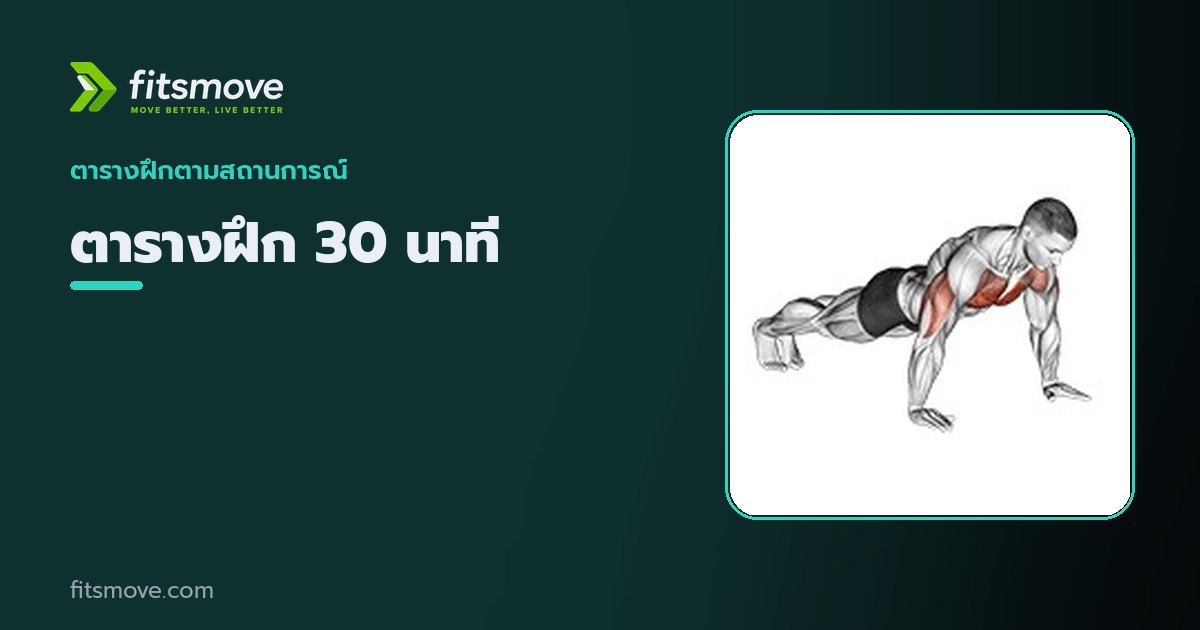
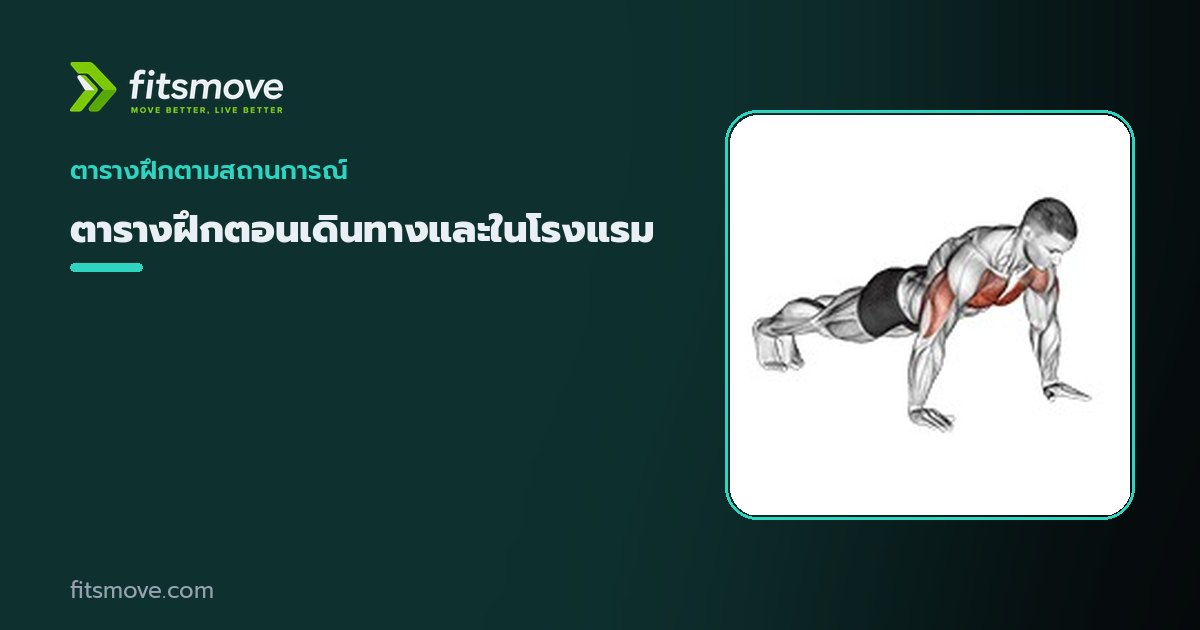
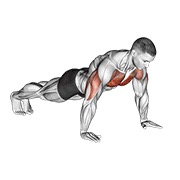
Your body is the only equipment you can always count on, and it travels for free. A complete in-room session covers the same movement patterns as a full gym day: push, pull-style bracing, squat, hinge, and core. The push-up handles your chest, shoulders, and triceps. Squats and split squats load your legs. A glute bridge trains the hinge and protects your back. The plank builds core stability, and a mountain climber or burpee adds conditioning when you want your heart rate up. For a full breakdown of how to build a session from these, read our full-body bodyweight routine.
Pack resistance bands
If you want to add real resistance without adding weight to your bag, pack a set of resistance bands. They weigh almost nothing, fit in a pocket, and turn a bare room into a gym. Loop a band under your feet and press overhead, anchor it in a door for rows, or hold it for banded squats and curls. Bands give you the pulling movements that bodyweight training alone struggles to provide, which keeps your back and biceps working while you are away. A single medium band covers most needs, and a light-plus-heavy pair covers nearly everything. They are the single most useful thing you can pack for training on the road. Because bands create tension through the whole range of a movement, you can make a set harder simply by choosing a thicker band, shortening the slack, or slowing the tempo, so a small kit keeps challenging you for the length of any trip.
Warm up in a small space
You do not need much room to warm up properly, and it matters even more when your body is stiff from sitting on a plane or in a car. Spend five minutes waking your joints and raising your heart rate before the first hard rep. March in place, do arm and hip circles, add slow bodyweight squats, and finish with a light set of your first exercise. This restores range of motion and lowers your risk of a tweak. For a complete sequence you can run anywhere, see our warm-up guide.
A three-day travel schedule
Here is a plan built for a trip. It uses three short full-body sessions across the week, with rest and walking in between. Each session runs as a circuit: do one set of each move in order, rest briefly, then repeat the whole list two to four times.
| Day | Focus | Sample circuit |
|---|---|---|
| Day 1 | Full body | Push-up, squat, glute bridge, plank |
| Day 2 | Rest or walk | Explore on foot, light mobility |
| Day 3 | Full body plus bands | Banded row, split squat, band press, mountain climber |
| Day 4 | Rest or walk | Sightseeing steps count |
| Day 5 | Full body conditioning | Burpee, squat, push-up, plank |
| Day 6-7 | Rest and recover | Walk, stretch, enjoy the trip |
Keep each session to 20 or 30 minutes. Adjust rounds and reps to how you feel after travel days. The walking days are not filler, they keep you active and help you recover while you see the place you came to visit.
Fit training around your trip
The best travel plan is the one that survives contact with a real itinerary. Train early when you can, before meetings or sightseeing eat the day and your energy fades. If mornings are impossible, a short circuit before dinner works just as well. Keep your sessions flexible: if a day disappears, do a ten-minute version rather than skipping entirely, because a small session keeps the habit alive. Count your walking, too. A day spent exploring a city on foot is real activity, and it can stand in for a formal session when the schedule is full. The aim across the whole trip is simply to keep moving.
Common mistakes
- Going all-or-nothing. Skipping every session because you cannot do a full one is the fastest way to lose momentum. A short circuit still counts.
- Ignoring pull movements. Push-ups and squats are easy in a room, but without a band your back gets neglected. Pack one.
- Skipping the warm-up. Bodies stiff from travel need it most. Five minutes protects the session.
- Trying to progress hard. The road is for maintaining, not for chasing personal bests. Push when you are home.
- Not counting walking. Long days on foot are genuine activity and count toward staying active.
- Overeating the trip away. Travel food adds up. Training helps, but keep an eye on portions too.
Frequently asked questions (FAQ)
Will I lose muscle on a one-week trip? Almost certainly not. Muscle is lost slowly, and even a couple of short sessions will preserve it. A single week off would not undo your progress either.
Do I really need resistance bands? You can train well with bodyweight alone, but bands add the pulling movements that are hard to do in a room. For the little space they take, they are worth packing.
What if my room is tiny? Most bodyweight moves need only the space of a yoga mat. Push-ups, squats, planks, and glute bridges all fit. Trade jumping moves for controlled ones if the floor is thin.
Summary
A trip does not have to cost you your progress. Aim to maintain, not to peak. Cover every movement pattern with bodyweight, pack a band for the pulling work, warm up even in a small space, and run three short sessions across the week with walking in between. Small, consistent efforts protect what you built and let you come home ready to push again. When you want a structured home routine to return to, follow one of our home-focused programs. If anything causes sharp pain, stop and consider checking with a professional.
Ready to put this into action? Start with a program for your level.
View programs →