
A 30-minute workout plan
A common belief holds you back more than a busy calendar ever will: the idea that a workout only counts if it lasts an hour or more. It does not. A focused, well-designed 30-minute session can build strength, protect muscle, and keep you fit through the busiest stretches of your life. The secret is not to cram a two-hour program into half the time. The secret is to choose the right exercises, remove the dead minutes, and repeat the plan often enough that it adds up. This article shows you exactly how to make 30 minutes pay off, with a sample table you can run today and a weekly rhythm that fits a real schedule.
Why 30 minutes is enough
Most of the benefit in any session comes from a handful of hard, well-executed sets. When you strip away the scrolling, the wandering, and the long chats between sets, an hour of "training" often contains only 20 to 30 minutes of real work. A deliberate 30-minute plan simply removes the waste. You still hit every major muscle, you still push each set close to effort, and you still apply progressive overload week to week. For a fuller look at how session length relates to results, read how long should a workout be. The short answer is that quality and consistency beat raw duration almost every time.
Lead with compound movements
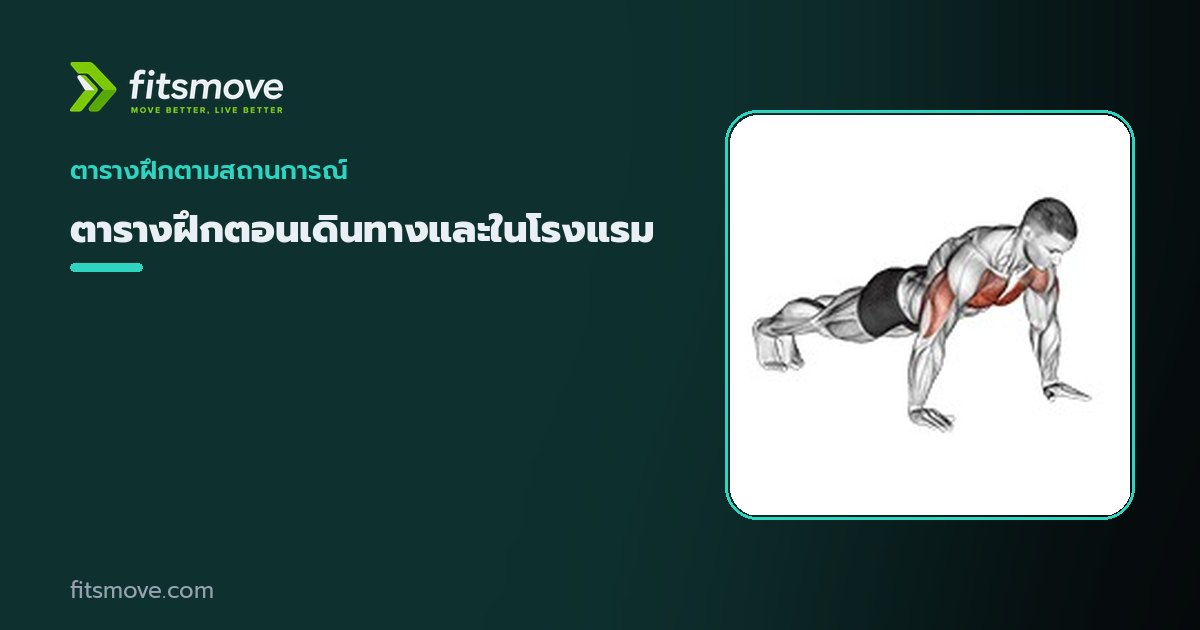
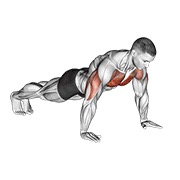
When time is tight, spend it on exercises that pay you back the most. Compound movements work several muscle groups across multiple joints in a single lift, so they deliver more training per minute than isolation work ever can. A push-up trains your chest, shoulders, and triceps at once. A squat pattern loads your whole lower body. Rows and pulls hit your back and arms together. Build your 30 minutes around three or four of these big lifts, and add one or two small isolation moves only if time remains. If you want a ready plan built on this logic, the busy two-day programs are designed for exactly this situation.
Use supersets to save time
A superset means pairing two exercises and doing them back to back with little or no rest in between, then resting once before the next pair. Pair movements that work opposite jobs, such as a push with a pull, or an upper-body lift with a lower-body one. While one muscle group works, the other recovers, so you keep moving without sacrificing performance. Supersets can cut a session's length by a third while keeping the total work the same. They also raise your heart rate, adding a light conditioning effect on top of the strength work. Keep your setups simple so you can switch between the two exercises in seconds.
Warm up in five minutes
A rushed session is not an excuse to skip the warm-up, but it does mean keeping it short and specific. Spend five minutes raising your heart rate and rehearsing the day's patterns. Do arm circles, bodyweight squats, hip swings, and a light set of your first exercise. This primes your joints and lowers your risk of a tweak without eating into your working time. For a complete routine you can trim to fit, see our warm-up guide, and for the difference between moving and holding stretches, read dynamic versus static stretching.
A sample 30-minute session
Here is a full-body plan that fits inside 30 minutes, warm-up included. Exercises marked A and B are supersets: do one set of A, then one set of B, then rest and repeat. Adjust the load so the last two reps of each set feel genuinely hard.
| Block | Exercise | Sets x Reps | Rest |
|---|---|---|---|
| Warm-up | Light cardio and mobility | 5 min | - |
| A1 | Squat or goblet squat | 3 x 8-12 | Superset |
| A2 | Push-up | 3 x 8-15 | 60 sec |
| B1 | Row (dumbbell or band) | 3 x 10-12 | Superset |
| B2 | Glute bridge or hinge | 3 x 10-15 | 60 sec |
| Finisher | Plank | 2 x 30-45 sec | 45 sec |
The two supersets cover push, pull, squat, and hinge, which is a complete list of patterns for one session. The plank finisher trains your core without adding much time. Move with intent, keep your rest honest, and this fits comfortably inside half an hour.
How often to train
A 30-minute plan works best when you run it three to four times a week on non-consecutive days. Because each session is short, your body recovers quickly, so a Monday, Wednesday, Friday rhythm keeps stress and recovery in balance. If you can only manage two days, a full-body plan twice a week still delivers real results, which is the principle behind our two-day full-body plan. The best schedule is the one you will actually keep, so pick your days and defend them like appointments.
Keep the plan progressing
Short sessions still need a way to get harder over time, or they stop working. Change one variable at a time. Add a rep to each set until you reach the top of the range, then add a little load or a harder variation and drop back to the bottom of the range. You can also shorten rest by ten seconds or slow your lowering phase to three seconds. Track your numbers in a simple log so you can see the climb. If your progress stalls for a couple of weeks, small tweaks like these are usually all it takes to move again.
Common mistakes
- Treating rest as free time. Long, distracted breaks turn a 30-minute plan into a 50-minute one. Keep a timer.
- Choosing isolation over compounds. Curls and calf raises are fine extras, but they should never be the core of a short session.
- Going too light. If every set feels easy, you are training your patience, not your muscles. Load the last two reps hard.
- Skipping the warm-up entirely. Five focused minutes protect the twenty-five that follow.
- Never progressing. The same weights for months means the plan has stopped challenging you.
- Adding random extras. More exercises crammed into 30 minutes just means each one gets less effort.
Frequently asked questions (FAQ)
Can I really build muscle in only 30 minutes? Yes. Muscle responds to hard, progressive sets, not to clock time. A focused half-hour with compounds and supersets provides plenty of stimulus, especially for beginners and intermediates. See our muscle-building guide for the bigger picture.
Is 30 minutes enough for both strength and fat loss? It can serve both. Strength comes from the hard sets, and the superset structure keeps your heart rate up, adding a conditioning effect. Pair it with sensible eating for fat loss.
What if I only have 20 minutes some days? Keep the two supersets and drop the finisher. A shorter, done session beats a perfect one you skip. Consistency is what compounds over months.
Summary
Thirty minutes is not a compromise, it is a strategy. Lead with compound lifts, pair them into supersets, keep your rest honest, and repeat the plan three to four times a week. Add one small challenge whenever the work starts to feel easy, and track your numbers so you can see the progress. When you want the whole week mapped out for a busy schedule, follow one of our programs. If anything causes sharp pain, stop and consider checking with a professional.
Ready to put this into action? Start with a program for your level.
View programs →