Which muscles should a beginner train first?
One of the very first questions new lifters ask is where to begin. Should you start with arms, abs, or the muscles you can see in the mirror? The most effective answer is usually the opposite of what feels exciting: start with the big muscle groups and the movements that train several of them at once. This single decision shapes how fast you get stronger, how balanced your body becomes, and how enjoyable your sessions feel.
This guide explains which muscles to prioritise, why compound lifts come first, how to order a single workout, and how to spread your training across the week. Get this foundation right and almost everything else in the gym becomes easier.
Start with the big muscle groups
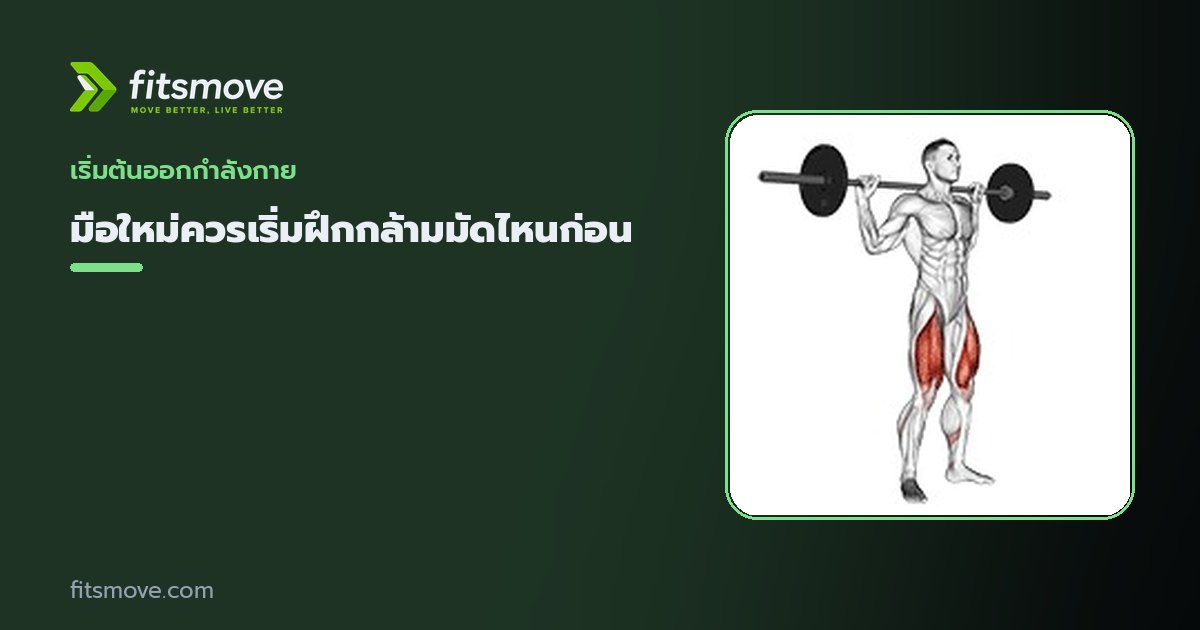
Your largest and most powerful muscles live in your lower body and back. The upper legs include the quads, hamstrings, and glutes - the engine of nearly every athletic movement, from standing up to sprinting. The back supports your posture and powers almost every pulling action, and the chest drives your pushing strength. Building a foundation in these areas first gives you the most return for your effort, because larger muscles respond strongly to training and carry a big share of your total strength.
Training the big groups first also has a quiet bonus: stronger legs, back, and chest make the smaller muscles work better too. A strong torso stabilises your arm work, and strong legs support nearly everything you do standing up.
Why compound movements come first
Compound exercises use more than one joint and work several muscles together - think squats, rows, and presses. For a beginner they offer three big advantages:
- They build overall strength quickly, because they load many muscles at once.
- They teach coordinated, whole-body movement, which transfers to daily life and sport.
- They are time-efficient, training more muscle per set than small isolation moves.
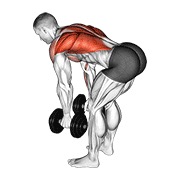
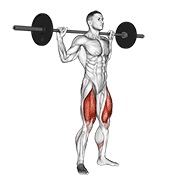
Smaller muscles like biceps and calves still matter, and you will train them - but they grow best once the big compound lifts that build muscle are in place. Good starting compounds include the barbell full squat for the legs, the dumbbell bent over row for the back, and the push-up for the chest. Our guide to the 6 basic exercises brings the full set together.
Compound versus isolation: what's the difference?
Understanding the two main types of exercise makes the "big first" rule click into place. A compound movement bends at two or more joints and recruits several muscle groups working together - a squat bends the hips, knees, and ankles and drives your quads, glutes, hamstrings, and core all at once. An isolation movement bends at a single joint to target one muscle, like a biceps curl bending only the elbow.
Neither type is "better" in the abstract; they do different jobs. Compounds are your foundation because they deliver the most strength and muscle for your time, teach your whole body to move as a unit, and let you handle meaningful loads safely. Isolation moves are your finishing touches - they let you give extra attention to a specific muscle that compounds alone might under-stimulate, such as the cable triceps pushdown for the back of the arms. As a beginner, the right ratio is heavily weighted toward compounds, with a small amount of isolation work added at the end.
How to order a single session
Within one workout, the rule is simple: train the biggest muscles and most demanding lifts first, while you are fresh. Heavy compound work requires the most focus, coordination, and energy, so it deserves your best effort early in the session - not your leftover energy at the end.
A reliable order looks like this:
| Order | What to train | Example |
|---|---|---|
| 1 | Large compound lift | Barbell full squat |
| 2 | Second compound, different area | Cable seated row |
| 3 | Push movement | Push-up |
| 4 | Smaller isolation move | Cable triceps pushdown |
| 5 | Core / finisher | Front plank with twist |
If you flip this order and tire out your small muscles first, you will not have the strength left to perform the big lifts safely or effectively - and the big lifts are where most of your progress comes from.
A balanced weekly approach
Over a week, aim to give your legs, back, and chest roughly equal attention rather than favouring one area, such as only training the muscles you see in the mirror. A balanced beginner often trains the whole body two or three times a week, hitting each major group with a compound lift each session.
This even approach builds strength steadily and helps prevent the muscle imbalances that lead to nagging aches and poor posture - for example, training chest far more than back is a very common cause of rounded shoulders. If you prefer to focus a session on one region, the category pages for shoulders, upper arms, and waist can help you fill in the smaller groups.
Don't forget the smaller muscles - later
Prioritising big muscles does not mean ignoring the rest. Arms, calves, and core all deserve attention; they simply belong later in the session and later in your training journey, once the foundations are solid. A short block of isolation and core work at the end of each session - a few sets of curls, triceps, and a plank variation - rounds out your training without stealing energy from the lifts that matter most.
Putting it together
You do not need a complicated plan to start well. Pick a few big compound lifts, cover legs, back, and chest across the week, and add smaller moves at the end. Keep the weight manageable, focus on clean repetitions, and give yourself time to learn how each movement should feel before chasing heavier loads.
Common mistakes to avoid
- Starting with arms or abs. They feel productive but leave little energy for the lifts that build the most strength.
- Training chest far more than back. This imbalance hurts posture; keep pushing and pulling roughly equal.
- Doing isolation before compounds. Pre-tiring small muscles weakens your big lifts.
- Skipping legs. Leg training drives much of your overall strength and physique - do not neglect it.
- Adding too many exercises. A few well-chosen compounds beat a long, scattered list.
Frequently asked questions (FAQ)
Should I train upper or lower body first? Within a full-body session, lead with whichever large compound demands the most from you - often a squat or a heavy pull. The key principle is biggest and hardest first, while you are fresh.
Do I need to train abs separately? Compound lifts already work your core hard, but a little dedicated core work at the end of a session is worthwhile. A move like the front plank with twist is a simple, effective option.
How many exercises should a beginner do per session? Around four to six is plenty: two or three compounds for the big groups, then one or two smaller moves and some core work. Quality and consistency matter far more than quantity.
Summary
Start big, start with compounds, and order your session so the most demanding lifts come first. Cover legs, back, and chest evenly across the week, then add the smaller muscles at the end once the foundations are in place. This approach builds strength quickly, keeps your body balanced, and makes future progress far easier.
Ready to begin? Follow a structured beginner program or browse all the programs, start with the beginner guide, and if you are unsure how to sequence the smaller muscles within a session, our companion article on which muscle first and the 6 basic exercises will keep you on track. Master the basics first, build the habit of showing up, and everything else becomes far easier to build on later.
Ready to put this into action? Start with a program for your level.
View programs →