
How to choose a workout split
Walk into any gym and you will hear people arguing about the best training split. One swears by Push/Pull/Legs, another insists full body is the only way, and a third is running a bro split they saw a champion use. The truth is quieter and more useful: there is no single best split. There is only the split that fits the number of days you can realistically train, matches your experience level, and keeps each muscle group working often enough to grow. Get that match right and almost any well-built split will work. Get it wrong and even the most famous program will stall.
This guide strips away the noise. First we define what a split actually is, then we walk through how to choose one based on how many days a week you can commit, from two all the way to six. You will get a clear comparison table, a short section on the mistakes that trip people up, and a simple way to decide today. If you are still building the fundamentals, our beginner guide pairs well with this, and for the full picture of how growth works, the muscle building guide is worth a read.
What a training split actually is
A training split is simply the way you divide your muscle groups across the days of the week. Instead of trying to train everything in one giant session, a split decides which body parts get worked on which days. A full-body split trains everything each session. An Upper/Lower split cuts the body in two. A Push/Pull/Legs split slices it into three. The names sound technical, but the idea is basic: it is a schedule for your muscles.
Why does it matter? Because two variables decide most of your results, and a split controls both. The first is volume, the total number of hard sets you do per muscle each week, which our weekly training volume article covers in depth. The second is frequency, how often you train each muscle. A good split delivers enough of both without asking for more days than you can give. That is the whole game.
Choose your split by training days
The single most important input is honest: how many days per week can you actually train, week after week, not just in a motivated first month? Our how many days per week article digs into this, but the short version is that consistency beats ambition. A four-day plan you keep beats a six-day plan you abandon by March. Pick the number you can defend on a bad week, then choose the split that fits it.
Below is the practical mapping most coaches would give you. Notice that as days go up, the split can slice the body more finely, giving each session more focus while keeping frequency high.
| Days per week | Best split | Why it fits |
|---|---|---|
| 2 days | Full body | Trains everything twice, no muscle neglected |
| 3 days | Full body or PPL | Simple, high frequency, ideal for beginners |
| 4 days | Upper/Lower | Each half twice a week, fits a busy life |
| 5 days | Upper/Lower + a specialty day | Frequency plus a weak-point focus |
| 6 days | Push/Pull/Legs x2 | Maximum volume, each muscle twice a week |
Two and three days: keep it full body
If you can only train two or three days, a full-body split is almost always the right call. Because you train each muscle every session, two full-body days already hit everything twice a week, which is the frequency research links to solid growth. Trying to run a body-part split on two days would leave chest or legs trained only once every seven days, which wastes half the week.
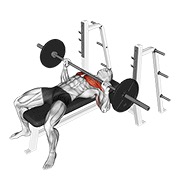
Three days opens a little room. Most beginners still do best with three full-body sessions built around compound lifts like the barbell full squat, the bench press, and the deadlift. A three-day PPL is also viable for those who prefer more focus per session, though frequency drops to once a week per muscle. For a ready-made option, our beginner programs are built exactly this way.

Four and five days: enter Upper/Lower
Four days is the sweet spot for many working adults, and the Upper/Lower split owns this slot. It trains the whole upper body twice and the whole lower body twice, giving high frequency inside a schedule you can actually keep. Each session is focused enough to feel productive without ballooning into a two-hour marathon. If four days is your ceiling, this is the answer, and our upper-lower programs put it into practice.
Five days is a hybrid zone. The cleanest approach is to run four Upper/Lower days and add a fifth session dedicated to a weak point, such as arms, glutes, or shoulders. This keeps the balanced base of Upper/Lower while letting you attack a lagging area with extra volume. Avoid the temptation to simply add random exercises; a fifth day works best when it has a clear job.
Six days: Push/Pull/Legs shines
If you can genuinely train six days a week, the Push/Pull/Legs split run twice through is hard to beat. It groups the pushing muscles (chest, shoulders, triceps), the pulling muscles (back, biceps), and the legs into three focused sessions, then repeats them so each muscle is trained twice a week with plenty of volume. The extra day gives room to specialise and to spread volume so no single session becomes overwhelming.
A word of caution: six days is a real commitment, and it only pays off if you recover from it. Sleep, protein, and stress management all have to be in order, topics our protein and recovery guide covers. If life gets busy and you start skipping, drop back to a four-day Upper/Lower rather than limping through a broken six-day plan. The split should serve your life, not the other way around.
ข้อผิดพลาดที่พบบ่อย (Common mistakes)
- Choosing the split before counting your days. Pick the number of realistic days first, then the split. Not the other way around.
- Copying an advanced lifter's plan. A six-day bro split that works for someone on stage will bury a beginner. Match the split to your level.
- Chasing the trendiest name. PPL is popular, but it is a poor fit at four days. Trends do not train your muscles, frequency does.
- Ignoring frequency. A split that trains each muscle only once a week leaves gains on the table for most people. Aim for twice where you can.
- Never following through. Switching splits every two weeks means never applying progressive overload long enough to see results. Pick one and commit.
คำถามที่พบบ่อย (FAQ)
What split is best for a total beginner? A full-body split three days a week. It teaches the main lifts, trains everything twice weekly, and leaves plenty of recovery. Our beginner guide walks through the whole starting point.
Can I switch splits later? Yes, and you should as your available days or goals change. Just give any split at least eight to twelve weeks so progressive overload has time to work before you judge it.
Is a bro split (one muscle per day) worth it? For most people, no. Training each muscle once a week is lower frequency than the evidence favours. A PPL or Upper/Lower usually delivers more growth for the same days.
สรุป (Summary)
Choosing a split is not about finding the one magic program. It is about matching structure to reality: count the days you can truly train, then pick the split built for that number. Two or three days means full body, four means Upper/Lower, five adds a specialty day, and six unlocks Push/Pull/Legs. Layer in enough frequency and volume, apply progressive overload, and stay consistent. Ready to stop guessing? Browse our structured training programs and pick the split that fits your week, not someone else's.
Ready to put this into action? Start with a program for your level.
View programs →