Working out in a small space
A small apartment, a corner of a bedroom, a hotel room on a work trip: none of these are reasons to skip training. In fact, the space you need for an effective full-body workout is smaller than most people imagine, roughly the size of a yoga mat. What matters is choosing movements that build strength and burn energy without needing room to run or swing, and doing them in a way that does not shake the floor or rattle your neighbours below. This guide shows you the best space-saving exercises, a compact routine you can run in a room the size of a bathroom, and low-impact options that keep the peace while still working you hard.
Why small spaces are no barrier
Most productive strength movements happen within the footprint of your own body. A push-up, a squat, a plank, a lunge: each of these fits inside a single mat and still trains major muscles hard. The idea that you need a sprawling home gym is mostly marketing. What you truly need is a plan that plays to the strengths of bodyweight training, where you control difficulty through leverage, tempo, and range rather than through equipment that eats floor space. If you want the broader structure, our best home workout plan shows how to organize sessions, and the full-body bodyweight routine gives you a complete template that needs almost nothing.
There is also a hidden advantage to training in a confined area. With no equipment to arrange and nowhere to wander, you waste no time between sets, which keeps your heart rate up and your focus sharp. A small space naturally nudges you toward efficient, circuit-style sessions that pack a lot of work into a short window. Travellers discover this constantly: a hotel room with a strip of carpet is all it takes to keep a routine alive on the road. Once you accept that the limitation is minor, it stops feeling like a limitation at all, and it becomes one less reason to ever skip a session.
Choosing space-saving movements
The trick to training in a tight space is picking exercises that stay put. Favour moves where your feet remain roughly planted and your limbs travel up and down rather than side to side or forward and back. These deliver a full-body stimulus inside a small square.
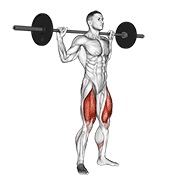
- Squat: the bodyweight squat trains your legs and glutes and never leaves its spot.
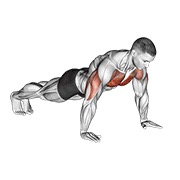
- Push: the push-up works your chest, shoulders, and arms within a mat.
- Core: the front plank trains your trunk with zero movement across the floor.
- Legs, one at a time: a stationary lunge or split squat loads each leg hard in a tiny footprint.
- Glutes: a glute bridge trains the back of your body while you lie flat, using no extra space at all.
Keeping it quiet for your neighbours
If you live above other people, impact matters as much as space. Jumping, dropping, and stomping travel straight through floors and ceilings. The fix is to favour low-impact versions of high-effort moves. Instead of jump squats, do slow, controlled bodyweight squats with a three-second lowering phase. Instead of a jumping burpee, step back into the plank and step forward again. A mountain climber can be done slowly and softly, keeping your toes light rather than hammering the floor. A thick mat absorbs sound and cushions your joints. The result is a workout that is intense for you and invisible to everyone else in the building.
A compact small-space routine
Here is a full session you can run in a space no bigger than a mat, with quiet, low-impact options built in. Move through it as a circuit, resting briefly between moves and longer between rounds.
| Exercise | Muscles | Reps / time | Impact |
|---|---|---|---|
| Slow bodyweight squat | Legs, glutes | 12-20 | Low |
| Push-up (or kneeling) | Chest, arms | 8-12 | Low |
| Reverse lunge in place | Legs, glutes | 10 per leg | Low |
| Slow mountain climber | Core, shoulders | 20-30 total | Low |
| Front plank | Core | 30-45 sec | Low |
Repeat the full list two to four times depending on your level. With a short warm-up, the whole thing fits inside 25 to 30 minutes and stays quiet throughout. Run it three to four non-consecutive days a week.
How to add difficulty without adding space
A small footprint does not mean a small challenge. The same progressive overload that drives any good program works here, and none of the tools you use require more room. Slow the tempo so each rep takes longer under tension. Add reps or another round. Shorten your rest. Progress to harder variations, moving from a kneeling push-up to a full one, or from a two-leg squat to a single-leg version. Each of these makes the workout harder while your footprint stays exactly the same, which is the whole point of training smart in a tight space.
Fitting a small-space plan into your week
A compact routine is easy to keep because it removes so many excuses. There is no travel, no setup beyond unrolling a mat, and no noise to worry about. Train three to four times a week on non-consecutive days, leave recovery time between sessions, and keep the routine steady for a few weeks so you can measure progress. On off days, a short walk outdoors adds gentle movement without needing any indoor space at all. Because the barrier to starting is so low, a small-space plan is often the most consistent one people ever run, and consistency is what actually changes your body. If you would rather follow a guided structure, our home bodyweight programs lay it all out for you.
Common mistakes
- Assuming you need more room. A mat-sized space trains the whole body. Work with what you have.
- Choosing high-impact moves in an apartment. Jumping disturbs neighbours and jars your joints. Pick quiet, controlled versions.
- Never progressing because the space feels limiting. Tempo, reps, and harder variations add difficulty without adding space.
- Skipping the warm-up. Small space is no excuse to start cold. Spend a few minutes loosening up.
- Doing only the moves you like. Cover squat, push, lunge, and core so your training stays balanced.
Frequently asked questions (FAQ)
How much space do I actually need? Roughly the size of a yoga mat, enough to lie down and extend your arms. That is sufficient for a complete bodyweight session.
Can I train hard without disturbing my neighbours? Yes. Swap jumping moves for slow, controlled versions, keep your feet soft on the floor, and use a thick mat. You can push yourself hard while staying quiet.
Will a small-space workout really build muscle? Yes, especially as a beginner. Bodyweight progressions, slower tempos, and harder variations keep the stimulus high enough to build strength and muscle over time.
Summary
A tight space is no obstacle once you choose the right movements and keep them controlled. Stick to exercises that stay within a mat, favour quiet low-impact versions to keep the peace, and add difficulty through tempo, reps, and harder variations rather than more room. Train consistently a few times a week and let the results build. When you are ready to follow a structured plan, browse our home bodyweight programs. If any movement causes sharp pain, stop and consider checking with a professional.
Ready to put this into action? Start with a program for your level.
View programs →