

A no-equipment fat-loss plan
You do not need a gym membership, machines, or even a single dumbbell to lose fat. Your own bodyweight, a small patch of floor, and a sensible approach to food will get the job done. What actually drives fat loss is a modest calorie deficit held steady over time, and training supports that by burning energy, protecting your muscle, and keeping your metabolism healthy. This plan combines short, effective bodyweight circuits with a realistic way to eat, laid out as a weekly schedule you can start today. It makes no extravagant promises, because the honest truth is that steady, sustainable habits beat crash efforts every single time.
What actually drives fat loss
Fat loss comes down to one principle: over time you must use slightly more energy than you take in. That is the calorie deficit, and no exercise trick replaces it. Training helps in two big ways. It burns extra calories, which widens the deficit, and it signals your body to keep muscle while you lose weight, so what you lose is mostly fat rather than hard-won tissue. This is why a plan built only on cardio often disappoints, while one that pairs movement with a small, consistent deficit works. Set a realistic target of roughly half a kilogram to one kilogram of fat loss per week and let the weeks add up.
It is worth being clear about what training can and cannot do here. Exercise is a powerful tool for shaping your body, protecting muscle, and improving health, but the number of calories a single session burns is usually smaller than people assume, and it is easy to replace with a modest snack. That is not a reason to skip training; it is a reason to treat food as the primary lever and movement as the reliable support. When the two work together, a small daily deficit plus consistent activity produces steady results that a punishing crash diet, or an hour of frantic cardio you cannot sustain, never will. The best plan is the one you can repeat, week after week, without burning out.
Why bodyweight circuits are ideal at home
Circuits move you from one exercise to the next with little rest, which keeps your heart rate up and packs a lot of work into a short window. That combination of resistance work and elevated heart rate makes bodyweight circuits an efficient tool for burning calories while still challenging your muscles. Because they need no equipment, they remove every excuse to skip a session. For a ready-made version you can slot straight in, our home fat-loss circuit is built for exactly this purpose, and it pairs well with the plan below.
The key movements
A good fat-loss circuit blends strength patterns with higher-energy moves so you build and burn at once. These five cover the bases with nothing but the floor.
- Squat pattern: the bodyweight squat loads your legs and glutes, the largest muscles you own.
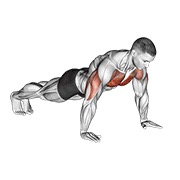
- Push: the push-up trains your chest, shoulders, and arms.
- Explosive: the jump squat raises your heart rate fast and adds power.
- Full-body burner: the burpee works everything and spikes your effort.
- Cardio-core: the mountain climber trains your core while keeping the pace high.
Where interval work fits in
Short bursts of hard effort followed by recovery, often called interval training, are a time-efficient way to add a cardio stimulus without long, dull sessions. Two well-placed interval workouts a week complement your circuits and steady walking nicely. If the idea is new to you, HIIT explained breaks down how to do it sensibly and, just as importantly, how not to overdo it. Intervals are a seasoning, not the main course, so keep them brief and let most of your energy go to consistency and diet.
A sample weekly plan
Here is a full week that balances circuits, intervals, walking, and rest. Adjust the days to fit your life, keeping the overall shape intact.
| Day | Focus | Session |
|---|---|---|
| Monday | Full-body circuit | 3-4 rounds of the five moves |
| Tuesday | Steady cardio | 30-45 min brisk walk |
| Wednesday | Interval training | 15-20 min of short hard bursts |
| Thursday | Rest or light walk | Recovery |
| Friday | Full-body circuit | 3-4 rounds of the five moves |
| Saturday | Interval training | 15-20 min of short hard bursts |
| Sunday | Rest | Full recovery |
For each circuit, do 30 to 45 seconds of work per move, rest briefly, and repeat the whole list three to four times. The circuits and intervals together take 20 to 30 minutes, so the plan stays realistic even on busy weeks.
Eating for sustainable fat loss
Training opens the door, but food walks you through it. Aim for a modest calorie deficit rather than a punishing one, because extreme cuts backfire through hunger, fatigue, and lost muscle. Center each meal on protein to preserve muscle and stay full, fill your plate with vegetables and fruit for volume and nutrients, and keep starches and fats sensible rather than absent. Drink water, limit liquid calories, and give yourself room for the foods you enjoy so the plan survives real life. Protein deserves special attention while losing weight, and our guide to keeping muscle while cutting explains why and how. The goal is a way of eating you could keep for months, not a two-week sprint you abandon.
A few practical habits make the deficit almost effortless to hold. Plan your meals a day ahead so hunger never forces a rushed, poor choice. Keep easy high-protein options within reach, such as eggs, yoghurt, or a simple chicken dish, so a good decision is always the convenient one. Watch portion sizes on calorie-dense foods like oils, nuts, and sauces, which are healthy but add up fast. And weigh yourself no more than once or twice a week, in the morning, because daily fluctuations from water and food weight can mislead you into thinking a good week has failed. Trends over time tell the truth; single days rarely do.
Common mistakes
- Chasing sweat instead of a deficit. You cannot out-train a diet that ignores calories. Fix the food first.
- Cutting calories too hard. Extreme deficits kill energy and muscle. Aim for a modest, steady cut.
- Doing intervals every day. Hard bursts need recovery. Two or three sessions a week is plenty.
- Ignoring protein. Too little protein while dieting means you lose muscle along with fat.
- Expecting overnight results. Fat loss is slow and non-linear. Judge progress across weeks, not days.
- Skipping rest days. Recovery is when your body adapts and your appetite hormones stay balanced.
Frequently asked questions (FAQ)
Can I really lose fat with no equipment? Yes. Fat loss is driven by a calorie deficit, and bodyweight circuits plus walking burn plenty of energy while protecting muscle. Equipment is optional, not required.
How fast should I expect to lose weight? A steady half to one kilogram per week is realistic and sustainable. Faster loss usually costs you muscle and rarely lasts, so patience wins.
Do I need to do cardio and circuits, or just one? Both help. Circuits build and preserve muscle while burning calories, and walking plus short intervals add to the deficit. The combination is more effective and more balanced than either alone.
Summary
Losing fat at home without equipment is entirely doable when you get the basics right. Hold a modest calorie deficit, run short bodyweight circuits a few times a week, add walking and a couple of interval sessions, and rest enough to recover. Keep it sustainable and let the weeks compound. When you want a fully structured version to follow, explore our fat-loss programs. If any movement causes sharp pain, stop and consider checking with a professional.
Ready to put this into action? Start with a program for your level.
View programs →