The Smith machine: pros and cons
Few pieces of gym equipment spark as much debate as the Smith machine. To some lifters it is a safe, convenient tool that lets you train hard without a spotter. To others it is a crutch that builds a false sense of strength. The truth sits in the middle: the Smith machine is neither magic nor poison. It is a tool with a specific design, and once you understand how that design shapes the movement, you can decide exactly when it earns a place in your routine and when a barbell serves you better.
This guide walks through what the Smith machine actually is, where it genuinely helps, where its fixed path holds you back, and how to use it intelligently rather than dogmatically.
What the Smith machine is
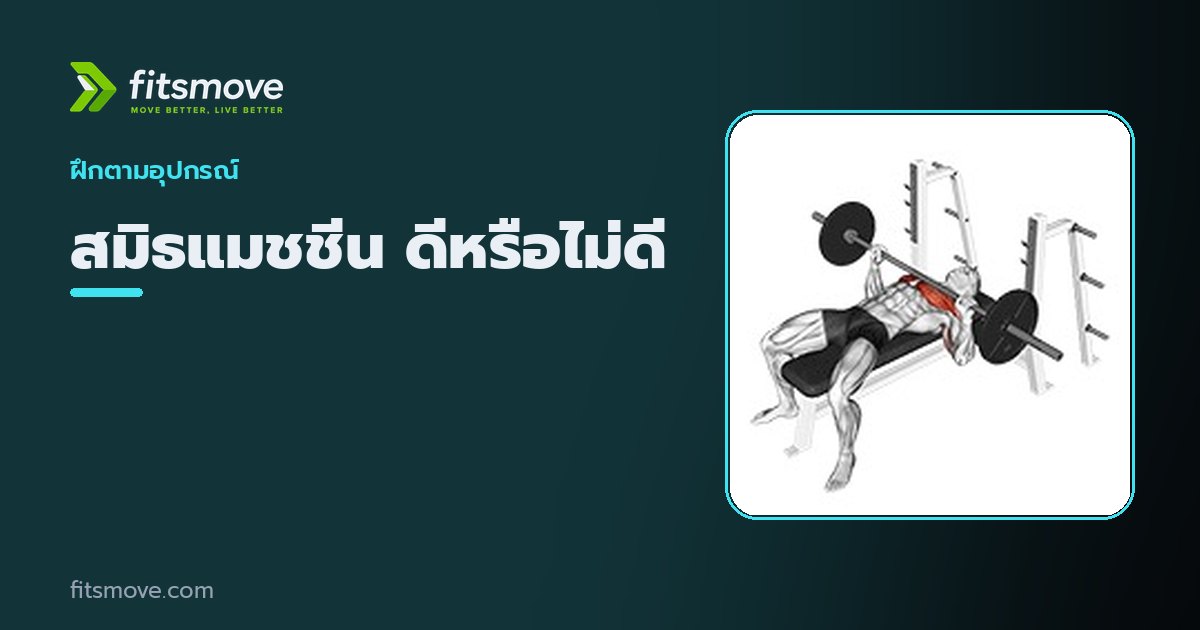
The Smith machine is a barbell fixed inside two vertical rails. Instead of moving freely in space, the bar can only travel up and down along that locked track. A row of hooks runs along the rails, so you can rotate the bar a few degrees and rack it almost anywhere in the range of motion. That racking feature is the heart of its appeal: if a rep stalls, you simply turn your wrists and the safety catches hold the bar for you.
Because the rails carry the weight along a set line, you do not have to balance the bar from side to side or front to back. The machine handles stabilisation, leaving you to push or pull. This is the single fact that explains almost every pro and con that follows. It removes the balancing demand of a true free weight, and that removal cuts both ways.
The case for the Smith machine
The biggest advantage is safety when you train alone. On a free-weight bench press, getting pinned under a heavy bar is a real risk without a spotter. On the Smith machine you can bail out of a failed rep by twisting the bar into the nearest hooks. For a solo lifter pushing close to failure, that built-in safety net has obvious value.
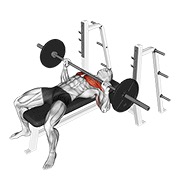
It is also friendly to beginners. Because the path is fixed, a newcomer can feel a pressing or squatting pattern without first mastering balance and coordination. That lets you focus on tempo, range, and feeling the target muscle work, much like the broader benefits covered in our form before weight guide. The fixed groove can make it easier to chase a strong mind muscle connection on isolation-style work too.
Convenience matters as well. Loading, unloading, and re-racking are quick, and the catches let you set up a movement at any height without a separate rack. For higher-rep finishing sets where balance is a distraction rather than the point, that smooth, predictable path can be genuinely useful.
The case against it
The fixed path is also the Smith machine's core limitation. Your joints and limbs are built to move along slightly curved, individual arcs. A barbell bench press, for example, naturally drifts as you press; a squat shifts subtly to keep the bar over your midfoot. The Smith machine forces a single straight line, so your body must conform to the bar rather than the bar following your body. For some people that mismatch loads the shoulders, knees, or lower back in ways that feel awkward or strained.
Because the machine balances the load for you, it also trains your stabilising muscles far less. Those smaller muscles are a real part of strength and joint health, and they are exactly what free weights develop. Strength built on the Smith machine does not always transfer cleanly to the barbell version of the same lift, which matters if your goals include the big three barbell lifts.
| Aspect | Smith machine | Free weights |
|---|---|---|
| Bar path | Fixed, straight line | Free, follows your body |
| Stabiliser demand | Low | High |
| Solo safety | High (rack anywhere) | Lower (needs a spotter) |
| Beginner learning curve | Gentle | Steeper |
| Carryover to barbell lifts | Partial | Full |
| Skill and balance built | Limited | Substantial |
When the Smith machine is a good choice
The Smith machine shines in a few clear situations. If you train alone and want to push a pressing movement near failure, the safety catches let you do that with less risk. If you are brand new and still learning how a squat or press should feel, the fixed path can serve as a stepping stone before you graduate to the barbell, in the same spirit as our gym machines for beginners guide.
It is also handy for certain assistance and isolation work where balance adds nothing useful. Things like supported split squats, calf raises, or controlled high-rep upper-body finishers can work well on the Smith machine because the goal is muscle tension, not coordination. Used this way, it complements free weights rather than replacing them.
How to use it intelligently
Treat the Smith machine as one option among many, not your default for every lift. For your main strength work, especially the patterns you want to carry over to a barbell, prioritise free-weight versions and use the Smith machine as a supplement. When you do use it, set your foot or body position to suit the straight bar path: in a Smith squat, for instance, your stance often needs to sit slightly forward so the fixed line stays comfortable on your knees and back.
Pay attention to how each lift feels. If a movement on the Smith machine causes joint discomfort, the forced path may not match your structure, and a free-weight or cable alternative will likely feel better. Build the bulk of your training around free weights and compound patterns, see the chest category for pressing options, and let the Smith machine fill specific, sensible roles.
Common mistakes
- Using it for everything. Relying on the Smith machine for all your main lifts limits the balance and stabiliser strength that free weights build.
- Ignoring foot placement. Standing as if under a free barbell forces the straight rail into your joints awkwardly; adjust your stance for the fixed path.
- Assuming the numbers match. A weight you handle on the Smith machine will usually feel heavier as a true free-weight lift, because now you must balance it too.
- Pushing through joint pain. A forced path that hurts a shoulder or knee is a signal to switch to a free-weight or cable option, not to grind on.
- Skipping the catches. The safety hooks are the machine's best feature; learn to rotate and rack the bar before you train near failure.
Frequently asked questions (FAQ)
Is the Smith machine bad for you? No. It is a tool with trade-offs. The fixed path can feel awkward for some joints and trains stabilisers less, but used sensibly for the right movements it is perfectly safe and useful, especially for solo lifters and beginners.
Can I build muscle on the Smith machine? Yes. Muscle responds to tension, effort, and progressive overload, all of which you can apply on the Smith machine. It is excellent for many hypertrophy and isolation exercises. The main caveat is strength carryover to free-weight lifts.
Should beginners use the Smith machine or free weights? Both have a place. The Smith machine can ease you into a movement pattern, but plan to learn free-weight versions over time so you develop balance and full carryover. A structured plan makes this transition smooth.
Summary
The Smith machine is neither a shortcut nor a trap: it is a fixed-path barbell with clear strengths and clear limits. Its locked track makes it safe for solo lifters and gentle for beginners, but that same track reduces stabiliser demand and does not always transfer to the barbell. Use free weights for your main strength work, lean on the Smith machine for safe solo sets and well-chosen isolation work, and always let how a lift feels guide your choice.
Want a plan that puts each tool in its proper place? Explore our programs page for structured routines, and pair this with our barbell big three guide to build a strong free-weight foundation.
Ready to put this into action? Start with a program for your level.
View programs →