How to make the most of the cable machine
Walk into any well-equipped gym and the cable machine is often the busiest piece of kit on the floor. There is a good reason for that. Few tools are as flexible: one frame with an adjustable pulley can train your back, chest, shoulders, arms, and legs, all with a quality of resistance that free weights cannot quite match. Yet many lifters use it for two or three moves and never explore the rest. They are leaving a lot of progress on the table.
This guide explains why cable resistance feels different, which moves stand out for each muscle group, how to set the pulley height and attachment for the result you want, and the mistakes that quietly hold people back. By the end you will know how to turn a single station into a full-body toolkit. For how cables fit alongside the big barbell lifts, pair this with our compound vs isolation guide.
Why constant tension matters
The defining feature of a cable is that resistance stays steady through the entire range of motion. With a dumbbell, gravity only pulls straight down, so there are points in many movements where the load lightens or almost disappears. Think of the top of a biceps curl, where the forearm is vertical and the muscle barely works. A cable, by contrast, pulls along the line of the wire no matter where your limb is, so the target muscle stays loaded from the first inch to the last.
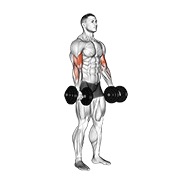
That steady pull has two practical benefits. First, it keeps the muscle under tension for longer, and time under tension is one of the drivers of growth. Second, it lets you train through angles that a dumbbell or barbell cannot reach, because the cable can pull from below, beside, or above you. The result is a smoother, more controlled feel that many lifters find easier on the joints while still being demanding on the muscle.
The advantages over free weights
Free weights remain the foundation of serious training, and nothing here argues against them. But the cable adds things they cannot. It gives you instant adjustability: change the pin and the weight changes in a second, which makes drop sets and quick progression effortless. It offers a huge range of attachments, from a straight bar to a rope to single handles, each changing the feel of the same basic movement.
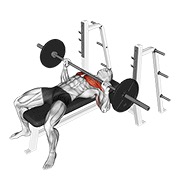
Cables are also forgiving when you train alone. A failed rep on a cable simply means the stack returns to the bottom, with no need to bail out from under a loaded barbell. That safety lets you push closer to your limit on isolation work without a spotter. None of this replaces the bench press or other heavy lifts, but it makes the cable an ideal partner for finishing a session and polishing detail.
Best cable moves by muscle group
The cable shines on pulling and isolation work. For the back, the cable lat pulldown builds width by training the lats through a long, controlled range, while the seated cable row builds thickness by driving the elbows back against constant tension. Both let you feel the back working in a way that is sometimes hard to find with a barbell.
For the arms, the triceps pushdown with a V-bar is one of the best isolation moves there is, keeping the triceps loaded at full lockout where a dumbbell would go slack. The same logic applies to cable curls and cable lateral raises for the shoulders. For the chest, a cable crossover hits the inner fibers at the squeeze, and for the legs, cable kickbacks and pull-throughs add targeted glute and hamstring work at the end of a session.
How to set the pulley and attachment
Getting results from a cable starts with two choices: how high you set the pulley and what you clip to it. The height decides the angle of pull, and the angle decides which muscle works hardest. As a rough guide, a high pulley suits pulling down and pressing down, a low pulley suits lifting up and rowing, and a chest-height pulley suits movements that travel across the body.
| Pulley height | Best for | Example move |
|---|---|---|
| High | Pulling and pressing down | Lat pulldown, triceps pushdown |
| Chest | Movements across the body | Cable crossover, face pull |
| Low | Lifting up, rowing | Seated row, cable curl |
The attachment fine-tunes the feel. A rope lets the wrists rotate freely and spread at the bottom, which many people prefer for triceps and face pulls. A straight or angled bar locks the grip for heavier pulldowns and curls. A single D-handle lets you train one side at a time and stretch through a longer range. Try a few and keep the one that lets you feel the target muscle best.
A sample cable-focused session
Here is how the moves above combine into a balanced upper-body session that leans on the cable station for most of the work.
| Order | Exercise | Target | Sets x reps |
|---|---|---|---|
| 1 | Lat pulldown | Back width | 3 x 10-12 |
| 2 | Seated cable row | Back thickness | 3 x 10-12 |
| 3 | Cable crossover | Chest | 3 x 12-15 |
| 4 | Triceps pushdown | Triceps | 3 x 12-15 |
| 5 | Cable curl | Biceps | 3 x 12-15 |
| 6 | Cable lateral raise | Side shoulder | 3 x 15 |
Notice that the heavier pulling moves come first while you are fresh, and the smaller isolation moves come last. This is the same ordering that works for any session, cable or not.
ข้อผิดพลาดที่พบบ่อย (Common mistakes)
- Using momentum instead of the muscle. Yanking the stack with your whole body wastes the cable's main strength, which is steady tension. Move under control both ways.
- Cutting the range short. The cable rewards a long range, so let the weight stretch the muscle at the start and squeeze it fully at the end.
- Ignoring the negative. Letting the stack crash back removes half the work. Lower it slowly to keep tension on the target.
- Picking the wrong pulley height. A low pulley for a pushdown changes the angle and the muscle worked. Match the height to the move.
- Treating cables as the whole program. Cables are excellent accessories, but heavy free-weight lifts still build the base.
คำถามที่พบบ่อย (FAQ)
Are cables as good as free weights for building muscle? For isolation and finishing work, cables can be better thanks to constant tension. For building overall strength and size, heavy free-weight compounds still come first. The smart plan uses both.
Can I build a full workout from the cable machine alone? Yes, especially for back, arms, and shoulders. You can train almost every muscle with the right pulley height and attachment, though most lifters combine cables with a few barbell or dumbbell lifts.
What attachment should a beginner start with? A rope and a straight bar cover most needs. The rope suits triceps and face pulls, the bar suits pulldowns and curls. Add a single handle later for one-sided work.
สรุป (Summary)
The cable machine earns its popularity by keeping tension constant through the whole range, offering instant adjustability, and reaching angles that free weights cannot. Use a high pulley for pulling and pressing down, a low pulley for lifting and rowing, and match the attachment to the muscle you want to feel. Lead with the bigger pulling moves like the lat pulldown and seated row, then finish with isolation work. Ready to put a cable session into a full plan? Browse our programs and pair this with the compound vs isolation guide.
Ready to put this into action? Start with a program for your level.
View programs →