Kettlebells for beginners
A single kettlebell is one of the most efficient pieces of equipment you can own. With one bell and a little floor space you can train your legs, hips, back, shoulders, and grip, all while raising your heart rate. For a beginner, that efficiency is a gift: fewer decisions, less clutter, and a clear path to building real, usable strength. This FitsMove guide explains what a kettlebell is, walks through the two movements every beginner should learn first, shows you how to choose a starting weight, lays out a simple plan, and covers the safety habits that keep training enjoyable.
What a kettlebell is
A kettlebell is a cast iron or steel ball with a flat base and a thick handle on top. The key feature is that its weight sits below and slightly away from the handle, rather than centred in your hand like a dumbbell. This offset is what makes the kettlebell special. It rewards movements where the weight swings, rotates, or shifts, and it forces your grip, core, and hips to work together to control it.
Because of that design, kettlebells are brilliant for movements that combine strength with momentum, such as the swing. They also work perfectly well for slower, grinding lifts like the goblet squat or press. One bell genuinely covers a lot of ground, which is exactly why it suits a beginner who wants results without a complicated setup.
The kettlebell swing
The swing is the signature kettlebell movement, and it is worth learning properly from day one. It is a hip movement, not a squat and not a front raise with the arms. The power comes from snapping your hips forward, and the arms simply guide the bell.
- Set up with the bell about a foot in front of you, feet a little wider than your hips.
- Hinge at the hips, pushing them back, and grab the handle with both hands.
- Hike the bell back between your legs like a rugby pass, keeping your back flat.
- Snap your hips forward hard, letting the bell float up to about chest height. Do not lift it with your arms.
- Let it fall back between your legs and flow straight into the next rep.
The swing trains the glutes, hamstrings, and the entire posterior chain, and it doubles as conditioning. If the hip hinge feels unfamiliar, slow it right down and practise the hinge with no weight first. The lower body work here connects directly to the upper legs category if you want related movements.
The goblet squat
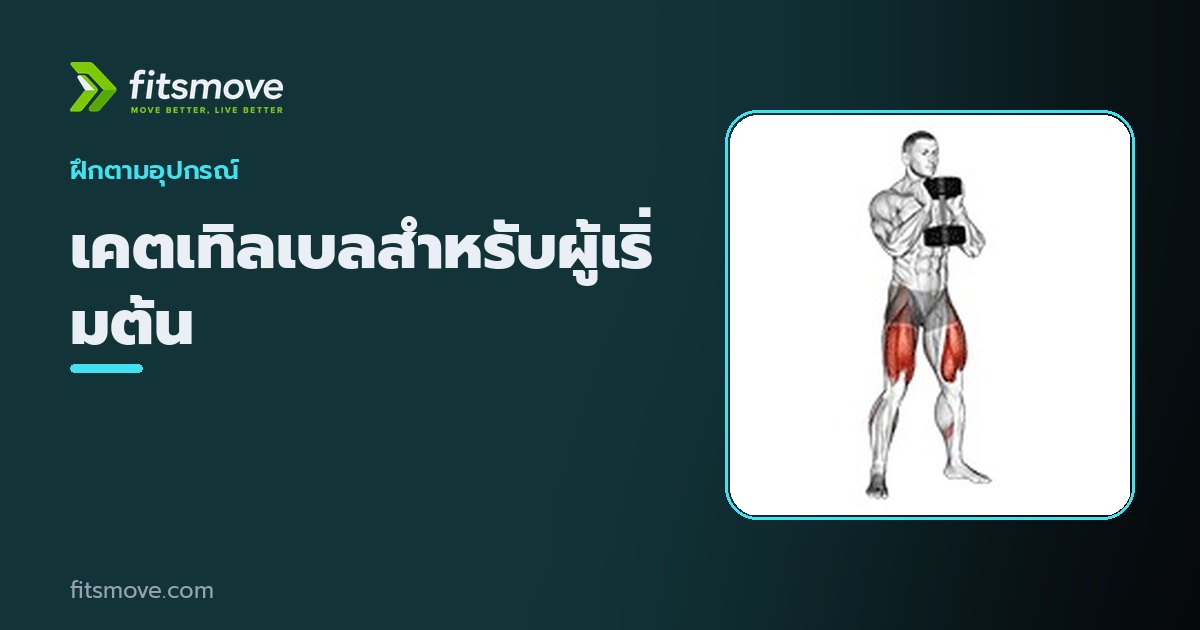
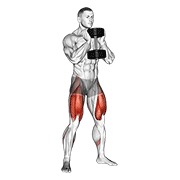
The goblet squat is the friendliest squat variation for beginners, and the kettlebell is the perfect tool for it. Holding the weight in front of your chest naturally encourages an upright torso and good depth.
Hold the bell by the horns of the handle, close to your chest. Stand with your feet a little wider than your shoulders, toes turned out slightly. Sit down between your hips, keeping your chest tall and your heels planted, until your thighs are at least parallel to the floor, then drive back up. The front-loaded weight acts as a counterbalance, which is why so many people squat better with a goblet squat than with a barbell on their back. You can see the same pattern with a dumbbell in the dumbbell goblet squat, and explore more leg work in the upper legs category.
How to choose your weight
Picking a sensible starting weight matters more with kettlebells than with most equipment, because the swing needs enough mass to move correctly. Too light, and the swing has no momentum to work with; too heavy, and your form falls apart. As a rough guide:
| Starting point | Swing weight | Goblet squat / press |
|---|---|---|
| Smaller or new to training | 8 kg | 6 to 8 kg |
| Average, some activity | 12 to 16 kg | 8 to 12 kg |
| Larger or already active | 16 to 20 kg | 12 to 16 kg |
Notice that the swing usually uses a heavier bell than the goblet squat or press, because the swing is powered by the strong muscles of the hips. If you can only buy one bell, choose one that lets you swing well, and simply do more reps on the slower lifts. For more on dialling in load across exercises, our choose dumbbell weight guide applies the same logic.
A simple starter plan
You do not need a complicated routine. Three short sessions a week, built from the swing, goblet squat, and a press, will take a beginner a long way. Here is a sample structure.
| Day | Workout |
|---|---|
| Monday | Swings 5 x 10, goblet squat 3 x 8 |
| Wednesday | Goblet squat 4 x 8, kettlebell press 3 x 6 each arm |
| Friday | Swings 6 x 10, goblet squat 3 x 10 |
Rest about a minute between sets, and keep every rep crisp rather than chasing a number. When the sets start to feel easy, add a rep or two, then eventually move up to a heavier bell. That steady climb is how strength builds. If you want a broader full-body session that mixes bells with other tools, our full body dumbbell routine pairs nicely, and the beginner program gives you a ready-made structure.
Safety and good habits
Kettlebells are safe when treated with respect. Always train on a clear, non-slip floor with room around you, since a swing needs space front and back. Keep your back flat during the hinge and never round it to reach the bell. Grip the handle firmly but let your hips, not your hands, do the heavy work on swings.
When you finish a set, set the bell down by hinging at the hips, not by bending at the waist. Start lighter than you think you need for the first week so the movement patterns become automatic before the load climbs. A clean, well-practised swing is far safer than a heavy, sloppy one.
Common mistakes to avoid
- Squatting the swing. The swing is a hip hinge, not a squat. Push the hips back, do not drop straight down.
- Lifting with the arms. The bell floats up from hip power; your arms only steer it.
- Rounding the back. Keep a flat, braced back every time you reach for the bell.
- Going too heavy too soon. Master the pattern with a manageable bell before adding load.
- Skipping the goblet squat. It builds the leg and core base that makes everything else work.
Frequently asked questions (FAQ)
Is one kettlebell really enough? For a beginner, yes. A single well-chosen bell lets you swing, squat, press, row, and carry, which covers your whole body. Many people train productively with one or two bells for a long time before needing anything else.
Are kettlebells good for fat loss? Swings in particular raise your heart rate while building strength, so kettlebell sessions blend muscle work and conditioning in one. Combined with sensible eating, that makes them a useful tool, though no single exercise targets fat in one spot.
How heavy should my first kettlebell be? Use the table above as a guide, and lean toward a weight you can swing with control. Most beginners do well starting somewhere between eight and sixteen kilograms depending on size and activity level.
Summary
A kettlebell is a compact, efficient way to build full-body strength and conditioning at the same time. Learn the swing as a powerful hip hinge, use the goblet squat to build a strong lower body, and choose a weight that lets you move well rather than one that flatters your ego. Train three short sessions a week, keep your form crisp, and add load gradually as the movements become second nature.
When you are ready to follow a structured plan, the beginner program on the programs page removes the guesswork, and our full body dumbbell routine makes a great companion. Pick up one bell, clear some space, and start with the swing and the goblet squat today.
Ready to put this into action? Start with a program for your level.
View programs →