Your first month workout plan
The first month of training decides more than any single workout ever will. It is not the month you build a new body, and it is not the month you set records. It is the month you become a person who trains. Almost everyone who quits does so inside the first four weeks, usually for the same reasons: they started too hard, chased numbers instead of skill, and treated soreness as proof of progress. This plan is built to keep you from making those mistakes. It is deliberately gentle, deliberately simple, and deliberately focused on the one outcome that matters most right now, which is showing up again next week.
Think of these four weeks as an on-ramp. You are learning the movements, letting your body adapt, and stacking small wins until training feels less like a project and more like a habit. If you want a broader orientation before you begin, the beginner start guide and the fuller beginner guide are both worth a read. This article is general educational information, not medical advice, so if you have any health concerns, check with a qualified professional before you begin.
Why the first month is different
In your first weeks, most of your progress comes from your nervous system, not your muscles. Your brain is learning to recruit muscle fibers, coordinate joints, and stabilize your body under load. This is why beginners often add weight quickly at the start: the movement is becoming efficient, not just stronger. If you rush this phase with sloppy technique, you teach your body the wrong patterns, and those are hard to unlearn later.
This is also the window where your connective tissue, tendons, and ligaments are adapting far more slowly than your enthusiasm. They need time and gentle, repeated exposure to load. Starting light is not a sign of weakness, it is how you build a foundation that will not crack when you start pushing harder in month two and beyond.
The three goals for these four weeks
Keep your ambitions narrow and clear. First, learn the basic movement patterns well enough that they feel natural: squat, hinge, push, pull, and brace. Second, build a consistent schedule you can repeat, ideally the same days each week. Third, finish every session feeling like you could have done a little more. That last one is the secret. Leaving something in the tank keeps you fresh, uninjured, and motivated to return.
Notice what is not on this list: burning fat, building visible muscle, or lifting heavy. Those come later, and they come much more easily once the habit and the technique are in place. Trust the process and let the first month do its quiet work.
How to structure your sessions
Train three days a week with a rest day between each session, for example Monday, Wednesday, and Friday. Each workout is a full-body routine, so every muscle group gets trained three times a week, which is ideal for learning. Full-body training also means missing one session is not a disaster, because you will hit those movements again in a couple of days.
Every session follows the same shape. Start with five to ten minutes of a proper warm-up to raise your temperature and prime the joints. Then do four to five main exercises for two to three sets each. Rest one to two minutes between sets. Finish with a few minutes of easy stretching or walking. The whole thing takes about forty-five minutes.
Your week-by-week 4-week plan
Here is the progression. The key idea is that intensity and volume rise slowly while your focus stays on clean movement throughout. Do not skip ahead even if week one feels easy, because feeling easy is exactly what week one is supposed to do.
| Week | Sessions | Sets per exercise | Focus |
|---|---|---|---|
| 1 | 3 full-body | 2 sets, light | Learn the movements, easy weight |
| 2 | 3 full-body | 2-3 sets | Add a small amount of load |
| 3 | 3 full-body | 3 sets | Build working weight, stay clean |
| 4 | 3 full-body | 3 sets | Slightly heavier, confident reps |
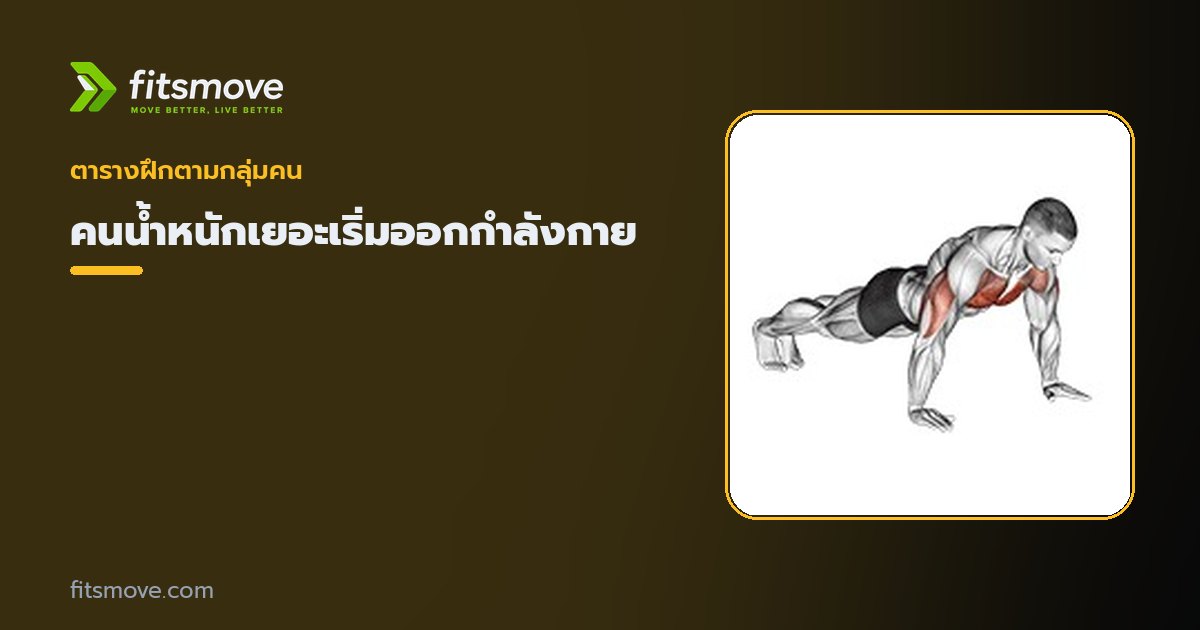
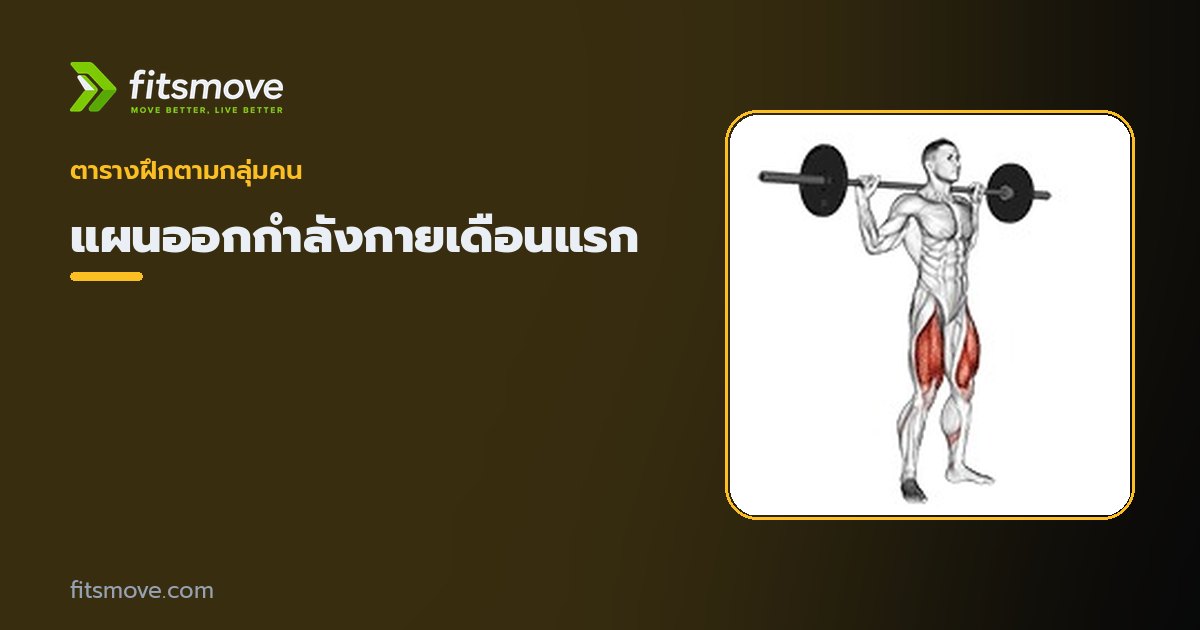
For your main movements, a simple and effective menu is the bodyweight squat or a goblet squat, a push-up or its knee variation, a row of some kind, a hip hinge, and a plank for your core. If you prefer a fully guided path, a structured beginner program lays all of this out for you so you never have to guess.


Progress without adding weight every session
You do not need to add weight every workout to improve. In the first month, progress often looks like doing the same weight with better control, adding one clean rep, or resting a little less between sets. This is the gentle side of progressive overload, and it is more than enough right now.
A useful habit is to keep a short log: the exercise, the weight, the sets, and how it felt. Over four weeks you will see a clear upward line, and that visible evidence is powerful motivation on days when you do not feel like training. When the last set of an exercise starts to feel easy for all your reps, that is your green light to add a small amount of weight next time.
Recovery is part of the plan
Your muscles get stronger while you rest, not while you lift. In your first month, respect the rest days and do not be tempted to train every day just because you feel motivated. On off days, gentle movement like walking counts as active recovery and helps you feel better without adding stress.
Sleep and food do a lot of the heavy lifting here. Aim for solid sleep, and make sure you eat enough, with adequate protein to support recovery. You do not need supplements or a complicated diet in month one. Consistency in the basics beats perfection in the details every single time.
ข้อผิดพลาดที่พบบ่อย (Common mistakes)
- Starting far too hard in week one. Extreme soreness is the number one reason beginners skip their next session. Ease in.
- Adding weight before the movement is clean. Chasing numbers before technique builds bad habits. Form comes before weight, always.
- Training every day out of enthusiasm. Muscles grow during rest. Skipping recovery slows progress and invites injury.
- Copying an advanced person's routine. Long, complex splits are wrong for month one. Simple and repeatable wins.
- Judging success by the mirror. Visible change takes longer than four weeks. Judge success by whether you showed up.
คำถามที่พบบ่อย (FAQ)
How much weight should I start with? Light enough that the last rep of each set still feels controlled and clean. If your form breaks down or you cannot finish the set, it is too heavy. Starting too light is a smaller mistake than starting too heavy.
Is three days a week really enough? Yes. For a beginner, three full-body sessions a week is highly effective and leaves plenty of recovery time. More is not better in your first month, it is just more fatigue.
I feel sore after every workout. Is that bad? Some muscle soreness is normal, especially early on, and it fades as your body adapts. Sharp or joint pain is different and is a reason to stop and rest. This is general educational information, not medical advice.
สรุป (Summary)
Your first month is about becoming someone who trains, not about transforming your body overnight. Train three full-body days a week, learn the five basic movement patterns with clean form, and let intensity rise slowly across the four-week plan. Progress through better control and small additions rather than heavy weight, respect your rest days, and keep a simple log to see your momentum build. Get oriented with the beginner start guide or the beginner guide, and when you are ready to follow a fully mapped path, begin a structured beginner program and browse all programs to find your fit.
Ready to put this into action? Start with a program for your level.
View programs →