
A plan for skinny hardgainers
If you have ever eaten what feels like a mountain of food and still not gained a pound, you know the frustration of being a hardgainer. The word describes people who are naturally lean, often with fast metabolisms and small appetites, who find it genuinely hard to add muscle and weight. The good news is that hardgainer is a description, not a life sentence. The physiology of building muscle is the same for everyone; you simply have to apply the principles more deliberately. That means eating more than you think you need, training the big lifts hard, keeping your volume smart rather than excessive, and recovering like it is part of the program. This guide lays out exactly how to do that, as general educational information rather than medical advice.
Eat in a calorie surplus
For a naturally skinny person, this is the whole game. You cannot build a bigger body out of nothing; muscle growth requires extra energy and building blocks, which means eating more calories than you burn. Most hardgainers dramatically underestimate how little they actually eat, because a fast metabolism and a small appetite hide the gap. If the scale is not moving up, you are not in a surplus, full stop.
Start by adding roughly 300 to 500 calories above your maintenance level and track your weight weekly. Aim for a slow, steady climb of a few hundred grams per week. If the scale stalls for two weeks, add more food. To understand the mechanics of energy balance from the other direction, our guide on calorie deficit basics explains the same principle in reverse, and reading it makes the surplus concept click.
Practical tips help enormously here. Eat frequently, include calorie-dense foods like nuts, oats, rice, olive oil, and whole milk, and do not fill up on low-calorie bulky vegetables at the expense of energy. Liquid calories such as milk or a homemade shake are a hardgainer's best friend because they are easy to consume on top of meals.
Prioritise heavy compound lifts
With food handled, training is where the surplus turns into muscle rather than fat. Hardgainers should build their program around heavy compound movements, the multi-joint lifts that load the most muscle at once and drive the biggest strength and size gains. This is the most efficient way to grow, especially when your recovery capacity is limited.
The core of any hardgainer plan should be the barbell squat, the deadlift, and the bench press, supported by rows and overhead pressing. These lifts train enormous amounts of muscle and let you add weight over time, which is the real driver of growth. Our muscle building guide goes deeper on how these movements fit into a complete plan.
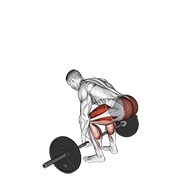
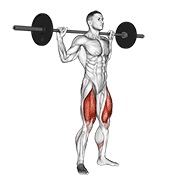
Getting strong on these lifts matters more than chasing a burn or a pump. Track your top sets and treat every session as a chance to add a little weight or a rep. The pursuit of steadily heavier compounds, applied over months, is what changes your frame.
Use just enough volume
Here is where many skinny lifters go wrong. Assuming more is always better, they pile on set after set, chasing a bigger workout. But hardgainers often have limited recovery, and excessive volume simply burns the very calories and energy you are trying to bank for growth. Doing too much can leave you spinning your wheels, sore and tired but not bigger.
Aim for enough hard, quality sets to stimulate growth and no more. For most hardgainers, a moderate number of challenging sets per muscle each week is plenty when the intensity is high and progression is consistent. Quality beats quantity here. Every set should be productive, taken close to but not always to failure, with the goal of progressing over time. That principle of doing a little more each week is the engine of results, and it is covered in progressive overload.
A sample weekly schedule
A three or four day upper/lower or full-body split works beautifully for hardgainers because it hits each lift often without demanding excessive daily volume. The plan below is an example built around heavy compounds with sensible support work and full rest days.
| Day | Focus | Main lifts | Notes |
|---|---|---|---|
| Monday | Lower | Squat, hinge, calf | Heavy, add weight over time |
| Tuesday | Upper | Bench, row, overhead press | Compounds first, then arms |
| Wednesday | Rest | Walk, eat, sleep | Recovery is training |
| Thursday | Lower | Deadlift, split squat, core | Keep sets quality |
| Friday | Upper | Incline press, pull, shoulders | Finish with light arm work |
| Weekend | Rest | Eat well, sleep well | Two full rest days |
Notice how much rest is built in. For a hardgainer that is a feature, not a flaw. The training provides the stimulus; the food and rest turn it into muscle. If four days feels like too much recovery demand, a three day full-body version works just as well.
Recover as hard as you train
Muscle is not built in the gym, it is built while you recover from the gym. For a hardgainer with limited recovery capacity, protecting rest is as important as any lift. Sleep is the biggest lever. Aim for seven to nine hours of quality sleep, because that is when most repair and growth hormone release happens, a link explained in sleep and muscle growth.
Nutrition around recovery matters too. Spread your protein across the day to keep the muscle-building signal topped up, and do not train through genuine exhaustion. Protein and rest work together, as our guide to protein and recovery explains. If you are always sore, stressed, and hungry with no weight gain, that is your body telling you to eat more and rest more, not train more.
Track, adjust, and be patient
Building muscle as a hardgainer is a numbers game played over months. Keep two simple logs: your bodyweight each week and your key lifts each session. These two numbers tell you almost everything. If your weight is climbing slowly and your lifts are getting stronger, the plan is working. If both are flat, the fix is usually more food and better sleep, not a fancier routine.
Adjust in small steps. Add food when the scale stalls, add weight when a lift feels easy, and resist the urge to change everything at once. Consistency over many months is what turns a skinny frame into a solid, muscular one. Frame progress in terms of sustainable habits you can hold for a year, not a two-week sprint.
ข้อผิดพลาดที่พบบ่อย (common mistakes)
- Not actually eating in a surplus. If the scale is not rising, you are not eating enough, no matter how much it feels like you are.
- Doing too much volume. Endless sets burn the energy you need for growth and hurt recovery. Keep sets hard and focused.
- Neglecting the big compounds. Isolation work is a supplement, not the foundation. Get strong on squats, hinges, and presses.
- Cutting recovery short. Poor sleep and constant training sabotage the whole effort. Rest days are when you grow.
- Changing the plan constantly. Progress needs consistency. Give a sensible plan months, not days.
คำถามที่พบบ่อย (FAQ)
How many calories should a hardgainer eat? Start around 300 to 500 above your maintenance and track your weight weekly. If you are not gaining a few hundred grams a week, add more. Every metabolism is different, so let the scale guide you.
Should hardgainers do cardio? A little is fine for health, but heavy cardio burns calories you are trying to bank for growth. Keep it light and moderate so it does not undo your surplus.
How long until I see results? Expect visible change over months, not weeks. If your bodyweight and key lifts are both climbing steadily, the plan is working even when the mirror is slow to show it.
สรุป (summary)
The hardgainer label is real, but it is not the end of the story. The path is clear: eat in a genuine calorie surplus, build your training around heavy compound lifts, use just enough volume to grow without wrecking recovery, and rest and eat like it is part of the program. Track your weight and your lifts, adjust in small steps, and give it months of consistency, as general educational guidance rather than medical advice.
Ready to put muscle on that frame? Start with our muscle building guide for the full picture, lock in your food using progressive overload on the big lifts, and follow a structured intermediate program to keep the compounds and progression organised. Set your surplus this week and start logging.
Ready to put this into action? Start with a program for your level.
View programs →