Weight training for teens
There is an old myth that lifting weights stunts a teenager's growth. It simply is not supported by the research. What the evidence actually shows is that well-coached resistance training is one of the safest and most beneficial activities a young person can do: it builds strength, improves sports performance, strengthens bones, and teaches discipline that carries into adult life. The key words are well-coached. A teenager who trains with good form under supervision is doing something excellent for their body. A teenager who copies a random heavy program from social media and grinds to failure alone is asking for trouble. This guide is written for teens, and for the parents and coaches who help them, as general educational information rather than medical advice. If a young athlete has any health condition, a doctor should be consulted first.
Is it safe for teens to lift weights?
Yes, when it is done properly. Major sports-medicine and paediatric bodies agree that supervised resistance training is safe and healthy for young people who are ready to follow instructions. Injuries in youth lifting almost always come from poor technique, loads that are too heavy, or a lack of supervision, not from the act of lifting itself. In fact, a well-structured program tends to reduce injury risk in other sports by building resilient muscles, tendons, and coordination.
The old growth-plate fear deserves a plain answer. Growth plates can be injured by trauma in any sport, but there is no good evidence that sensible, supervised strength training damages them. What matters is that a teen learns to move well before adding meaningful load. That is the same principle every beginner follows, and it is why form comes before weight for lifters of any age.
A quick note on readiness: it is less about a specific birthday and more about maturity. If a young person can listen, follow coaching cues, and stay focused for a session, they are ready to start learning the movements.
Technique first, always
For a teenager, the first weeks of training are a skill course, not a strength test. The goal is to own the pattern of each movement with light load, so that heavier weight later sits on a solid foundation. Start with bodyweight and very light weights. Master the hinge, the squat, the push, and the pull before anyone talks about numbers.
Coaches should watch every set at the start and give one clear cue at a time. Filming a set on a phone and reviewing it together is a simple, powerful teaching tool. A teen who genuinely understands what a good rep feels like will train safely for the rest of their life. To build that base, our beginner guide walks through the same fundamentals in more detail.
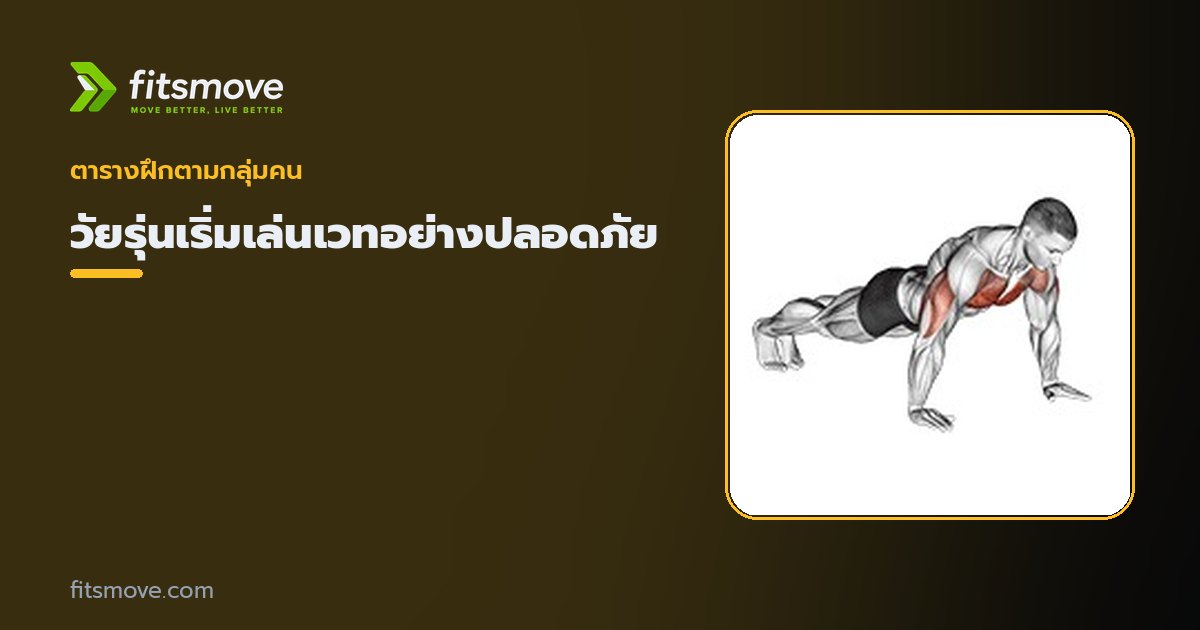
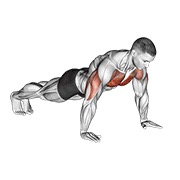
Bodyweight movements are the perfect starting classroom. A clean push-up teaches the pressing pattern with zero equipment risk, and it can be made easier on an incline or harder over time. Bodyweight squats and planks build the same control that later transfers to loaded lifts.
A light full-body schedule
Most teens do best with two or three full-body sessions per week, with at least one rest day between them. Full-body training keeps volume manageable, teaches the main patterns often, and leaves plenty of energy for school sports and play. Keep every set two to three reps away from failure, and keep the load light enough that technique never breaks down.
| Day | Focus | Sample movements | Notes |
|---|---|---|---|
| Monday | Full body | Goblet squat, push-up, row, plank | Light load, learn the patterns |
| Wednesday | Rest or sport | Walking, a game, easy cardio | Recovery still builds you |
| Friday | Full body | Hinge, incline push-up, band row, carry | Add a rep before adding weight |
| Weekend | Play | Sport, cycling, swimming | Movement should be fun |
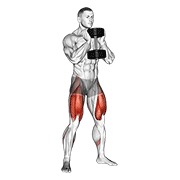
A goblet squat is an ideal first loaded lift because it is easy to set down and it naturally teaches an upright, controlled squat. Keep sessions to around 45 minutes so training stays enjoyable rather than a chore. When a teen can complete every set with clean form and reps in reserve, that is the signal to nudge the load up slightly, an idea explained in progressive overload.
Food and sleep for growing bodies
Teenagers are already building tissue at a rapid rate, and training adds to that demand. The nutrition message is simple and positive: eat enough real food across the day. Regular meals with protein at each one, plenty of carbohydrates to fuel school and sport, fruits and vegetables, and water throughout the day. There is no need for complicated supplements. Whole foods do the job for the vast majority of young athletes, and our overview of protein and recovery explains why protein spread through the day helps.
Sleep may be the single most underrated factor. Teens need more sleep than adults, often nine hours or more, and much of the body's repair and growth happens during deep sleep. A teen who trains hard but sleeps five hours will feel weak, moody, and prone to injury. Protecting sleep is protecting progress, a link explored in sleep and muscle growth.
Why supervision matters
Supervision is not about mistrust, it is about safety and speed of learning. A coach, a trained parent, or a qualified trainer can spot a rounding back, a caving knee, or a bar drifting off path long before it becomes a problem. They can also stop a teen from doing the classic thing every beginner wants to do: adding weight too fast to impress friends.
Good supervision also builds good habits. A young lifter who learns to warm up, log their sets, and respect rest days is building a template that will serve them for decades. If a program feels too advanced, too heavy, or too focused on maxing out, that is a sign to step back to the basics. Structured, age-appropriate plans like the ones in our beginner program keep the load sensible and the focus on movement quality.
Building lifelong habits
The real prize of teen training is not a bigger bench at 16. It is a young person who understands their body, enjoys moving, and carries a healthy relationship with exercise into adulthood. Frame every session around consistency and quality, not ego. Celebrate a cleaner rep or an extra push-up as much as any weight on the bar.
Encourage variety too. Strength work pairs beautifully with sport, running, cycling, and simple play. A teen who moves in many ways builds broad, resilient athleticism. The aim is a body that is strong, capable, and comfortable, and a mind that sees training as something to enjoy rather than endure.
ข้อผิดพลาดที่พบบ่อย (common mistakes)
- Chasing heavy weights too soon. Impressing friends with load is the fastest route to bad form and injury. Master the pattern first.
- Training alone with no coaching. Early on, a set of experienced eyes is worth more than any program.
- Copying advanced routines from social media. Programs built for adult athletes are wrong for a beginner teen.
- Skimping on sleep and food. A growing, training body needs both. Cutting them undoes the work.
- Training to failure every set. Leave two to three reps in reserve to protect form and recovery.
คำถามที่พบบ่อย (FAQ)
Will lifting weights stunt my growth? There is no good evidence that sensible, supervised strength training harms growth. Injuries come from bad technique and excessive load, not from lifting done well. Focus on form and appropriate weights.
What age can a teen start? It depends more on maturity than a number. If a young person can follow instructions, stay focused, and train under supervision, they can begin learning the movements with bodyweight and light loads.
How heavy should a teen lift? Light enough that form never breaks and two to three reps are always left in reserve. Add weight only when every set is clean, using a slow and steady approach.
สรุป (summary)
Weight training is a genuinely great activity for teenagers when it is done the right way: technique first, light loads, full-body sessions, good food, plenty of sleep, and supervision from someone who knows what to look for. Approached this way, it builds strength, confidence, and habits that last a lifetime, with general educational guidance rather than medical advice, and a doctor's input if any health condition exists.
Ready to begin the right way? Start with our beginner guide to lock in the fundamentals, then follow a structured beginner program that keeps loads sensible and progress steady. Pick two or three days this week, keep it light, and make good form the win.
Ready to put this into action? Start with a program for your level.
View programs →