Working out over 40
Turning forty is not a reason to slow down. It is one of the best reasons there is to start or renew a consistent strength habit. From your forties onward, the body naturally begins to lose muscle and bone unless you give it a reason to hold on to them, and resistance training is by far the most effective way to do exactly that. Done sensibly, training after forty keeps you strong, mobile, and independent for decades, protects your joints, supports your metabolism, and keeps you feeling years younger than the number on your birthday card.
The approach simply shifts a little with age. You still train hard and progress steadily, but you pay closer attention to warming up, recovery, and technique, because the margin for careless mistakes narrows over time. This guide is general educational information rather than medical advice. If you are new to exercise, have been away from it for a while, or live with any health condition such as heart disease, high blood pressure, joint problems, or diabetes, please talk to your doctor before you begin. When you are ready for a structured, gentle on-ramp, our beginner programs are a great place to start.
What changes after forty
A few things genuinely shift with age, and understanding them helps you train smart rather than fearful. From around your forties, muscle mass and strength decline gradually unless you actively train, a process that accelerates if you do nothing. Bone density tends to decrease too, which makes falls more consequential. Tendons and joints become a little less forgiving, and recovery between hard sessions takes a bit longer than it did in your twenties.
None of this means you should train less. It means you should train deliberately. Strength training directly counters muscle and bone loss, and loading your joints in a controlled way keeps them healthy rather than harming them. The people who struggle with their joints as they age are far more often those who stopped moving than those who kept lifting sensibly. The goal is simply to respect these changes, not to fear them.
Warming up becomes non-negotiable
In your twenties you might have gotten away with jumping straight into a heavy set. After forty, a proper warm-up is one of the smartest investments you can make. Cold muscles and tendons are stiffer and more prone to strains, so a few minutes of preparation dramatically lowers your injury risk and improves how you feel and perform in the session that follows.
Start with five to ten minutes of light general movement, such as brisk walking or an easy cycle, to raise your body temperature. Then move through the joints you are about to load with gentle, controlled movements, and finish with a couple of light warm-up sets of your first exercise before adding real weight. Our dedicated warm-up guide walks through exactly how to build this routine. The five minutes you spend here protect the whole session.
Recovery is where the results live
Recovery matters at every age, but after forty it becomes central rather than optional. Your body still adapts and grows stronger, it simply needs a little more time between hard efforts to do so. Pushing through inadequate recovery is the fastest route to nagging aches, stalled progress, and the kind of setback that keeps you out of the gym for weeks.
Protect your sleep, aiming for seven to nine hours a night, since this is when most repair happens. Prioritise protein across your meals to give your body the raw materials it needs, and space your hard sessions so each muscle group gets at least 48 hours before you train it hard again. Building in easier days and listening to persistent aches rather than powering through them keeps you progressing for the long haul. Our protein and recovery guide covers the details that make the biggest difference.
A sensible three-day full-body plan
For most people over forty, a moderate three-day full-body routine hits the sweet spot: enough stimulus to build and maintain strength, with plenty of recovery built in. Run it on non-consecutive days, such as Monday, Wednesday, and Friday, and always begin with the warm-up above. Choose loads that leave you two or three clean reps in reserve rather than grinding to failure.
| Day | Focus | Main exercises |
|---|---|---|
| Day 1 | Full body | Goblet squat 3 x 10, chest press 3 x 10, row 3 x 10, plank 3 x 30 sec |
| Day 2 | Full body | Romanian deadlift 3 x 8, shoulder press 3 x 10, lat pulldown 3 x 10, glute bridge 3 x 12 |
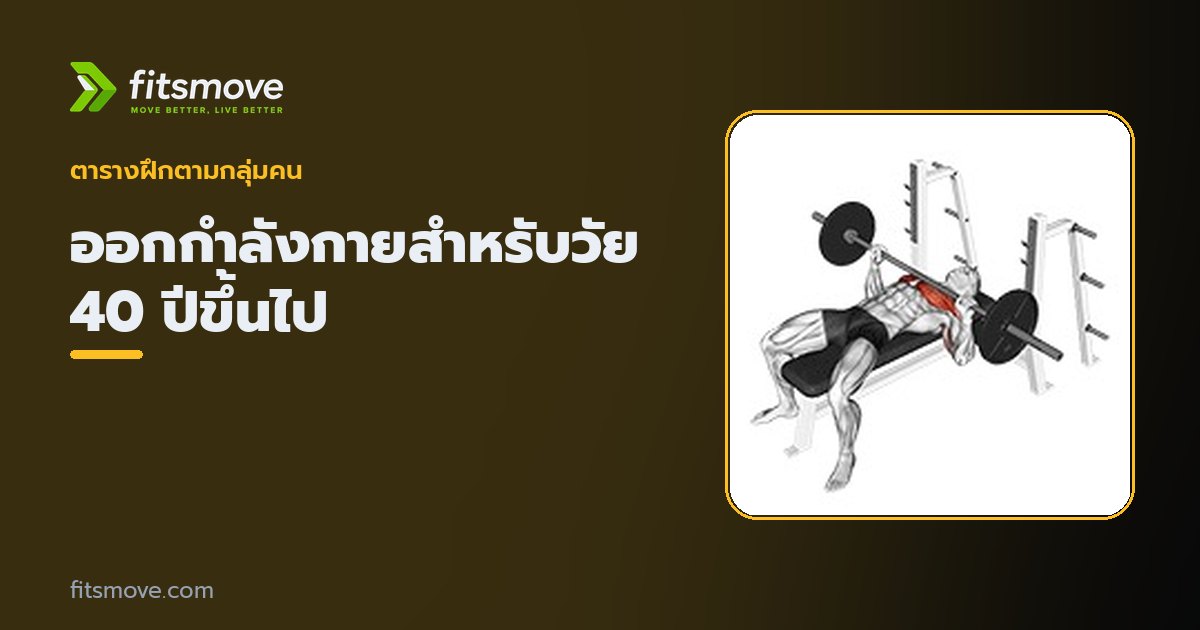
| Day 3 | Full body | Lunge 3 x 10 each leg, incline press 3 x 10, row 3 x 12, core work 3 sets |
Rest 90 seconds to two minutes between sets. Beginners should start with two sessions a week and lighter weights, mastering the movement patterns before adding load. Focus on smooth, controlled reps through a full range of motion rather than heavy weights with rushed technique. For more on frequency, see our guide on how many days per week to train.
Building strength safely
Strength gains come from steady progressive overload, and this works just as well after forty as before, only the pace is a touch more patient. Add small amounts of weight or an extra rep when a load starts to feel comfortable with clean form, and never sacrifice technique to lift more. Sound form is your best insurance against injury at any age, and it matters even more when recovery takes longer.
Favour controlled compound movements such as squats, presses, rows, and hip hinges, which train the most muscle for your time and build practical, everyday strength. Machines and dumbbells can be gentler on the joints than heavy barbells while you build a base, and single-joint work in a comfortable range helps around any cranky areas. Keep a training log so you can see your progress and know when to nudge the weight up. Our full muscle building guide explains the principles that make this work over the long term.
Precautions and when to see a doctor
Training after forty is remarkably safe and beneficial for most people, but a few sensible precautions are worth taking. Progress gradually rather than doing too much too soon, since the most common cause of injury is a sudden jump in weight or volume. Never train through sharp joint pain, which is a signal to stop rather than push. Stay hydrated, and pay attention to how you feel during and after each session.
Some situations warrant a conversation with your doctor first. If you have any diagnosed heart condition, high blood pressure, diabetes, joint or back problems, or you have been sedentary for a long time, get medical clearance before starting a new program. Chest pain, unusual shortness of breath, dizziness, or an irregular heartbeat during exercise all mean you should stop and seek medical advice. None of this is cause for worry, it is simply how sensible adults approach a new physical challenge.
ข้อผิดพลาดที่พบบ่อย (Common mistakes)
- Skipping the warm-up. After forty this is a genuine injury risk. Give yourself five to ten minutes of preparation before every session.
- Trying to train like you did at twenty. Ego lifting and cramming in daily sessions leads to setbacks. Train smart and recover fully.
- Ignoring persistent aches. Sharp or lingering joint pain is feedback, not something to push through. Adjust or rest.
- Neglecting recovery. Too little sleep, protein, or rest between sessions caps your progress and raises your injury risk.
- Avoiding weights out of fear. Strength training protects your joints and bones. Doing nothing is riskier than lifting sensibly.
คำถามที่พบบ่อย (FAQ)
Is it safe to start lifting weights after 40? For most people, yes, and it is one of the best things you can do for long-term health. Start gradually, focus on technique, and if you have any health condition, get your doctor's clearance first.
How many days a week should I train? Three moderate full-body sessions a week suits most people over forty, with a rest day between each. Beginners can start with two and build up as recovery and confidence improve.
Do I need to lift heavy to benefit? No. Challenging but controlled weights that leave a couple of reps in reserve build strength safely. Consistency and good form matter far more than chasing maximum loads.
สรุป (Summary)
Training after forty keeps you strong, mobile, and independent, and it is one of the best investments you can make in your future. Warm up properly, prioritise recovery and protein, train the whole body about three times a week with controlled compound movements, and apply patient progressive overload. Respect the changes that come with age rather than fearing them, and check with your doctor if you have any health condition. Ready to begin with a gentle, structured plan? Choose one of our beginner programs and start today.
Ready to put this into action? Start with a program for your level.
View programs →