Cardio vs weights for fat loss
Walk into any gym and you will see two camps. One group lives on the treadmill, convinced that fat loss is a matter of burning as many calories as possible. The other group never touches cardio, sure that lifting alone will reshape their body. Both are partly right and partly missing the point. The honest answer to "cardio or weights for fat loss" is that they solve different problems, and the people who get the best, most lasting results usually use both.
This article breaks down what cardio actually does, what resistance training actually does, and why the combination protects the thing most crash approaches destroy: your muscle. Fat loss is built on a calorie deficit, but how you create and maintain that deficit decides whether you finish leaner and stronger or just smaller and softer. FitsMove favours the approach you can keep doing for months, not the one that wins a single brutal week.
What fat loss really depends on
Before comparing the two, it helps to be clear about the foundation. You lose fat when you take in fewer calories than you burn over time, a state called a calorie deficit. No exercise style bypasses this. Cardio and weights are tools to help you reach and hold that deficit, plus tools that shape what your body looks like at the end of it.
If you are new to the concept, start with calorie deficit basics. Once that is in place, the question becomes how to spend your training time. That is where the cardio-versus-weights debate actually lives.
What cardio does for fat loss
Cardiovascular exercise, from brisk walking to running to cycling, burns calories during the session and improves your heart and lung fitness. It is an efficient way to widen your daily deficit without having to cut food any further, which many people find easier to sustain than constant hunger.
Cardio also improves recovery capacity, mood, and sleep, all of which quietly support fat loss. There are different intensities to choose from: lower-intensity work like LISS is gentle and easy to recover from, while HIIT burns more in less time but costs more recovery. For an overview of which styles suit which goals, see the best cardio for fat loss guide. Browse cardio movements to add variety.
The catch: cardio alone does little to preserve muscle in a deficit. If all you do is cardio while eating less, a meaningful share of the weight you lose can come from muscle, not just fat.
What weight training does for fat loss
Resistance training rarely burns as many calories per session as a hard cardio bout. Its value is different and arguably more important during a fat-loss phase: it sends your body a strong signal to keep the muscle it already has.
When you are in a deficit, your body looks for tissue to break down for energy. Muscle is metabolically expensive, so an unstimulated body is happy to shed it. Lifting tells the body that muscle is still needed, so it preferentially holds onto it and burns more fat instead. The result is the same scale weight but a visibly leaner, firmer shape. For the full picture of how muscle is built and kept, see the muscle building guide and the dedicated guide on how to keep muscle while cutting.
Muscle also raises your resting metabolic rate modestly. The bigger effect, though, is on body composition and how you look and feel.
There is a longer-term payoff too. The muscle you protect during a fat-loss phase stays with you afterward, giving you a more capable, resilient body and a slightly higher daily calorie burn going forward. People who lift through their cut tend to find it easier to maintain their results, because they finish with more muscle and better habits than someone who simply ate less and ran more. That is the difference between losing weight once and staying lean.
Cardio vs weights: a side-by-side comparison
| Factor | Cardio | Weight training |
|---|---|---|
| Calories burned per session | Higher | Lower |
| Protects muscle in a deficit | Low | High |
| Improves heart and lung fitness | High | Low to moderate |
| Shapes a lean, firm look | Low | High |
| Recovery cost (LISS) | Low | Moderate |
| Long-term metabolic benefit | Moderate | Higher (via muscle) |
The table makes the conclusion clear. These are not rivals competing for the same job. Cardio is your calorie-burning and fitness tool. Weights are your muscle-protecting and shaping tool. Choosing only one means leaving half the benefit on the table.
How to combine both without overdoing it
A practical weekly structure for most people aiming to lose fat looks like this: lift weights 3 to 4 times a week as the priority, and add 2 to 4 cardio sessions around it, leaning on lower-intensity work so it does not eat into your lifting recovery.
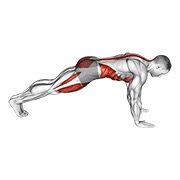
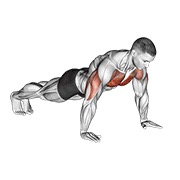
Prioritise the lifting. If a day is crowded, protect the weights session and trim the cardio. A simple sequence is to lift first when you have energy, then add a separate easy cardio session on another day or later in the same day. Bodyweight movements like the push-up and conditioning moves like the mountain climber let you blend strength and heart-rate work when time is tight. If you want a done-for-you structure, the FitsMove programs lay out exactly how to balance the two.
A note on doing too much
More is not always better. Piling on hours of cardio on top of heavy lifting and an aggressive deficit is a fast route to burnout, poor sleep, and stalled progress. If your results stop, the fix is usually not more cardio but smarter adjustment: see the guide on the fat-loss plateau.
If you have a heart condition, joint issues, are pregnant, or are returning from injury, check with a qualified doctor or coach before starting a new training routine. A short consultation can save months of trial and error.
ข้อผิดพลาดที่พบบ่อย (Common mistakes)
- Doing only cardio. You lose weight but also lose muscle, ending up smaller and softer.
- Doing only weights with no movement. You miss easy extra calorie burn and cardiovascular health.
- Adding cardio instead of fixing food. Cardio cannot rescue a diet with no deficit.
- Too much HIIT. High intensity every day wrecks recovery and lifting quality.
- Skipping protein. Without enough protein, lifting cannot protect muscle effectively.
คำถามที่พบบ่อย (FAQ)
Should I do cardio before or after weights? If fat loss and strength both matter, lift first while fresh, then do cardio, or split them into separate sessions. Doing hard cardio right before lifting can drain the strength you need to protect muscle.
Will lifting weights make me bulky while cutting? No. In a calorie deficit you are not in a position to add large amounts of muscle. Lifting keeps the muscle you have and helps you look leaner, not bigger.
How much cardio is enough? There is no fixed number. Start with 2 to 3 easy sessions a week on top of your lifting, and add more only if your deficit needs help and your recovery allows it.
สรุป (Summary)
Cardio and weights are not enemies. Cardio burns calories and builds fitness; weights protect the muscle that keeps you lean, strong, and shaped through a deficit. Use both: make lifting the priority, add manageable cardio around it, eat enough protein, and let a sustainable deficit do the fat loss over time. Ready to put it together? Pick a structured plan from the FitsMove programs and let the balance be done for you.
Ready to put this into action? Start with a program for your level.
View programs →