Which cardio burns fat best?
Walk into any gym and you will hear strong opinions about cardio. One person swears by long steady jogs, another insists short brutal intervals are the only thing that works, and someone on the treadmill is carefully keeping their heart rate inside the "fat-burning zone" printed on the console. So which kind of cardio actually burns the most fat? The honest answer is more freeing than any single method: the best cardio for fat loss is the one you will do consistently.
In this FitsMove guide we compare the three styles most people use, low-intensity steady state, high-intensity intervals, and plain walking, clear up the long-running confusion about the fat-burning zone, and give you a simple way to choose based on your schedule, joints, and preferences. Cardio is a powerful support tool for fat loss, but it works best alongside a sensible calorie deficit and some resistance training, not as a punishment for eating. If you are new to exercise or have a heart, joint, or other medical condition, check with a doctor before starting an intense program.
How cardio actually helps fat loss
Fat loss comes down to energy balance: taking in less than you burn over time. Cardio helps on the "burn" side by adding to your daily energy output. It is not magic and it does not melt fat off specific body parts, but a few well-placed sessions each week can widen your deficit without forcing you to eat uncomfortably little.
Just as importantly, cardio builds your aerobic base, improves heart and lung health, helps manage stress, and can sharpen sleep and appetite signals. Those benefits make the whole fat-loss process more sustainable, which matters far more than squeezing out a few extra calories in any single workout.
The fat-burning zone myth
Many machines show a low-intensity "fat-burning zone" and suggest staying there is best for losing fat. Here is the part that gets misread: at lower intensities a larger percentage of the energy you use does come from fat. That sounds great until you look at totals. At higher intensities you burn more calories overall, and a smaller percentage of a much bigger number often beats a bigger percentage of a small one.
What actually matters for fat loss is total energy burned over the day and week, plus how well the workout fits into your life. Do not chase a magic heart-rate band. A brisk session that burns more total calories, or an easy one you will actually repeat, both beat a "perfect zone" workout you dread and skip.
LISS: low-intensity steady state
LISS means holding a comfortable, steady pace for a longer stretch: think a brisk walk, easy cycle, or relaxed row where you can still hold a conversation. It is gentle on the joints, easy to recover from, and simple to add on top of your other training without eating into your strength sessions. Because the effort is low, it rarely leaves you wiped out.
The trade-off is time. To burn a meaningful number of calories you usually need 30 to 60 minutes. For a deeper look at programming this style, see our guide to LISS cardio. LISS pairs especially well with lifting because it adds output without much fatigue.
HIIT: high-intensity intervals
HIIT alternates short bursts of hard effort with brief recovery, for example 30 seconds near-max followed by 60 to 90 seconds easy, repeated several times. It is time-efficient, burns a solid number of calories in a short window, and can raise your metabolism slightly for a while afterward, an effect explained in EPOC and the afterburn.
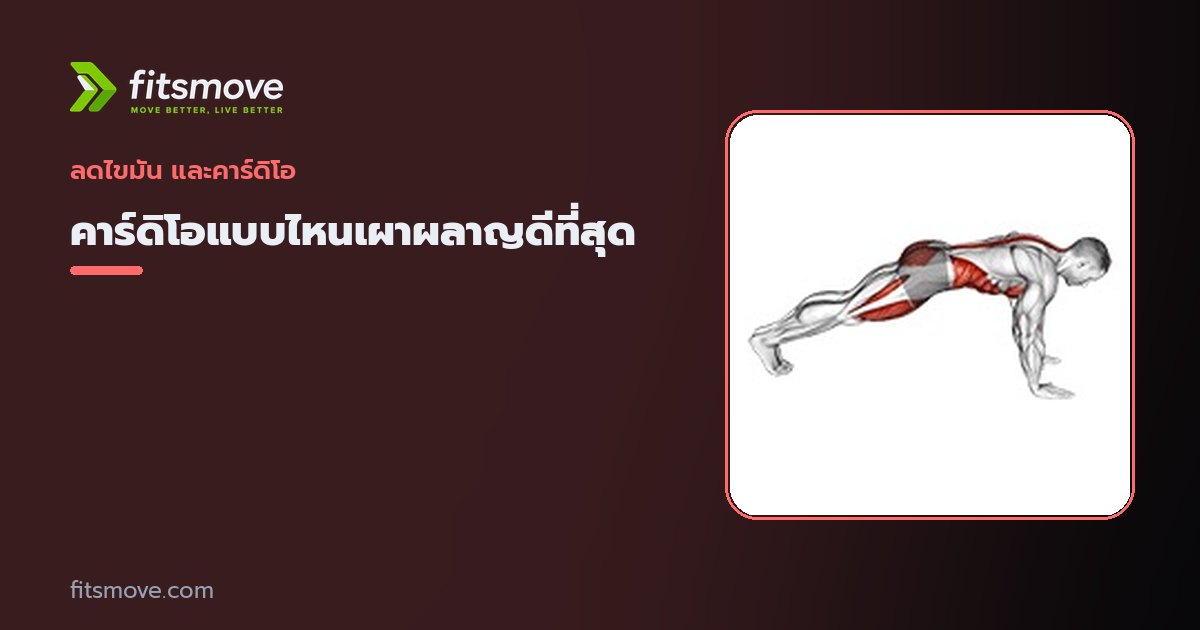
The catch is that real HIIT is demanding. It taxes your recovery, can interfere with hard leg days if overdone, and carries more injury risk with poor form. Two to three short sessions a week is plenty for most people. Bodyweight moves work well as intervals: a mountain climber is a great example of a joint-friendly, high-output exercise. For a full breakdown of structure and dosing, read HIIT explained.
Walking: the underrated option
Walking gets dismissed as too easy to matter, which is a mistake. It is the most sustainable form of activity there is: nearly zero injury risk, no recovery cost, no equipment, and you can do it almost anywhere. Stacking up daily steps quietly adds a large amount of energy output across a week without ever feeling like a workout.
For many busy people, simply walking more, taking the stairs, parking farther away, walking after meals, is the most realistic fat-loss tool of all. It also leaves your energy intact for the gym, so your resistance training and harder cardio do not suffer.
Comparing the three
None of these is universally "best." Each shines in different situations, so the right pick depends on your time, joints, and how it fits around your lifting.
| Style | Time needed | Joint impact | Recovery cost | Best for |
|---|---|---|---|---|
| Walking | Flexible, spread out | Very low | Almost none | Everyone, daily baseline |
| LISS | 30-60 min | Low | Low | Adding output near lifting |
| HIIT | 15-25 min | Moderate-high | Higher | Busy schedules, time-crunched |
A simple, balanced week might be lots of daily walking as your base, one or two LISS sessions, and one or two short HIIT sessions, adjusted to how recovered you feel.
Choosing based on your lifestyle
If you are short on time, HIIT delivers the most output per minute, so two or three brief sessions can do a lot. If you sit at a desk all day, building a daily walking habit is the highest-value change you can make. If your joints complain or you train legs hard, lean toward walking and LISS so cardio does not fight your strength work.
Whatever you choose, anchor it to a structured plan rather than random sessions. Browse the FitsMove programs to slot cardio around your lifting intelligently, and explore the cardio collection for exercises to build your sessions from.
ข้อผิดพลาดที่พบบ่อย (Common mistakes)
- Chasing the fat-burning zone. Total calories and consistency matter more than a heart-rate band.
- Doing only HIIT. Too much hard interval work hurts recovery and your leg days; balance it out.
- Using cardio to "earn" food. Cardio supports a deficit; it is not a license to overeat.
- Ignoring daily steps. Walking is the most sustainable tool and most people undervalue it.
- Skipping resistance training. Cardio alone tends to lose muscle along with fat; lift too.
คำถามที่พบบ่อย (FAQ)
Is HIIT really better than steady cardio for fat loss? Not inherently. HIIT burns more per minute, but steady cardio and walking are easier to sustain and recover from. Total weekly output and consistency decide your results, so pick what you will keep doing.
How much cardio do I need to lose fat? There is no fixed number. Cardio supports your calorie deficit, so even a daily walk plus two or three short sessions can be enough. Start modest and add only if progress stalls.
Should I do cardio before or after lifting? If your priority is strength, lift first and do cardio after or on separate days, so hard intervals do not drain your lifts. A short, easy warm-up beforehand is fine.
สรุป (Summary)
There is no single cardio that burns fat best; the winner is the one you will actually do, week after week. Use walking as your daily base, add LISS when you want low-stress output, and sprinkle in short HIIT sessions if you are pressed for time. Ignore the fat-burning-zone label, keep some resistance training in the mix, and let cardio support a sensible deficit rather than replace it. Ready to put it together? Check the FitsMove programs and build your week around training you enjoy.
Ready to put this into action? Start with a program for your level.
View programs →