LISS cardio: low-intensity steady state for sustainable burn
Not every fat-loss tool has to leave you gasping on the floor. While high-intensity work gets the attention, the quiet hero of sustainable fat loss is often the simplest thing you can do: go for a steady, easy walk. This is the heart of LISS, or low-intensity steady state cardio. It is gentle enough to do almost every day, easy to recover from, and remarkably effective at supporting long-term fat loss when paired with a sensible deficit.
LISS will not give you the bragging rights of a brutal interval session, but it does something more valuable for most people: it is sustainable. You can fit it into a busy life, it does not wreck your lifting recovery, and it adds up to a meaningful calorie burn over weeks and months. This article explains what LISS is, why it works so well, how much to do in minutes and steps, and how to combine it with weight training. FitsMove favours the approach you will actually keep doing.
What LISS actually is
LISS stands for low-intensity steady state. The defining feature is that you keep a comfortable, constant effort for an extended time, rather than alternating hard bursts with rest. A brisk walk, an easy bike ride, a gentle swim, or a relaxed session on the elliptical all count.
The intensity target is simple: you should be able to hold a conversation throughout. Your heart rate sits in a low to moderate zone, roughly 50 to 65 percent of your maximum. If you are too breathless to talk in full sentences, you have drifted into harder territory. That conversational pace is what makes LISS so repeatable. Explore cardio options to find a style you enjoy enough to do often.
Why LISS works so well for fat loss
The biggest advantage of LISS is its low recovery cost. Because it barely stresses your muscles and nervous system, you can do it almost daily without it interfering with your strength training or leaving you exhausted. That consistency is where the real fat-loss benefit comes from. A modest calorie burn done five or six days a week beats an exhausting session you can only manage once.
LISS also adds calorie burn on top of your training without adding much hunger, helping you maintain a deficit more comfortably. It supports recovery by gently increasing blood flow, it reduces stress, and it improves your general health. For a comparison of where LISS fits among other styles, see the best cardio for fat loss guide. And if you want to understand the harder end of the spectrum, the HIIT explained article covers the trade-offs.
There is a psychological benefit that is easy to overlook. Because LISS feels achievable on almost any day, even a tired one, it builds the habit of daily movement rather than the all-or-nothing pattern that derails many fat-loss attempts. You do not have to psych yourself up for a walk the way you do for a punishing workout, so you skip it far less often. Over a month, that reliability is worth more than the higher per-session burn of something you dread and avoid.
LISS vs HIIT at a glance
| Factor | LISS | HIIT |
|---|---|---|
| Intensity | Low, conversational | High, near-maximal bursts |
| Recovery cost | Very low | High |
| Frequency you can sustain | Almost daily | 1 to 3 times a week |
| Calories per minute | Lower | Higher |
| Interferes with lifting | Minimal | Can interfere |
| Best for | Steady, sustainable burn | Time-efficient bursts |
Neither is better in absolute terms. LISS wins on sustainability and recovery; HIIT wins on time efficiency. Many people use both, leaning on LISS as their everyday base.
How much LISS to do: minutes and steps
A practical starting point is 30 to 45 minutes of brisk walking, three to five times a week, on top of your strength training. If you prefer to track steps, aiming for around 8,000 to 10,000 steps a day is a well-known and achievable target that captures most of the benefit. You do not need to hit a perfect number; the point is to move more, consistently.
The beauty of LISS is that it slots into daily life. A walk after meals, a longer route to work, a treadmill session while watching something, or a weekend hike all count. If you are just getting started, build up gradually rather than jumping to long daily sessions, and let your step count rise week by week. The FitsMove beginner programs build in an easy on-ramp so you are not doing too much too soon.
Combining LISS with weight training
LISS and weights are a natural pairing for fat loss. Lifting protects your muscle in a deficit, and LISS adds calorie burn without draining the energy you need for those lifting sessions. Because LISS is so low-stress, you can do it on the same day as weights or on rest days without a problem.
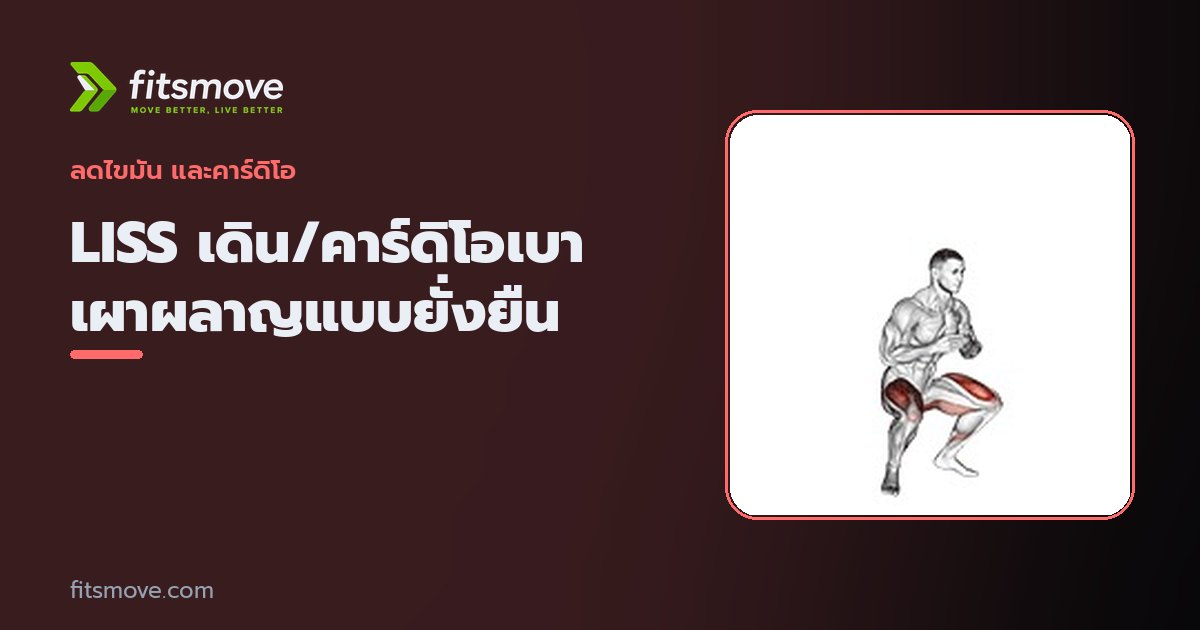
A simple weekly shape: lift 3 to 4 times a week, and add LISS walks on most days, including your rest days as active recovery. If you do LISS and weights on the same day, lift first while you are fresh, then walk afterward or later in the day. For days when you want a slightly higher heart rate without full intervals, gentle movements like the jump squat used sparingly can bridge the gap, but most of your conditioning base should stay easy.
A quick note on staying safe
LISS is one of the safest forms of exercise, which is part of its appeal, but it is still worth being sensible. Wear supportive shoes, stay hydrated, and build volume gradually to avoid overuse niggles in the feet, knees, or hips. If you have a heart condition, joint problems, are pregnant, or are coming back from injury, check with a qualified doctor before ramping up, even with something as gentle as walking. A brief consultation gives you peace of mind to be consistent.
ข้อผิดพลาดที่พบบ่อย (Common mistakes)
- Walking too hard. If you cannot hold a conversation, it is no longer LISS and costs more recovery.
- Doing it too rarely. LISS works through frequency; once a week barely moves the needle.
- Treating LISS as a license to overeat. It supports a deficit but cannot replace one.
- Jumping to long sessions immediately. Build minutes and steps up gradually to avoid overuse.
- Skipping weights because you walk a lot. Walking does not protect muscle; lifting does.
คำถามที่พบบ่อย (FAQ)
Is walking really enough to lose fat? Walking supports fat loss by widening your calorie deficit and is easy to sustain, but it works best paired with a sensible diet and some weight training. On its own it helps; combined, it is far more effective.
How many steps a day should I aim for? Around 8,000 to 10,000 steps daily captures most of the benefit for most people. If you are starting lower, simply add a little each week rather than forcing a big jump.
Can I do LISS every day? Yes, that is one of its main advantages. Its low recovery cost means daily easy walking is fine and often beneficial, including on your rest days from lifting.
สรุป (Summary)
LISS is the unglamorous but reliable backbone of sustainable fat loss: easy, conversational cardio you can do almost every day with little recovery cost. Aim for 30 to 45 minutes of brisk walking several times a week, or around 8,000 to 10,000 steps a day, and pair it with weight training to protect your muscle. Keep it easy, keep it frequent, and let it support a moderate deficit over time. Ready for a plan that builds it in from day one? Start with the FitsMove beginner programs.
Ready to put this into action? Start with a program for your level.
View programs →