Spot reduction: can you target belly fat?
Almost everyone has tried it at some point. You want a flatter stomach, so you do crunches every night. You want leaner arms, so you do endless triceps work. The logic feels obvious: work the muscle under the fat, and the fat there will go. This idea is called spot reduction, and it is one of the most persistent myths in fitness. The uncomfortable truth is that you cannot choose where your body burns fat from.
That sounds discouraging at first, but it is actually freeing. Once you stop chasing the impossible, you can put your energy into what genuinely works: a sustainable calorie deficit, full-body training, and patience. This article explains why spot reduction fails, how your body actually releases fat, the central role of a deficit, and why core training is still worth doing even though it will not directly burn belly fat. FitsMove keeps this practical and honest, with no gimmicks.
Why spot reduction does not work
The appeal of spot reduction rests on a false assumption: that the muscle you exercise draws on the fat sitting directly on top of it. Your body does not work that way. Muscles are fuelled by energy delivered through the bloodstream from fat stores all over the body, not just the fat nearest to them.
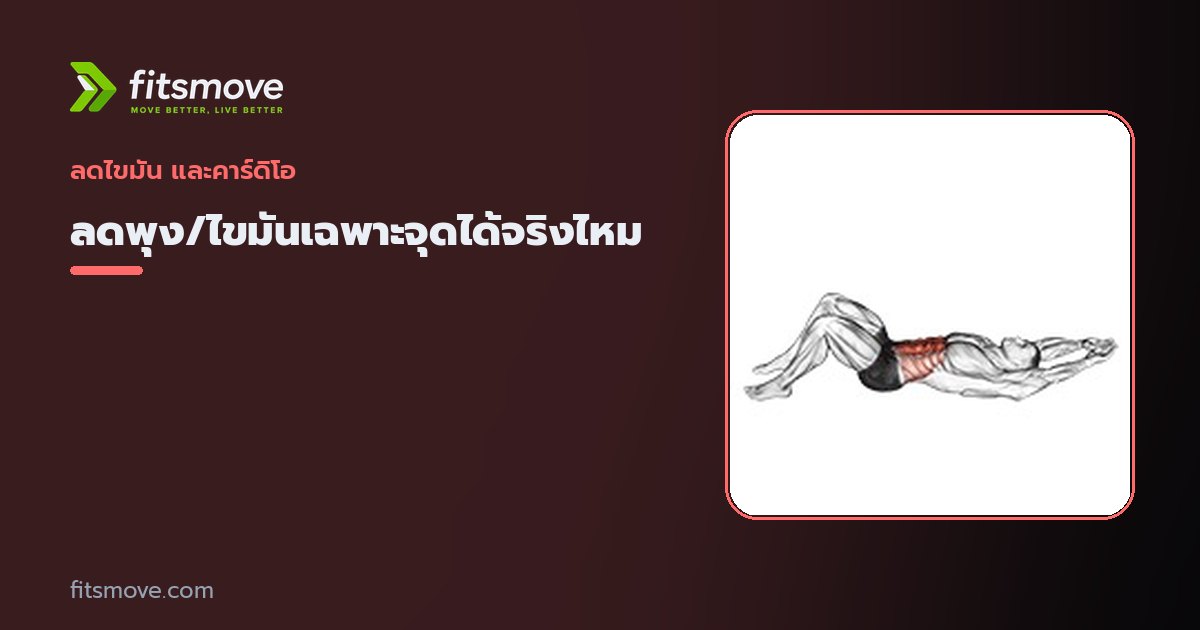
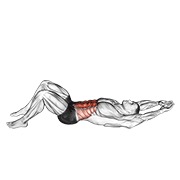
When you do a hundred crunches, you are training the abdominal muscles, which is useful, but you are not signalling your body to release fat specifically from your stomach. The small number of calories burned during the exercise comes from your whole-body energy supply. This is why people who do daily ab work for months often see strong abdominal muscles that stay hidden under a layer of fat. The muscle is there; the fat covering it has not moved.
How your body actually loses fat
Fat loss happens across your whole body at once, in a pattern set largely by your genetics, hormones, sex, and age, none of which you control by choosing an exercise. When you are in a calorie deficit, your body taps fat stores from everywhere, and over time the overall layer gets thinner.
The frustrating part is the order. Many people find that the areas they most want to lean out, often the belly or hips, are the last to visibly change. That is normal and not a sign you are doing anything wrong. It simply means those are the regions your body holds onto longest. The solution is not a special exercise but staying consistent with the deficit until the whole-body reduction reaches that stubborn area.
There is also a hormonal layer to this. Stress, sleep, and overall body-fat level all influence where fat is stored and how readily it is released. This is why two people eating the same and training the same can lean out in very different orders. You cannot override that pattern with an exercise selection, but you can support the whole process by sleeping well, managing stress, and keeping your deficit moderate rather than punishing. The body releases stubborn fat more willingly when it is not also fighting exhaustion and extreme restriction.
The real driver: a calorie deficit
If you want to lose fat anywhere, including the belly, the lever that actually moves is energy balance. Eat slightly fewer calories than you burn, consistently, and your body draws down its fat stores. This is the foundation of every effective fat-loss plan, and it is covered in detail in calorie deficit basics.
A sustainable deficit is a moderate one. Aggressive crash dieting may shed weight fast, but it tends to strip muscle, wreck energy, and rebound. FitsMove favours a gentle, livable deficit you can hold for months, paired with training that protects your muscle. To support the deficit with movement, lower-intensity cardio is an easy, recoverable way to widen the gap without extreme hunger.
Comparing the myth with reality
| Belief | Reality |
|---|---|
| Crunches burn belly fat | They build abs but do not target belly fat |
| You can choose where fat goes | Fat loss is whole-body and genetically patterned |
| More ab exercises means faster flat stomach | A calorie deficit reveals abs, not ab volume |
| The fattest area should leave first | Stubborn areas often leave last |
| Targeted creams or belts melt fat | No external product spot-reduces fat |
Reading the right-hand column makes the path clear. Your effort is best spent on the deficit and overall training, not on hunting for a magic local fix.
So why train your core at all?
If core work will not burn belly fat, is it pointless? Not at all. Training your core builds a strong, functional midsection that improves posture, protects your lower back, transfers force in nearly every lift, and gives you the defined look once the covering fat comes down through your deficit. The muscle and the fat are two separate projects: the deficit handles the fat, core training handles the muscle underneath.
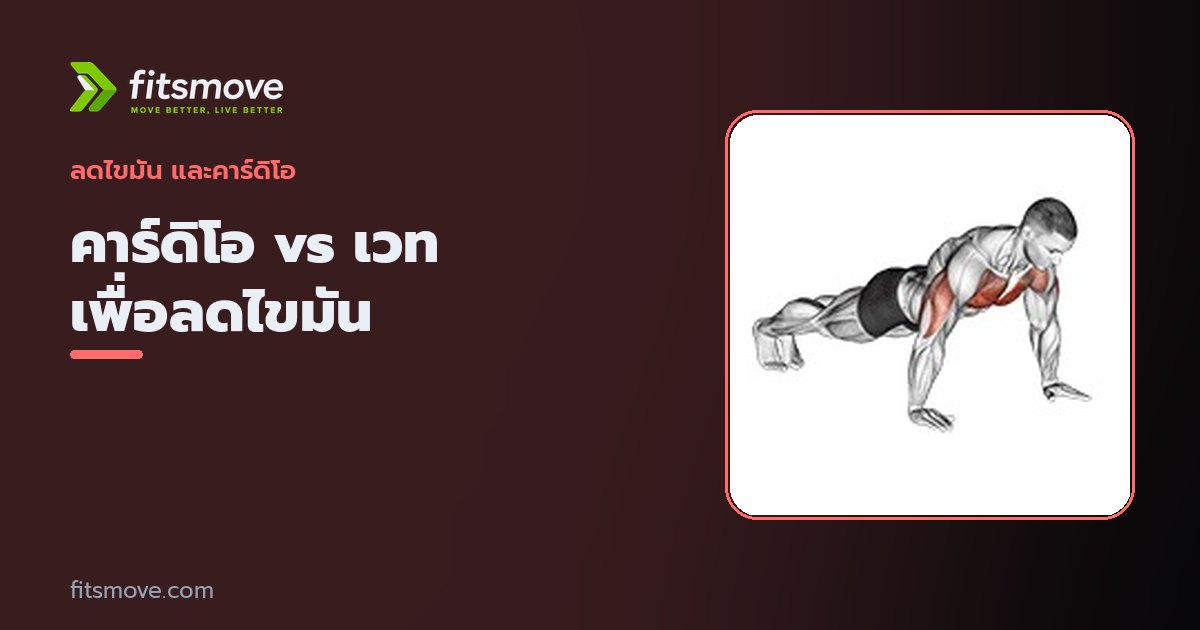
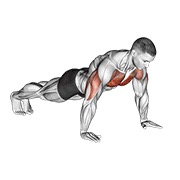
Core and full-body movements like the push-up train the trunk hard while also engaging large muscle groups, which burns more total energy than isolated crunches. Browse waist and core movements for a balanced selection. Combining full-body strength work with a deficit gives you both the reduced fat and the muscle definition underneath it.
A brief reality check on health
Belly fat is partly cosmetic and partly a health matter, since excess visceral fat around the organs is linked to metabolic risk. The good news is that a moderate deficit and regular movement reduce visceral fat effectively over time. If you have a large amount to lose, an existing health condition, or you are unsure where to start, a short consultation with a doctor or qualified coach is a sensible first step before changing your diet or training.
ข้อผิดพลาดที่พบบ่อย (Common mistakes)
- Doing endless crunches expecting a flat stomach. Abs are revealed by a deficit, not built thinner by volume.
- Ignoring food entirely. No amount of targeted exercise overcomes a missing calorie deficit.
- Crash dieting for fast belly loss. This strips muscle and rebounds; moderate and steady wins.
- Giving up when the belly is slow to change. Stubborn areas are simply last in line.
- Buying belts, wraps, or creams. No external product reduces fat in a chosen spot.
คำถามที่พบบ่อย (FAQ)
Can I lose belly fat without losing weight elsewhere? No. Fat loss is whole-body. As you reduce overall body fat through a deficit, the belly thins along with everything else, often a little later than other areas.
If crunches do not burn belly fat, should I skip them? Not necessarily. Core training builds a strong, defined midsection and supports your back and lifts. Just understand it shapes the muscle, while the deficit removes the fat covering it.
Why is my belly the last place to lean out? Genetics and hormones decide your fat-loss pattern, and for many people the abdomen is held onto longest. Stay consistent with your deficit and it will eventually follow.
สรุป (Summary)
Spot reduction is a myth: you cannot pick where your body burns fat. Belly fat comes off the same way as fat everywhere else, through a steady, sustainable calorie deficit paired with training that protects your muscle. Keep doing core and full-body work to build the shape underneath, but trust the deficit to reveal it. Want a structured, honest plan that pairs the two? Start with the FitsMove programs and let consistency do the work.
Ready to put this into action? Start with a program for your level.
View programs →