Workouts for busy parents
Being a parent rearranges your entire relationship with time. The neat one-hour gym session that fit your old life no longer exists, and the guilt of not training on top of everything else can push fitness off the list entirely. Here is the reframe that changes everything: you do not need long workouts, expensive equipment, or a perfect schedule to stay strong and healthy. You need short, effective sessions that bend around your life instead of demanding that your life bend around them.
This plan is built for the reality of parenting, where a session might get interrupted, moved, or squeezed into a nap window. It leans on brief full-body workouts, two or three days a week, that you can do at home with little or no gear, and it even shows you how to fold your kids into the routine instead of treating them as an obstacle. This is general educational information, not medical advice, so check with a professional if you have any health concerns before starting.
Why short workouts actually work
The belief that a workout only counts if it lasts an hour is one of the most damaging myths for busy people. The truth is that most of the benefit of a strength session comes from a handful of hard, focused sets. Twenty to thirty minutes of concentrated work, done consistently, beats a ninety-minute session you can only manage once a month.
Consistency is the real driver of results, and short sessions are simply easier to be consistent with. A workout you can reliably fit into your week, even a busy one, compounds over months into meaningful strength and fitness. A perfect program you keep skipping does nothing. For a parent, the best workout is the one you will actually do, and short workouts win that contest every time.
The 2-day full-body approach
If you can only train twice a week, make both sessions full-body. This way each muscle group gets worked twice weekly, which is plenty to build and maintain strength. Two well-chosen full-body sessions cover far more ground than two isolated body-part days, and they are forgiving when life interrupts your plans.
Focus each session on the big movement patterns that give you the most return: a squat, a push, a pull, a hinge, and a core brace. A dedicated two-day full-body plan lays this out in detail, and the busy 2-day program packages it into a ready-to-follow routine. If you find a third day, use it, but treat two as your reliable baseline and anything extra as a bonus.
Home training with little or no gear
You do not need a gym to get strong. Your own bodyweight is a complete resistance system, and a single pair of adjustable dumbbells or a resistance band expands your options enormously. Training at home also removes the biggest time cost of the gym, which is getting there and back. That saved commute alone can be the difference between training and skipping.
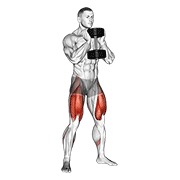
Build your home sessions around movements like the bodyweight squat or goblet squat, the push-up, a row using a band or dumbbells, and a plank for your core. The article on the best home workout plan goes deeper on setting this up. With these basics you can train effectively in your living room while a child naps or plays nearby.
A flexible weekly schedule
The secret to training as a parent is a schedule with built-in flexibility. Instead of locking workouts to specific days, aim for a target number of sessions per week and slot them wherever they fit. If Tuesday falls apart, you simply do that session on Wednesday. This removes the all-or-nothing trap where one missed day derails the whole week.
| Scenario | Sessions | Session length | Notes |
|---|---|---|---|
| Typical week | 2 full-body | 25-30 min | Flexible days, whenever they fit |
| Good week | 3 full-body | 25-30 min | Add a third session as a bonus |
| Chaotic week | 1-2 short | 15-20 min | Fewer sets, keep the habit alive |
| Zero-time day | 1 mini-set | 5-10 min | A few squats and push-ups still count |
Notice the chaotic and zero-time rows. On the hardest weeks, the goal is not a great workout, it is keeping the habit alive so it is easy to resume. A few squats and push-ups while dinner cooks is a win, because it keeps you in the identity of someone who trains.
Training with your kids
Your children do not have to be an obstacle to your workout. Young kids love to copy, so let them join you for squats, jumping jacks, or animal-walk games, turning your session into play. Bodyweight movements make this easy and safe, and modeling active habits benefits them as much as it does you.
You can also use active family time as movement: a walk to the park, a bike ride, or a game of tag all count as active recovery and keep everyone moving. On days when a structured session is impossible, this kind of play-based activity keeps your body working and your habit intact, without stealing time away from your kids.
Making every minute count
When time is tight, workout density matters more than duration. Cut your rest periods a little, or pair two movements back to back, such as squats and push-ups, so one muscle group rests while the other works. This keeps your heart rate up and packs more work into fewer minutes without adding time.
Keep the movements simple and skip the fancy extras that eat time without adding much. A brief warm-up of a few dynamic movements is enough before a home session, and you do not need a long cooldown. Focus your limited minutes on a handful of hard, clean sets of the big patterns, and let progress come from doing that consistently rather than perfectly.
ข้อผิดพลาดที่พบบ่อย (Common mistakes)
- All-or-nothing thinking. Believing a short workout is not worth doing leads to doing nothing. Fifteen minutes beats zero, every time.
- Rigidly fixing workouts to set days. With kids, plans change. Aim for a weekly target and stay flexible about which days.
- Trying to run an advanced gym split at home. Complex programs collapse under real family life. Keep it to two simple full-body sessions.
- Feeling guilty about training time. Modeling healthy habits and staying energetic makes you a better parent, not a selfish one.
- Waiting for the perfect moment. It never comes. Start with what your current week allows and build from there.
คำถามที่พบบ่อย (FAQ)
Can I really get results with only two short sessions a week? Yes. Two full-body sessions a week, done consistently, are enough to build and maintain solid strength and fitness for most people. Consistency matters far more than session count or length.
What is the minimum equipment I need at home? None to start. Bodyweight movements alone are effective. When you want more, one pair of adjustable dumbbells or a resistance band covers most needs affordably.
Is it safe to work out with my kids around? Yes, if you stay aware of them and keep the space clear. Bodyweight and light movements are easy to pause if a child needs you. As always, this is general educational information, not medical advice.
สรุป (Summary)
Being a busy parent does not mean giving up on fitness, it means training smarter. Short, effective full-body sessions, two or three days a week, done at home with little or no equipment, deliver real results when you are consistent. Build a flexible schedule that bends around your life, keep the habit alive even on chaotic days, and fold your kids into the fun instead of fighting for time away from them. Start with the two-day full-body plan, set up your space with the best home workout plan, and follow the ready-made busy 2-day program or browse all programs to find your fit.
Ready to put this into action? Start with a program for your level.
View programs →