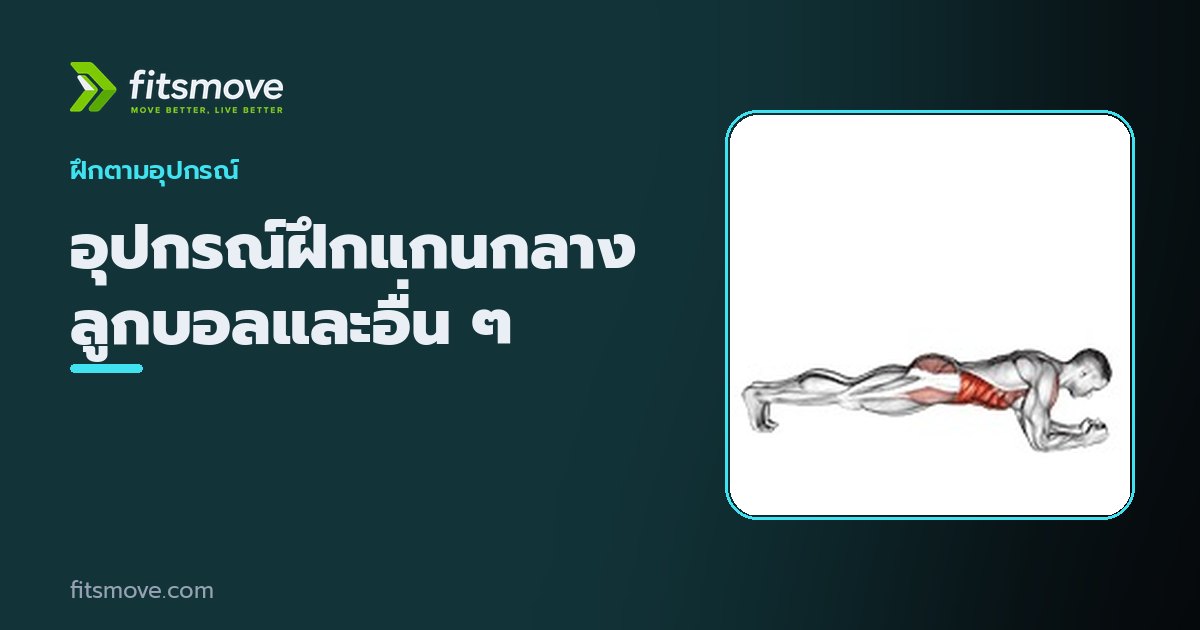
Core training equipment: ball, wheel and more
A strong core is the quiet engine behind almost everything you do, from lifting heavy to standing tall and moving without back strain. You can train it with nothing but your bodyweight, but a few well-chosen tools open up movements that are harder to replicate on the floor. A stability ball, an ab wheel, and a handful of others each add a unique challenge that makes your core work harder in a different way.
This guide walks through the most popular core training equipment, what each piece actually does well, sample exercises to try, and the mistakes that quietly sabotage core work. The aim is not to collect gadgets but to understand which tool earns its place and how to use it safely.
What "core" really means
Before the equipment, a quick reframe. Your core is not just the front abs you see in the mirror. It wraps all the way around your midsection, including the deep muscles that stabilise your spine and the muscles of your lower back. The job of the core is as much about resisting movement, staying solid while your limbs move, as it is about crunching.
That is why the best core tools challenge stability and anti-rotation, not just flexion. Keeping this in mind helps you pick exercises that build a genuinely strong, functional midsection rather than only chasing a burning sensation. For the full picture on training this area, our build abs and core guide is a useful companion, and the waist category collects related movements.
The stability ball
The stability ball, also called a Swiss ball, is one of the most versatile core tools. Because it is unstable, your core has to fire constantly just to keep you balanced on it. That turns simple movements into demanding ones. A plank with your forearms on the ball, for example, asks far more of your stabilisers than a plank on the floor.
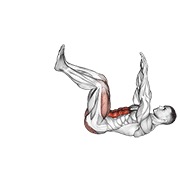
Useful exercises include ball crunches through a long range of motion, stir-the-pot planks where you draw small circles with your forearms, and dead bugs performed while holding the ball between your hands and knees. The ball is forgiving on the spine and beginner-friendly, which makes it a great first purchase. Start with basic holds and crunches before progressing to the more dynamic variations.
Choosing the right size matters more than people expect. When you sit on the ball, your hips and knees should both sit at roughly ninety degrees with your feet flat on the floor. A ball that is too small tips you forward, while one that is too large makes balance harder than it needs to be. Inflate it firm but with a little give, and keep it on a non-slip surface so it does not roll away mid-set.
The ab wheel
The ab wheel looks simple but is one of the most demanding core tools available. As you roll out, your core has to resist your spine sagging toward the floor, a powerful anti-extension challenge that trains the whole front of your midsection at once. Done well, few exercises build core strength as efficiently.
Because it is so challenging, the ab wheel rewards patience. Beginners should start kneeling with a short roll-out, only going as far as they can while keeping the lower back flat and braced. Rolling out too far, too soon, is the classic mistake and the fastest way to feel it in your lower back instead of your abs. Progress the distance gradually over weeks, not days.
| Equipment | Main challenge | Try this | Best for |
|---|---|---|---|
| Stability ball | Balance and stability | Ball crunch, stir-the-pot | Beginners, all levels |
| Ab wheel | Anti-extension | Kneeling roll-out | Intermediate and up |
| Resistance band | Anti-rotation | Pallof press | All levels |
| Hanging bar | Strength and grip | Hanging knee raise | Intermediate and up |
| Medicine ball | Power and rotation | Rotational throw | All levels |
Resistance bands and the cable machine
Bands and cables are excellent for anti-rotation work, which trains the core to stay stable while a force tries to twist you. The Pallof press is the signature movement: you hold a band or cable handle at your chest, press it straight out, and resist the pull that wants to rotate your torso. It looks gentle but lights up the deep core muscles.
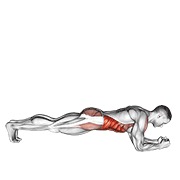
These tools are joint-friendly, easy to scale by changing the resistance, and suitable for every level. They also pair naturally with a rotational twist movement like the front plank with twist, which adds a controlled rotational element to a stable plank base. A single band can deliver a full core session at home.
To get the most from a Pallof press, set up side-on to the anchor point and step away until the band is taut before you begin. The further you step, the harder the anti-rotation challenge. Keep your hips and shoulders square and your ribs down as you press, and resist the urge to twist toward the anchor. A slow three-second press out and a controlled return will teach your core to stay braced far better than fast, jerky repetitions.
The hanging bar and medicine ball
A pull-up bar doubles as a serious core tool. Hanging knee raises and leg raises challenge the lower abs while also building grip and shoulder strength. Start with bent knees and progress toward straight legs as you get stronger, keeping the movement controlled rather than swinging.
The medicine ball adds power and rotation. Rotational throws against a wall, slams, and partner passes train your core to produce and transfer force quickly, which carries over to sport and everyday explosive movements. Because these are dynamic, they suit those who already have a stable core base. For balanced full-body work that includes core, see our full body bodyweight guide.
Common mistakes
- Chasing the burn instead of control. A slow, controlled rep with good bracing beats fast, sloppy repetitions every time.
- Rolling the ab wheel too far, too soon. Going beyond your control shifts the load to your lower back. Progress the range gradually.
- Only training the front abs. Ignore anti-rotation and lower-back work and you build an unbalanced midsection. Cover all directions.
- Holding your breath. Brace your core and breathe steadily; holding your breath through every rep is unnecessary and counterproductive.
- Buying gadgets you never master. One tool used well beats a cupboard of equipment used poorly. Learn the basics on each before adding the next.
Frequently asked questions (FAQ)
Do I need equipment to train my core? No. Bodyweight movements like planks and leg raises build a strong core on their own. Equipment simply adds variety and specific challenges like anti-extension or anti-rotation that are harder to create with bodyweight alone.
Which core tool should I buy first? A stability ball or a resistance band is the best starting point. Both are inexpensive, forgiving, suitable for all levels, and unlock a wide range of exercises. Add an ab wheel once your core base is solid.
How often should I train my core? Two or three focused sessions a week is plenty for most people, with rest days in between. Your core also works during compound lifts, so it gets more stimulus than you might think across a full program.
Summary
Core training equipment is not about owning the most gadgets; it is about choosing tools that challenge your midsection in ways the floor cannot. The stability ball builds balance, the ab wheel trains anti-extension, bands and cables develop anti-rotation, and the hanging bar and medicine ball add strength and power. Use each with control, cover every direction rather than only the front abs, and progress gradually.
Start with one or two tools, master the basics, and build from there. To put it all together, read our build abs and core guide, browse the waist category for more movements, and pick a structured routine from the programs page so your core work fits a complete plan.
Ready to put this into action? Start with a program for your level.
View programs →