

Warm-up sets vs working sets
Walk into any gym and you will see two kinds of lifters at the squat rack. One loads the working weight immediately and grinds through the first set looking stiff and cautious. The other spends a few minutes moving lighter loads first, then hits the same working weight looking smooth and strong. The difference is not talent or genetics. It is warm-up sets, one of the most overlooked yet highest-return habits in strength training.
Many people confuse the general warm-up with warm-up sets, or skip the latter entirely to "save energy." Both mistakes cost you performance and add unnecessary risk. This article explains exactly what a warm-up set is, why it matters, how to ramp your load intelligently, a clear sample progression, and how warm-up sets differ from a general warm-up. This is general educational information for healthy training, not medical advice; if you have pain or a specific condition, consult a professional.
What a warm-up set actually is
A warm-up set is a set of the exact exercise you are about to train, performed with a lighter load, done specifically to prepare you for your heavy working sets. If your goal is to bench press a challenging weight for your working sets, your warm-up sets are lighter benches leading up to it, using the same bar path and technique.
This is different from your working sets, which are the productive, harder sets that drive adaptation. Working sets are where the real stimulus for strength and size comes from, performed at a challenging load close to your target effort. Warm-up sets are not meant to be tiring; their whole job is to get you ready to perform those working sets well.
The distinction matters because the two serve completely different purposes. Working sets create the training stress that makes you adapt, which is the essence of progressive overload. Warm-up sets create the readiness that lets you deliver those working sets safely and with good technique. Confuse the two, and you either tire yourself out warming up or walk into a heavy set unprepared.
Why warm-up sets matter
The first benefit is performance. Warm-up sets prime the specific movement pattern, so by the time you reach your working weight, the groove feels familiar and your first heavy rep is as strong as your last. Skip them, and your opening working set often feels clumsy and heavy, effectively wasting your freshest, most productive set of the day.
The second benefit is preparation of the tissues and joints for that specific load. Gradually increasing weight lets muscles, tendons, and joints adjust to the demand step by step rather than jumping straight to a heavy load cold. This graded exposure is a core reason careful lifters treat warm-up sets as non-negotiable rather than optional.
The third benefit is rehearsal. Warm-up sets are practice reps for your technique. Each lighter set lets you dial in your setup, bracing, and bar path before it counts, so your working sets are more consistent and controlled. This is why warm-up sets pair naturally with a proper general warm-up as part of a complete pre-lift routine.
How to ramp the load intelligently
The core principle of warm-up sets is a gradual ramp toward your working weight, with reps decreasing as the load increases. You start light and easy, then take progressively heavier jumps, doing fewer reps each step so you build readiness without building fatigue. The goal is to arrive at your working weight feeling primed, not tired.
A few guidelines keep it efficient. Keep total warm-up reps modest, since the point is preparation, not a workout in itself. Rest briefly between warm-up sets, just enough to feel recovered. And scale the number of warm-up sets to the load: a heavy, technical barbell squat or barbell deadlift deserves more warm-up steps than a light isolation movement.
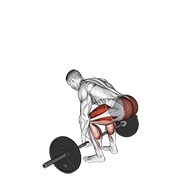
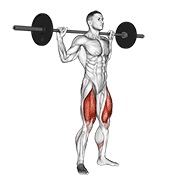
Heavier compound lifts generally need more warm-up sets than lighter isolation work. For a demanding barbell bench press, several ascending sets are appropriate. For a light accessory like a lateral raise late in the session, one easy set or none at all may be enough, especially once the surrounding muscles are already warm.
A sample warm-up progression
Here is a practical example for a lifter whose working weight on a compound lift is 100 kg. The numbers scale to any working weight; the pattern is what matters. Notice how reps drop as the load climbs, and how the jumps get smaller near the top.
| Set type | Load | Reps | Purpose |
|---|---|---|---|
| Warm-up 1 | Empty bar or ~40% | 8 to 10 | Groove the movement, feel the pattern |
| Warm-up 2 | ~55% | 5 | Add load, keep it easy |
| Warm-up 3 | ~70% | 3 | Prime for heavier work |
| Warm-up 4 | ~85% | 1 to 2 | Final primer, close to working weight |
| Working set | 100% | Target reps | The productive, challenging set |
Adjust the number of steps to the lift and the day. On a heavier or more technical lift, you might add a step; on a lighter one, remove a couple. Understanding how your sets and reps are structured overall helps you keep warm-up volume in proportion, so it prepares without eating into your productive work.
How warm-up sets differ from a general warm-up
These two terms are often used interchangeably, but they are distinct stages of preparation. A general warm-up comes first and prepares your whole body. It typically includes a few minutes of light cardio to raise your body temperature and heart rate, plus some dynamic movements to loosen the joints you are about to use.
Warm-up sets come after that and are specific to the exact lift you are performing. Where the general warm-up gets your whole system ready to move, warm-up sets get one particular movement pattern ready for a particular load. A complete routine uses both: a short general warm-up, then movement-specific warm-up sets before each main lift.
Think of it as zooming in. The general warm-up prepares the body broadly; the warm-up sets prepare the exact skill and load you are about to demand. Skipping the general warm-up leaves you globally cold; skipping warm-up sets leaves your first heavy set unrehearsed. Following a structured program makes it easy to build both into your session so nothing gets rushed or skipped.
ข้อผิดพลาดที่พบบ่อย (Common mistakes)
- Skipping warm-up sets entirely. Jumping straight to your working weight wastes your freshest set and skips valuable technique rehearsal.
- Warming up too hard. Doing high reps or near-heavy loads in warm-ups builds fatigue that steals from your working sets. Keep them easy.
- Using the same warm-up for every lift. A heavy compound needs more steps than a light isolation. Scale the ramp to the load.
- Confusing a general warm-up with warm-up sets. They are different stages. Do the general warm-up first, then movement-specific sets.
- Resting too long between warm-ups. Excessive rest cools you back down. Keep warm-up rest brief and purposeful.
คำถามที่พบบ่อย (FAQ)
How many warm-up sets should I do? It depends on the lift and the load. Heavy compound lifts often warrant three to five ascending sets, while light isolation movements may need only one or none once the area is warm. The aim is to feel primed at your working weight without accumulating fatigue.
Do warm-up sets count toward my training volume? Not in the meaningful sense. Warm-up sets are preparation, not the productive stimulus, so they are usually excluded when counting the working sets that drive adaptation. Track your working sets as your real volume.
Should I do warm-up sets for every exercise? Mainly for your heavier lifts and the first exercise for a muscle group. Later isolation movements, done once the surrounding muscles are already warm, often need little or no additional warm-up. Use judgment based on load and how prepared you feel.
สรุป (Summary)
Warm-up sets are lighter sets of the exact lift you are about to train, done to prepare you for your challenging working sets, where the real adaptation happens. Ramp the load gradually with decreasing reps so you arrive primed rather than tired, scale the number of steps to how heavy and technical the lift is, and remember that warm-up sets are distinct from, and follow, a general warm-up. Want structured sessions that build proper warm-ups into every workout? Explore a ready-made routine on the programs page and train smarter from your very first rep.
Ready to put this into action? Start with a program for your level.
View programs →