

Periodization basics
Most people train the same way every week and wonder why progress eventually flatlines. They add a little weight when they can, repeat the same session layout, and hope the line keeps climbing. For a while it does. Then it does not. The problem is rarely effort. The problem is structure. Training that never varies its emphasis eventually runs into a wall where hard weeks and easy weeks blur into one endless grind, and the body stops adapting because nothing ever changes enough to demand it.
Periodization is the answer to that problem. At its simplest, periodization means organizing your training into planned cycles of harder and lighter work rather than pushing at one flat intensity forever. It is the difference between a random walk and a deliberate route. This article covers what periodization actually is, the two main styles most lifters use, how mesocycles and deloads fit together, and two concrete sample schedules you can copy and adapt. This is general educational information for healthy training, not medical advice.
What periodization actually means
Periodization is planned variation over time. Instead of treating every week as a copy of the last, you map out how your training stress will rise, peak, and pull back across a block of several weeks. The goal is to accumulate enough stimulus to force adaptation, then give the body a window to actually absorb it before pushing again.
Think of it in three nested layers. The largest is the macrocycle, which might span several months toward a goal. Inside that sit mesocycles, blocks of roughly three to eight weeks with a specific focus. Inside each mesocycle are microcycles, usually a single week. Periodization is simply deciding, in advance, how effort moves across these layers instead of leaving it to mood and momentum.
Crucially, periodization is the vehicle that makes progressive overload sustainable. Overload tells you to do more over time. Periodization tells you how to arrange that "more" so fatigue does not swallow your progress. The two work as a pair: one supplies the direction, the other supplies the rhythm.
Linear periodization
Linear periodization is the classic model, and it is exactly what it sounds like. Over a block of weeks, volume gradually drops while intensity gradually rises. You start with more reps at lighter loads and finish with fewer reps at heavier loads, peaking toward the end of the block.
A simple linear plan might spend the first weeks in the eight to twelve rep range, shift into the five to eight range in the middle, and end with heavy sets of three to five near the finish. Each phase builds on the one before: the higher-rep work early builds a base and conditioning, and the heavier work later expresses the strength that base allowed you to build.
Linear periodization suits beginners and early intermediates especially well because it is predictable and easy to follow. If you are still learning how sets and reps drive different outcomes, a linear block gives you a clean, gradual introduction to shifting emphasis without juggling many variables at once. Its main limitation is that it trains one quality heavily at a time, which can let others fade during a long block.
Undulating periodization
Undulating periodization varies the load and rep ranges more frequently, often within the same week, rather than marching in one direction across a block. On Monday you might train heavy for low reps, on Wednesday moderate for medium reps, and on Friday lighter for higher reps. The emphasis "undulates" up and down instead of sliding steadily.
The appeal is that you touch several qualities regularly rather than parking one for weeks at a time. Strength, size, and muscular endurance all get stimulated within a short window, which many intermediate and advanced lifters find keeps progress steadier and training more interesting. It also spreads fatigue across different rep ranges rather than hammering one system repeatedly.
The trade-off is complexity. Undulating plans ask you to change your targets often, which requires more attention to tracking and more understanding of your own recovery. If you are comfortable managing your weekly training volume and reading your fatigue, undulating models often suit an experienced lifter following an intermediate program better than a rigid linear block.
Comparing the two models
Neither model is universally better. The right choice depends on your experience, your goal, and how much variety you enjoy managing. The table below lays out the practical differences.
| Factor | Linear | Undulating |
|---|---|---|
| How it varies | Gradually across weeks | Frequently, often within a week |
| Best for | Beginners, early intermediates | Intermediate to advanced |
| Complexity | Low, easy to follow | Higher, needs more tracking |
| Qualities trained | One emphasis at a time | Several in rotation |
| Main risk | Neglected qualities fade | Overcomplication, poor recovery reading |
For most people starting out, a linear block is the sensible first choice. Once you understand how your body responds and you want to keep several qualities sharp at once, experimenting with an undulating layout is a natural next step. Many lifters end up blending both across a longer plan.
Mesocycles and the role of the deload
A mesocycle is the practical unit you will actually plan around. It is a block of roughly three to eight weeks aimed at a specific focus, whether that is building size, pushing strength, or peaking for a test. Within it, training stress typically climbs for most of the block and then pulls back sharply at the end.
That final pullback is the deload week, and it is what makes periodization sustainable rather than exhausting. After several weeks of accumulating fatigue, a deload cuts volume and intensity so the body can clear that fatigue and convert the previous weeks of work into real adaptation. Skip it repeatedly and you drift toward the signs of overtraining: stalled lifts, poor sleep, and fading motivation.
This build-then-recover rhythm is exactly why periodization prevents plateaus in the first place. Rather than grinding into a wall and then trying to break through a plateau reactively, you build the recovery in ahead of time so the wall never forms. The deload is not lost time. It is the week that lets the previous weeks count.
A sample four-week linear block
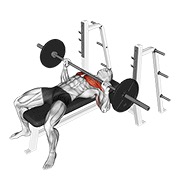
Here is a simple four-week mesocycle you can apply to your main lifts, such as the barbell squat, the barbell bench press, and the barbell deadlift. Numbers are illustrative; adjust loads to leave a rep or two in reserve early on.

| Week | Focus | Rep range | Effort |
|---|---|---|---|
| 1 | Base | 8 to 12 | Moderate, reps in reserve |
| 2 | Build | 6 to 10 | Harder, still controlled |
| 3 | Peak | 4 to 6 | Heaviest, near your limit |
| 4 | Deload | 8 to 10 | Easy, about half the sets |
After week four you begin the next block slightly stronger than you started the last one, because the deload let your true capacity surface. Repeat the cycle, nudging your working loads up each time, and you have a repeatable engine for progress that applies whether you train your upper body or your legs.
ข้อผิดพลาดที่พบบ่อย (Common mistakes)
- Never varying at all. Training at one flat intensity forever invites stalls. Plan waves of harder and lighter work.
- Skipping the deload. The recovery week is what makes the hard weeks pay off. Removing it usually backfires within a block or two.
- Peaking every single week. If every week is your hardest, none of them are. Reserve peak effort for the end of a block.
- Overcomplicating early. Beginners rarely need undulating models. Start linear and add complexity only when you need it.
- Changing the plan mid-block. Periodization needs consistency to work. Finish the block, judge the results, then adjust.
คำถามที่พบบ่อย (FAQ)
Do beginners need periodization? Formal periodization is less critical very early, since beginners progress on almost any consistent plan. That said, even a simple four-week build-and-deload structure teaches good habits and prevents burnout, so a basic linear block is a reasonable starting point.
How long should a mesocycle be? Most run three to eight weeks, with four to six being common. Shorter blocks suit heavier, more fatiguing work; longer blocks suit steady muscle-building phases. End each block with a deload before starting the next.
Can I combine linear and undulating? Yes, and many experienced lifters do. You might undulate rep ranges within each week while still trending toward heavier work across the block. Start simple, master one model, then blend once you understand how you recover.
สรุป (Summary)
Periodization means arranging your training into planned cycles of harder and lighter work instead of grinding at one intensity forever. Linear models shift gradually and suit newer lifters; undulating models vary often and suit experienced ones. Wrap either inside mesocycles that build for several weeks and finish with a deload, and you get a rhythm that turns effort into lasting progress. Ready to train in structured cycles instead of guessing? Explore a ready-made routine on the programs page and let the planning work for you.
Ready to put this into action? Start with a program for your level.
View programs →